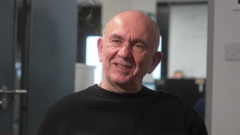
Peter Molyneux is the only person in the gaming world who can tell you he's building a digital soul and have you believe him—at least for twenty minutes. Most people think of him as the man who promised the world with Fable and delivered a very nice, slightly smaller world. But in 2026, as we sit in an industry currently eating itself alive with layoffs and creative exhaustion, his return with Masters of Albion feels less like another pitch and more like a necessary intervention.
Honestly, the industry is a mess right now. We've seen over 45,000 jobs vanish since 2022. Studios like Arkane Austin and London Studio are gone. Amidst this wreckage, the "God Game" pioneer is back, talking about AI and his final creation with the kind of wide-eyed enthusiasm that usually gets you laughed out of a boardroom. But maybe he's right this time.
The obsession with digital life
Molyneux hasn't changed. He's still obsessed with the idea that your actions should ripple through a world in ways that feel organic, not scripted. In his early days at Bullfrog and Lionhead, this meant things like the creature in Black & White or the aging protagonist in Fable. Today, that obsession has a new name: Artificial Intelligence.
While most CEOs see AI as a way to cut costs and replace junior artists, Molyneux sees it as a way to finally fulfill the promises he made in 2004. He's talked about a future where you don't just click a menu to build a house; you tell the game what you want, and the AI interprets your intent. It's a shift from "press X to interact" to a genuine conversation with the software.
Masters of Albion is basically the "Greatest Hits" album of his career. It pulls the possession mechanics from Dungeon Keeper, the god-like scale of Black & White, and the British whimsy of Fable. But it adds a layer of modern tech that actually supports his grand visions. It's not just a nostalgia trip. It's an attempt to prove that the "God Game" wasn't a dead end—it was just waiting for the hardware to catch up.
Why the industry keeps failing creators
We're currently in what analysts call a "reset phase." The COVID-era expansion was a bubble, and now it's popped. Big publishers are terrified of risk. They want Call of Duty 27 and Assassin’s Creed: Infinite. They don't want a game where you play as a hand in the sky throwing villagers into the sea because you're bored.
Molyneux's career is a roadmap of what happens when big business meets "too much" creativity. His time at EA and Microsoft ended in friction because those environments prioritize quarterly earnings over the "soul" of a project. He’s admitted he’s not a businessman. He’s a dreamer who occasionally forgets how physics works.
But look at the state of games today. They're polished, they're massive, and they're often incredibly boring. They lack the "slight weirdness" that Molyneux championed. When he talks about Masters of Albion, he focuses on the small things—how an arrow stays stuck in your hero's arm, turning them into a "human porcupine." That's the kind of tactile, weird detail that modern AAA games often polish away.
The AI trap and the single prompt future
Molyneux recently made headlines by suggesting that in 25 years, anyone will be able to create a game with a single prompt. "Make a battle royale on a pirate ship," and the AI does the rest. For a lot of developers, that sounds like a nightmare. It sounds like the death of the craft.
But if you look at his history, he’s always wanted to lower the barrier between the player's imagination and the screen. Whether it was the gesture-based spellcasting in Black & White or the simplistic "one-button" combat in Fable, he’s always hated friction. He thinks AI is the ultimate friction-remover.
There's a massive risk here, obviously. We've seen him get "sold" on tech before—remember the blockchain era of Legacy? It was a disaster. It’s easy to be skeptical when he starts talking about new "game-changing" tech. But there is a fundamental difference this time: he’s making a game people actually want to play, in a genre he literally invented.
What Masters of Albion gets right
- Scale: You can zoom from the clouds down to a single blade of grass.
- Morality: It's not just "Good vs. Evil." It’s an alignment system that monitors how you treat worshippers and build infrastructure.
- Consequence: If you’re a bad god, the world reflects it. Not through a cutscene, but through the behavior of the NPCs.
Stop overthinking the Molyneux hype
The common mistake people make with Molyneux is taking his "future-speak" as a literal feature list for his next game. It's not. It's a manifesto. When he says you can do anything, he means he wants you to feel like you can do anything.
He’s currently 66 years old. He calls Masters of Albion his "final creation" or the culmination of his life’s work. Whether it’s actually his last game doesn't really matter. What matters is that he’s still trying to push the medium forward while everyone else is just trying to survive the next round of budget cuts.
If you want to understand where gaming is going, don't look at the corporate earnings calls from Sony or Ubisoft. Look at the guy who is still trying to build a digital porcupine in a shed in Guildford. He might be wrong about the "single prompt" future, but he's right about one thing: games need to be more than just content. They need to be alive.
If you're a developer or a player worried about the "death of creativity," keep an eye on how Masters of Albion handles its Early Access period. It’s going to be a litmus test for whether Molyneux’s brand of "inspired chaos" can still find a home in a sanitized industry. Don't wait for the final review—watch the dev diaries. That’s where the real lessons are. It’s time to stop worrying about the hype and start looking at the mechanics. If he pulls this off, he won't just have made a good game; he'll have reminded us why we started playing them in the first place.