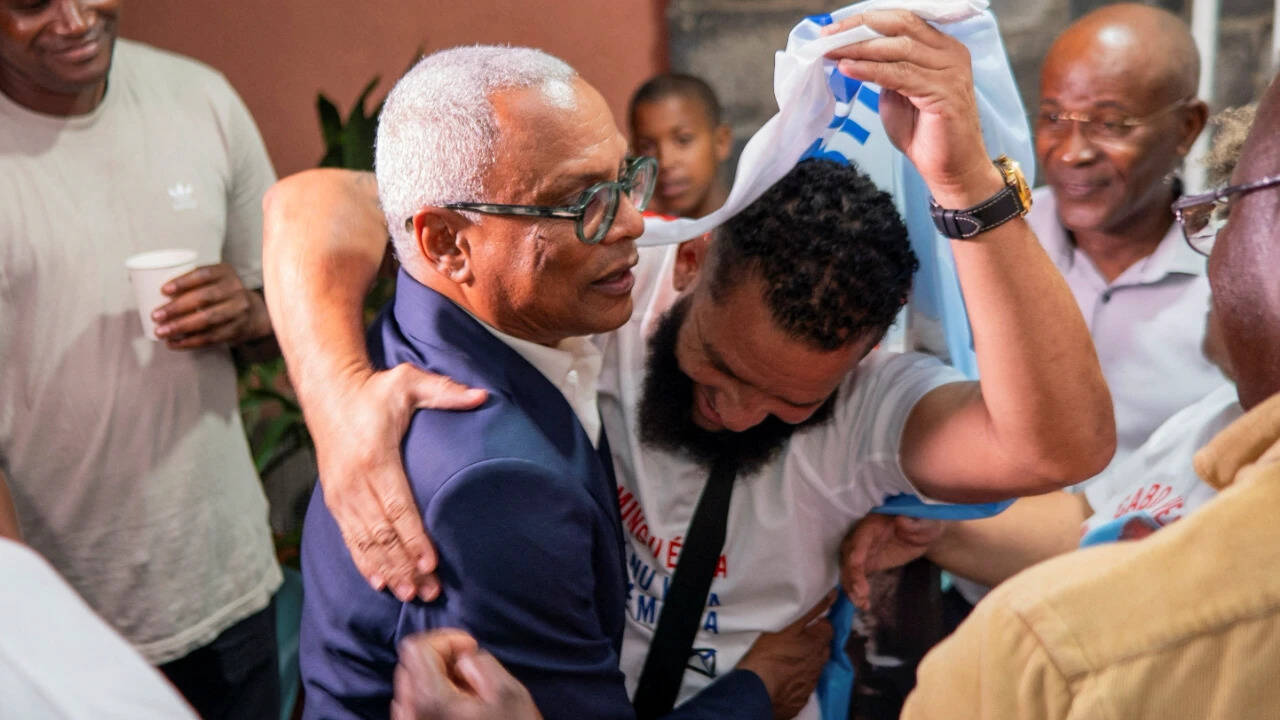
José Maria Neves didn't just win a second term on November 15, 2026. He crushed the field with nearly 64% of the vote, avoiding a runoff altogether and ending a decade of divided government in one of Africa's most stable democracies.
Most international headlines stopped at two facts. First, Neves won big. Second, he defeated former Justice Minister Joana Rosa, the first woman to ever run for president in Cape Verde's history. Both points are true. Neither tells the whole story.
Look closer at the numbers from the November 2026 vote and a very different picture emerges. Voter turnout collapsed to just under 32%—a massive drop from 2021. Meanwhile, the same party now controls both the presidency and the parliament for the first time in years. If you want to understand where this 10-island Atlantic nation is actually headed, you can't just look at the margin of victory. You have to look at why two-thirds of the country stayed home.
The Real Numbers Behind Cape Verde's 2026 Election
Let's get the hard data straight first. Out of 419,448 registered voters across the archipelago and the diaspora, José Maria Neves pulled in 82,602 votes, or 63.98%. That cleared the 50% threshold needed to skip the November 29 runoff by a wide margin.
Joana Rosa, backed by the center-right Movement for Democracy (MpD), finished second with 31.39%. Four independent candidates—physician Gilson Alves, jurist Casimiro de Pina, judge Antero Tavares, and teacher Loisito Sousa—split the scraps, each taking less than 1.5%.
Here is the number that should worry political leaders in Praia. Turnout sat at 31.69%. That means abstention hit roughly 68%. Compare that to 2021, when turnout was around 48% and Neves won his first term with 51.7%.
Why did turnout crater by more than 16 percentage points in five years?
Honestly, election fatigue played a huge role. Cape Verdeans had already gone to the polls six months earlier, on May 17, 2026, for a high-stakes parliamentary race. In that contest, voters threw out the MpD after ten years in office and handed a 37-seat majority in the 72-seat National Assembly to the African Party for the Independence of Cape Verde (PAICV). Once the main legislative battle was settled in May, plenty of voters treated November's presidential race like a formality.
There is also a deeper structural issue. Outward migration has drained communities across islands like Santiago, São Vicente, and Fogo. Election observers and local officials pointed out that heavy mobility among working-age citizens left voter rolls inflated compared to the people physically present to cast ballots.
Why Joana Rosa's Run Still Changed Cape Verdean Politics
It's easy to look at a 32-point loss and call Joana Rosa's campaign a failure. That would be a mistake.
Rosa didn't come out of nowhere. She trained in law and public administration, became the first woman to run for mayor in Cape Verde back in 1995, served two terms leading the municipal council on São Vicente, led the MpD parliamentary group, and spent five years as Minister of Justice from 2021 to 2026. She had the resume.
What she didn't have was momentum. By the time she entered the presidential race, her party was bruised from losing its parliamentary majority in May. Running as the standard-bearer of an outgoing ruling party right after voters demanded change is an uphill battle anywhere. In a small island nation where political swings tend to compound across back-to-back elections, it was nearly impossible.
Still, she broke a 51-year barrier. Since Cape Verde gained independence from Portugal in 1975, not a single woman had appeared on a presidential ballot. Even in defeat, Rosa pulled nearly a third of the vote and normalized female candidacy at the highest executive level. Combine that with the May 2026 legislative results—where women won 34 of the 72 parliamentary seats (47.2%) and Janira Hopffer Almada became the first female Speaker of the National Assembly—and you see a real shift in who holds institutional power.
When Rosa conceded on election night, she framed her run around duty rather than personal ambition. She told reporters she had set an example for participation. Whether you agree with her politics or not, future female candidates in Praia won't have to answer the tired question of whether the country is "ready" for a woman on the presidential ticket. That door is open now.
How Cape Verde's Semi-Presidential System Actually Works
If you read casual news coverage of this election, you might think José Maria Neves now runs the day-to-day government. He doesn't.
Cape Verde uses a semi-presidential system modeled loosely on Portugal's constitution. Understanding the division of labor here is critical if you want to make sense of what happens next:
- The Prime Minister holds executive control. Following the May 2026 legislative election, PAICV leader Francisco Carvalho became Prime Minister. He and his cabinet manage the budget, run ministries, negotiate foreign loans, and execute daily policy.
- The President acts as constitutional referee. Neves serves as head of state and commander-in-chief. He doesn't draft tax bills or run public hospitals. Instead, he holds veto power over legislation, can refer questionable laws to the Constitutional Court, appoints key judicial and diplomatic figures, and—in extreme crises—can dissolve parliament.
During his first term from 2021 to 2026, Neves operated under cohabitation. He came from the left-leaning PAICV, while Prime Minister Ulisses Correia e Silva led the center-right MpD. That forced constant negotiation. Neves frequently positioned himself as a moderating check on the government, occasionally clashing with MpD ministers over transparency and state appointments.
Now that arrangement is over. Both the presidency (Neves) and the government (Carvalho) belong to the PAICV.
The Hidden Risk of Single-Party Alignment
On paper, alignment between the president and prime minister makes governing smoother. Bills pass faster. Diplomatic messaging stays consistent. Public squabbles between the Palace of the Republic and the Prime Minister's office disappear.
In practice, it creates a subtle accountability trap.
Cape Verde ranks near the top of African governance benchmarks—sitting third out of 54 countries in the 2025 Mo Ibrahim Index of African Governance, right behind Seychelles and Mauritius. Much of that reputation rests on institutional checks and balances. When rival parties split the executive branch, neither side gets a free pass.
With the PAICV holding both offices, Neves has promised to remain an "impartial arbiter" rather than a rubber stamp for Prime Minister Carvalho. Voters will test that promise quickly. If economic frustration grows and the president stays quiet to protect his own party's cabinet, public cynicism—already visible in that 68% abstention rate—will deepen.
What Voters Actually Care About Right Now
Talk to anyone in Mindelo, Praia, or Santa Maria, and they aren't debating constitutional theory. They're talking about three stubborn economic pressures that neither party has fully solved.
1. The Inter-Island Transport Bottleneck
Living across nine inhabited islands creates a brutal logistical tax. Moving goods or people between islands remains expensive and unreliable. Ferry schedules shift, domestic airfares eat up local wages, and farmers on Santo Antão or Fogo struggle to get produce reliably to hotel markets on Sal and Boa Vista. Transport costs were a top issue in the May legislative campaign, and they haven't gone away.
2. Youth Unemployment and the Brain Drain
Tourism drives roughly a quarter of Cape Verde's economy, yet young graduates still struggle to find well-paid work outside hospitality. The result is a steady exodus to Portugal, the United States, France, and Luxembourg. During his re-election campaign, Neves pledged to convene a national youth summit to address emigration. Summits don't create jobs, though. Young Cape Verdeans want lower barriers to starting businesses, better vocational training, and digital infrastructure that lets them work remotely without leaving home.
3. Cost of Living and Energy Vulnerability
Because Cape Verde imports most of its food and fossil fuels, global price spikes hit households immediately. While renewable energy projects—wind and solar—have expanded over the past decade, fuel prices and utility bills still squeeze working families.
How to Follow Cape Verde's Next Political Chapter
If you're tracking West African governance, emerging island economies, or diaspora investment opportunities in Cape Verde, don't stop at election-night headlines. Watch these specific indicators over the next six months:
- Monitor the first legislative friction points. Pay attention to how President Neves handles Prime Minister Carvalho's early budget and state-reform bills. The first time Neves uses his veto or sends a law to the Constitutional Court will tell you whether his pledge of impartiality is real.
- Track electoral reform proposals. Both major parties acknowledged that a 31.69% turnout is unsustainable. Watch for concrete bills introducing electronic voting or cleaning up diaspora voter registries before the next municipal cycle.
- Follow inter-island transport contracts and submarine cable rollouts. Economic growth in Cape Verde depends on physical and digital connectivity. Check official updates from the National Assembly and the Ministry of Finance and Economy on maritime concession reforms and new fiber-optic capacity aimed at turning the islands into a regional tech hub.
- Verify official gazette releases directly. Rather than relying on brief wire summaries, check the Comissão Nacional de Eleições (CNE) at cne.cv for certified municipal breakdowns and the Boletim Oficial for enacted decrees.
Neves got his landslide, and Joana Rosa made history. Now comes the harder test: proving to the 68% of voters who stayed home that showing up next time will actually change their daily lives.
Neves Wins Second Term as Joana Rosa Makes History
This broadcast segment breaks down the official voting results alongside political analysis of what Neves's second term and Rosa's historic candidacy mean for Cape Verde's political balance.


