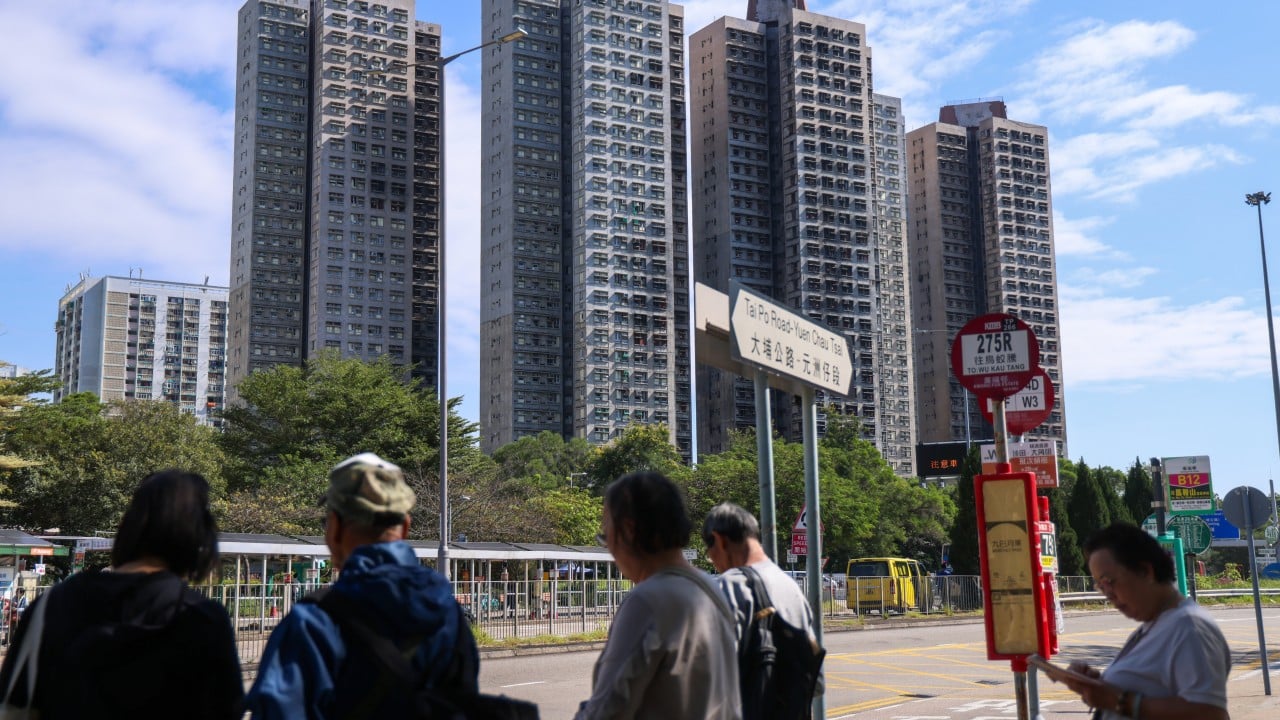
The newly formed Tai Po fire reform panel has officially convened its inaugural meeting, with government leadership pressing for immediate, enforceable safety upgrades across older residential districts. While officials demand swift action to close regulatory loopholes, the committee faces a stark reality. Decades of fragmented building ownership, aging infrastructure, and deep-seated bureaucratic inertia threaten to stall meaningful change before a single fire door is replaced.
The Anatomy of a Predictable Crisis
Walk down any older residential street in the New Territories and look up. You will see a dense thicket of unauthorized metal cages, tangled external wiring, and subdivided flats crammed behind single-exit stairwells. For years, urban planners and fire safety engineers have warned that older composite buildings in districts like Tai Po represent a ticking clock. Recently making headlines lately: Seven Months Underwater And The Breaking Point Of Britain's Nuclear Deterrent.
The spark that forced the current administrative scramble did not appear out of nowhere. It was the inevitable result of structural neglect meeting high-density living. When a blaze breaks out in an aging structure lacking modern sprinkler systems or properly maintained smoke lobbies, minutes matter. Thick smoke fills narrow, obstructed corridors almost instantly, turning routine evacuation routes into traps.
The reform panel was assembled to stop this cycle. During its opening session, Chief Secretary for Administration Eric Chan emphasized that delays are no longer acceptable, urging members to bypass traditional administrative bottlenecks and deliver concrete policy proposals without hesitation. More insights on this are explored by TIME.
Yet seasoned observers of Hong Kong municipal governance know that urgency in a conference room rarely translates to speed on the street. The history of building safety in the city is written in reactive spurts. A major tragedy occurs, a task force is convened, stern warnings are issued, and then the grueling reality of enforcement grinds the momentum to a halt.
Why Swift Action Hits a Concrete Wall
To understand why fire safety reforms consistently bog down, you have to look at the legal and financial mechanics of older residential blocks. Most buildings constructed prior to the late 1980s were built under fire codes that look dangerously permissive by modern standards. Retrofitting them is not as simple as handing out smoke detectors.
The Divided Ownership Trap
In a typical aging tenement or older private estate, ownership is fractured among dozens or hundreds of individual flat owners. Before a contractor can install a pressurized water tank for a new fire hose reel system, the building needs a functioning owners' corporation to collect funds, approve tenders, and sign off on structural modifications.
Many of the most vulnerable buildings do not have active owners' corporations at all. They are what local authorities call "three-nil" buildings, lacking owners' committees, residents' organizations, and property management companies. Trying to force compliance on a building where nobody is legally in charge is like trying to serve a subpoena to a ghost.
Even when a committee exists, securing consensus is a nightmare. Elderly residents living on fixed pensions often balk at special levies costing tens of thousands of dollars per household. Meanwhile, absentee landlords renting out subdivided units have every financial incentive to delay inspections that might expose illegal structural alterations.
Physical and Structural Limits
Money is only half the barrier. Engineering realities often make standard fire code compliance physically impossible without tearing down half the structure.
Consider the requirement for rooftop water tanks to feed modern sprinkler and hydrant systems. Many older walk-up buildings were simply not engineered to bear the immense dead weight of thousands of gallons of water perched on their roofs. Reinforcing the load-bearing columns from the foundation up requires invasive construction that disrupts every resident in the building.
Then there is the issue of space. Ground-floor pump rooms require square footage that does not exist in tightly packed urban footprints. If a building was erected right up to its lot line fifty years ago, where does the municipal utility room go? Engineers frequently find themselves caught between rigid statutory fire codes and the unyielding laws of physics.
The Enforcement Deficit
Laws on paper mean nothing without boots on the ground to enforce them. Over the past decade, the Buildings Department and the Fire Services Department have issued thousands of Fire Safety Directions ordering property owners to upgrade their premises. A staggering percentage of those orders remain unfulfilled years past their deadlines.
Why does compliance lag so severely? The penalties for ignoring a statutory order have historically been cheaper than the cost of doing the actual work. A property owner dragged before a magistrate might face a modest fine, pay it off as a cost of doing business, and continue collecting rent on an unsafe property.
Furthermore, government agencies operate in distinct silos. One department oversees structural integrity and unauthorized building works. Another monitors fire suppression equipment and escape routes. A third handles licensing for guesthouses or subdivided flats. When an inspector from one bureau spots a hazard that falls under another agency's jurisdiction, the resulting interdepartmental referral can take months to process.
By urging the Tai Po reform panel to move swiftly, leadership is implicitly acknowledging that this fragmented enforcement model has failed. The panel's mandate requires it to look beyond simple rule-tightening and confront how agencies share data, conduct joint inspections, and penalize chronic non-compliance.
What the Reform Panel Must Actually Deliver
If this new committee wants to avoid becoming another footnote in administrative history, it cannot rely on public awareness campaigns or voluntary compliance schemes. Real progress requires structural shifts in how the government intervenes in private property management.
Default Intervention Powers
The single most effective tool at the state's disposal is the power to step in, execute the necessary fire safety upgrades directly, and claw back the costs through property liens. Currently, the threshold for government contractors to forcibly enter a private building and install fire safety infrastructure is high, bogged down by lengthy notification periods and appeal mechanisms.
Lowering that threshold is controversial. Property rights are fiercely guarded, and taxpayers are rightfully wary of fronting the bill for negligent private landlords. However, when a fire hazard threatens not just the occupants of a single building but the densely packed neighboring blocks as well, private property rights must yield to public safety. The panel needs to establish a clear, rapid-response mechanism where unheeded safety orders automatically trigger state-led retrofitting, with the debt attached directly to the land registry title of the delinquent flats.
Targeted Financial Engineering
For genuine owner-occupiers who simply cannot afford massive retrofit bills, existing subsidy schemes need a radical overhaul. Current grant applications are notoriously bureaucratic, requiring technical assessments and multiple contractor bids before a single dollar is released.
A streamlined approach would pair pre-approved engineering templates with direct, low-interest government loans tied to the property rather than the individual's age or income. If an elderly homeowner cannot pay today, the loan sits against the property equity and is settled only when the flat is eventually sold or transferred. This removes the immediate financial terror that drives residents to vote against safety upgrades at owners' meetings.
Radical Transparency for Buyers and Tenants
Market forces can do half the enforcement work if consumers have access to accurate risk data. Right now, a prospective tenant or buyer looking at a flat in Tai Po has no easy way to verify whether the building has outstanding fire safety orders, blocked escape routes, or failing alarm systems.
The reform panel should mandate a public, easily searchable digital registry grading every multi-story residential building on its current fire compliance status. When banks refuse to issue mortgages on high-risk buildings, and insurance premiums spike for non-compliant landlords, owners' corporations suddenly find the motivation to hire contractors quickly.
The Political Friction Ahead
None of these solutions will pass without a fight. Tightening fire regulations inevitably collides with Hong Kong's acute housing shortage.
For example, consider the proliferation of subdivided units across older districts. These tiny, partitioned living spaces are frequently fire traps, built with flammable materials and lacking proper ventilation or secondary exits. Yet they also house tens of thousands of low-income workers who have nowhere else to go. If the reform panel recommends an aggressive, immediate crackdown on all non-compliant subdivided flats without simultaneously providing transitional housing, it risks triggering a homelessness crisis.
Similarly, cracking down on unauthorized rooftop structures and enclosed balconies will spark fierce pushback from middle-class homeowners who view those extra square feet as essential living space. Politicians and district councilors often face intense pressure from constituents to soften enforcement or grant endless extensions.
This is the exact trap that has neutralized previous reform efforts. Officials talk tough in the immediate aftermath of a crisis, only to quietly dilute the rules six months later when the political cost of enforcement becomes clear.
Measuring Success Beyond the Press Conference
The true test of the Tai Po fire reform panel will not be the length of its final report or the severity of its rhetoric. It will be measured in raw, unglamorous metrics twelve months from now.
Did the number of unfulfilled Fire Safety Directions in the district actually drop? Were magistrates handing down deterrent sentences, including jail time, for landlords who lock fire exits or disable alarm bells? Did the government physically step in to retrofit at least a dozen "three-nil" buildings without waiting for bankrupt owners' committees to organize themselves?
Bureaucracies are masters at simulating motion. They form subcommittees, commission feasibility studies, and draft consultation papers that create the illusion of progress while the underlying hazards remain untouched. Eric Chan's demand for speed is a welcome signal from the top, recognizing that the status quo is indefensible.
Now the panel has to prove it has the teeth to dismantle the legal and financial excuses that have protected dangerous buildings for decades. Until inspectors have the authority to bypass obstructive landlords and contractors are actively bolting new fire doors onto aging stairwells, every resident living in an older walk-up remains hostage to the next stray spark.


