The hum of a fluorescent bulb is a distinct kind of silence. It fills the room, but it doesn't quiet the mind.
Inside the cavernous halls of the Pentagon, beneath layers of security clearances and vaulted ceilings designed to withstand geopolitical tempests, documents do not merely exist. They accumulate. They pile into grey boxes. They are slotted into password-protected databases with cryptographic keys that outlive administrations. And sometimes, they are simply overlooked. Read more on a similar topic: this related article.
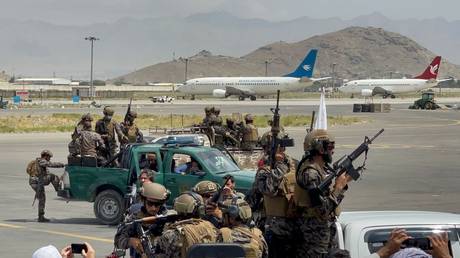
For years, the chaotic final days of America’s longest war have been analyzed, debated, and dissected across congressional hearings and cable news panels. We were told we knew the shape of the disaster. We were given timelines, casualty figures, and overhead footage of desperate crowds clinging to the tarmac at Hamid Karzai International Airport.
Yet history has a habit of keeping secrets in plain sight. Further analysis by Reuters explores similar perspectives on this issue.
Recently, the Department of Defense acknowledged a discovery that sent a quiet shudder through the defense apparatus. Hidden files. Not buried beneath classified lock and key in some subterranean vault, but digital files tucked away in obscured folders—records detailing the granular, agonizing communications, logistics bottlenecks, and command decisions from those frantic August days in 2021.
Consider what happens when an empire retreats. The grand strategies drawn up in air-conditioned rooms dissolve into the blinding dust of a runway.
To understand the weight of these newly surfaced files, you have to strip away the acronyms and the dry military nomenclature. Picture a young staff sergeant sitting in a windowless operations center in Qatar or Virginia, staring at a flashing monitor while a secure phone line rings off the hook. On the other end of that line is an Afghan interpreter standing outside the abbey gate, listening to the concussions of a city changing hands in real time, asking a question that has no good answer: What about us?
The newly found documents capture the agonizing friction of that exact moment. They show the operational drag, the competing chains of command, and the desperate improvisations of mid-level officers who were trying to save lives while bureaucratic machinery ground forward at a glacial pace.
For a long time, the public narrative surrounding the Afghan withdrawal was framed as a binary failure of intelligence or political will. But the truth is more mundane, and therefore much more terrifying. It was a failure of connective tissue. The left hand of the military apparatus often had no earthly idea what the right hand of the State Department was doing.
In these newly recovered logs, you see the digital footprint of that fracture.
There are email chains time-stamped at three in the morning, where logistics officers plead for more transport aircraft while transportation planners wait for authorization signatures that take hours to clear. There are frantic manifests of local allies whose names were entered into databases that crashed under the weight of simultaneous users.
Statistics numb the brain. Two decades. Trillions of dollars. Thousands of lives. These numbers are too vast to feel. They roll off the tongue like rain off a tin roof.
Files, however, have edges.
When you read the specific operational logs—the unredacted digital debris of a collapse—the abstract geometry of war collapses into human scale. You see the exact hour a fuel truck was delayed. You see the exact minute a communications blackout severed contact between a gate commander and a hovering evacuation chopper. You see the bureaucratic ghosts of promises made and forgotten.
Transparency in government is rarely a sudden flash of illumination. It is usually a slow leak.
The Pentagon did not unearth these files because of a dramatic midnight raid or a whistleblower's daring exit through a parking garage. They found them because someone, somewhere in the endless audit of institutional memory, decided to look through the folders that everyone else assumed were empty.
And that is the real unsettling takeaway.
If critical records from the most scrutinized military withdrawal in modern history can simply sit in a digital purgatory for years before being acknowledged, what else is hiding in the dark? What other hard lessons are waiting in neglected databases, waiting for an auditor with enough patience to double-click a folder labeled miscellaneous?
The dust on the Kabul tarmac settled long ago. The C-17s flew out into the dark, their cargo bays packed with weary service members and shell-shocked evacuees, leaving behind the skeletal remains of an abandoned embassy and millions of people facing an uncertain dawn under a restored regime.
But history is never truly finished when the last plane leaves. It follows us home in the form of paper, pixels, and the relentless persistence of the record.
The files have been found. The question now is whether anyone has the stomach to read them to the very end.