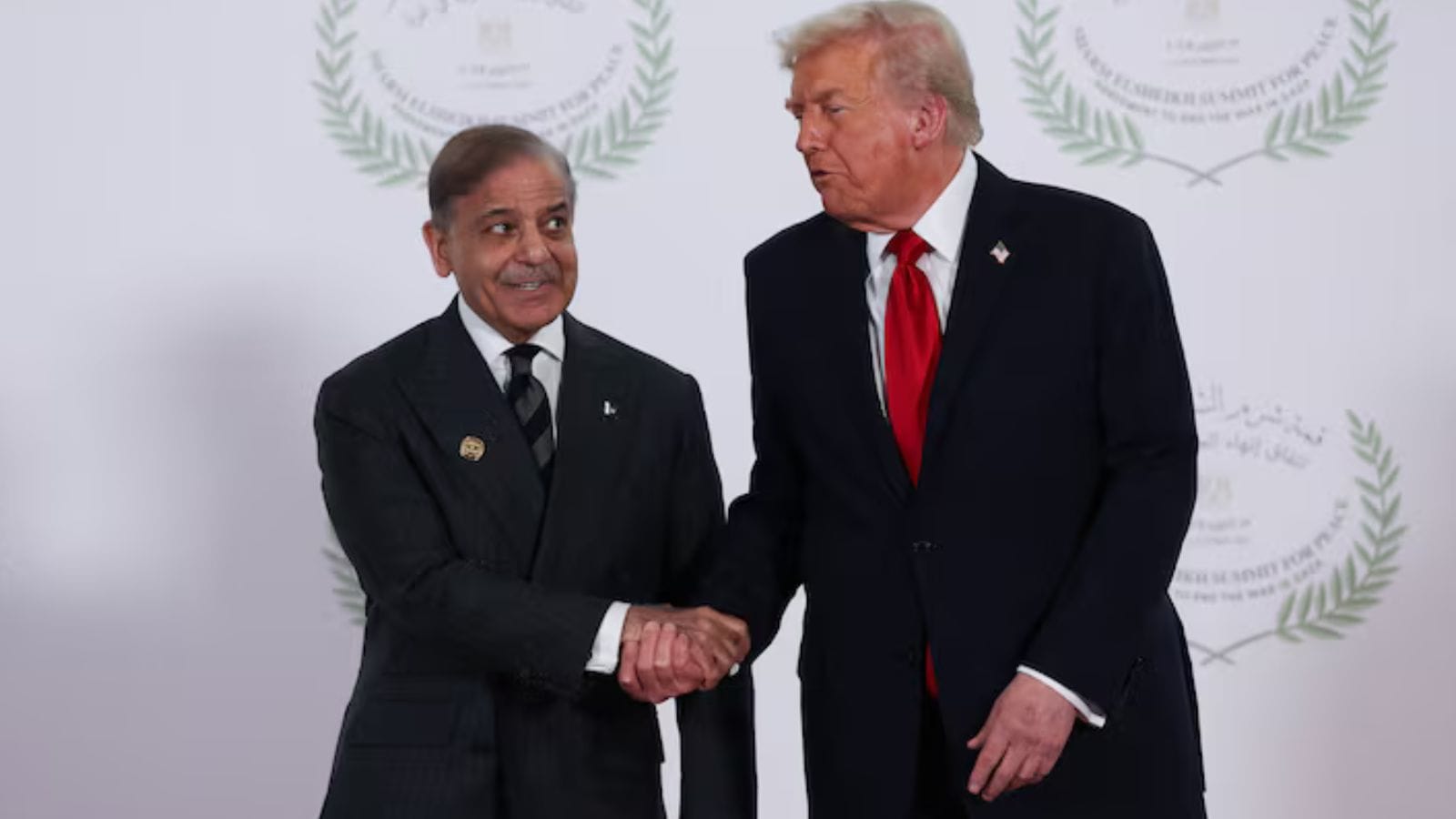
The "lazy consensus" among geopolitical analysts right now is that Pakistan is playing the role of a sophisticated regional bridge-builder. They point to Army Chief Asim Munir’s calls with Donald Trump and Prime Minister Shehbaz Sharif’s huddles with Tehran as evidence of a "strategic pivot" toward mediation. They frame it as a bid for global relevance or a desire to lead the Muslim world.
They are wrong.
Pakistan isn’t mediating because it wants to; it is mediating because it is suffocating. This isn't a "peace offensive"—it is a desperate, clawing attempt to prevent a total domestic implosion. When your economy is a hollowed-out shell and your western border is a tinderbox, "neutrality" isn't a choice. It's a life support system.
The Myth of the "Honest Broker"
The competitor narrative suggests Pakistan is leveraging its unique position as a Sunni-majority state with a massive Shia minority to foster harmony. This is a fairy tale. In reality, Pakistan is terrified of its own internal fault lines.
I’ve seen how states in crisis use diplomacy as a shield. When the state shuts down schools to save fuel—as happened this March—and cancels its own Republic Day parade because it can't afford the gas for the tanks, it loses the luxury of "grand strategy."
If Iran and the U.S. go to a full-scale, sustained kinetic war, the sectarian spillover into Karachi and Islamabad won't just be "protests." It will be an existential security crisis the cash-strapped military cannot afford to suppress. General Munir isn’t calling Trump to save the Middle East; he’s calling to save the Pakistani budget from an oil price spike that would move past $180 per barrel.
The Saudi-Iran "Defense Pact" Trap
Standard analysis says Pakistan is "balancing" its ties between Riyadh and Tehran. Let’s dismantle that. In September 2025, Pakistan signed a Strategic Mutual Defence Agreement (SMDA) with Saudi Arabia. On paper, it’s a tripwire: an attack on Riyadh is an attack on Islamabad.
The contrarian truth? That pact is a noose.
- The Saudi Expectation: Riyadh expects its nuclear-armed "partner" to provide a deterrent umbrella.
- The Iranian Reality: Tehran knows Pakistan’s military is bogged down in Operation Ghazab Lil Haqq against the Afghan Taliban. They know Islamabad cannot handle a second front.
- The Pakistani Hedge: By offering to host talks, Islamabad is trying to invalidate its own defense obligations. If you are the "mediator," you have a valid excuse not to send troops to the Saudi border.
It’s About the IMF, Not the Ayatollah
If you want to understand why Shehbaz Sharif is so "honored" to host talks, stop looking at maps and start looking at spreadsheets.
Pakistan is currently under the thumb of "unimaginable" IMF conditions. The U.S. holds the keys to the IMF board. By positioning itself as the only channel that can get a 15-point peace plan to Tehran, Pakistan is attempting to trade diplomatic utility for debt relief. It is a classic "security-for-solvency" swap.
When Trump announces a five-day pause in strikes citing "productive conversations," he isn't just listening to Pakistan’s logic; he’s utilizing a convenient proxy to test the waters without losing face. Pakistan is the "disposable" intermediary. If the talks fail, the blame falls on the venue, not the participants.
The Failed "Strategic Depth" Fallacy
For decades, the Pakistani establishment obsessed over "strategic depth" in Afghanistan. Now, they are facing a "strategic encirclement."
To the east, a hostile India. To the northwest, an insurgent Taliban. To the west, a burning Iran. The mediation offer is a desperate attempt to keep the western border from becoming a permanent combat zone. If the U.S. decimates Iran’s central authority, the "ungoverned spaces" in Sistan-Baluchestan will become a sanctuary for militants that will tear Pakistan’s Balochistan province apart.
Imagine a scenario where the Iranian state weakens to the point of collapse. Pakistan wouldn't just lose a neighbor; it would gain a 900km-long vacuum of chaos that would funnel weapons and refugees directly into its most volatile region.
The Vance-Ghalibaf Longshot
The rumor mill is obsessed with a potential JD Vance and Mohammad Bagher Ghalibaf meeting in Islamabad. Analysts call this a "bold move."
It’s actually a high-stakes gamble with zero margin for error. If a high-level U.S. official is targeted on Pakistani soil, or if the talks end in a public shouting match, Pakistan’s credibility as a "safe harbor" dies forever. They are betting the house on a diplomatic "Hail Mary" because the alternative—staying silent while the region burns—is a guaranteed slow-motion collapse of the Pakistani state.
Why "Neutrality" is a Lie
Pakistan claims it is neutral because it hosts no U.S. bases. Don't be fooled. It is deeply embedded in the U.S. financial system and deeply dependent on Saudi oil and Chinese infrastructure.
True neutrality requires strength. What Pakistan is practicing is forced equidistance. It is the "neutrality" of a man standing between two giants with his hands tied behind his back.
The Real Winners and Losers
| Entity | Real Motivation | Risk |
|---|---|---|
| Pakistan Military | Preserving the budget and avoiding a sectarian civil war. | Being forced to choose between Saudi cash and Iranian border peace. |
| Shehbaz Sharif | Using diplomacy to distract from a collapsing economy and fuel riots. | Domestic backlash if the U.S. uses the "mediation" as a cover for a "trick" peace plan. |
| The U.S. (Trump) | Finding a low-cost "off-ramp" while maintaining military pressure. | Validating a "rogue" nuclear state's intermediaries. |
The status quo says Pakistan is a rising diplomatic star. The reality is that Islamabad is a firefighter trying to put out a forest fire with a garden hose because its own house is made of dry tinder.
Stop asking what Pakistan "gets" out of this. They are just trying to get through the week without the lights going out.
Would you like me to analyze the specific 15-point ceasefire plan Pakistan is currently relaying to Tehran?