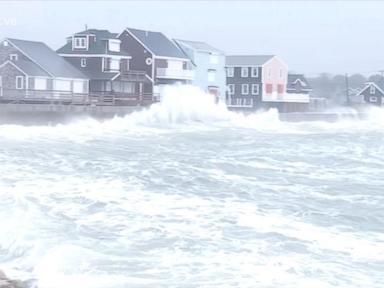
Power lines snap like toothpicks. Waves chew up coastal driveways. Millions of people wake up to total darkness from New York up through Maine. Every single winter, we act surprised when a powerful nor’easter slams the East Coast, as if coastal states haven't dealt with these meteorological beatdowns for centuries.
When a classic nor’easter rolls up the Atlantic seaboard, it feeds on a nasty collision of cold arctic air plunging down from Canada and warm, moisture-heavy air sitting over the Gulf Stream. That temperature contrast creates a spinning atmospheric monster. Winds roar up to hurricane force along the shorelines, while heavy, wet snow or relentless sheets of freezing rain trap drivers and crush roofs under tons of heavy precipitation.
The Anatomy of Coastal Devastation
You can't talk about a major northeastern storm without looking at storm surge. It's not just the wind speeds that knock houses off their foundations; it's the ocean itself getting pushed onshore by hours of sustained gales. When high tide lines up with the peak of the storm, coastal communities take the brunt of the hit.
In places like Long Island, coastal New Hampshire, and the rocky shores of Maine, high water overtakes seawalls in minutes. Cars parked in low-lying driveways turn into submerged metal boxes before owners can even grab their keys. Power infrastructure suffers the worst. Utility poles rot from the inside out, and when heavy, wind-whipped tree branches crash down onto local distribution lines, grids fail instantly.
Municipal crews know this drill by heart. Yet, aging infrastructure means repair times stretch from days into weeks. If you live within five miles of the coast from Montauk to Bar Harbor, losing power for four or five days during a deep freeze isn't a worst-case scenario. It's the baseline expectation.
Why Winter Storms Pack More Punch Than Summer Squalls
People often confuse nor'easters with ordinary winter snowstorms or even tropical hurricanes. They operate on entirely different physics. While a hurricane loses its punch once it hits cold northern waters or makes landfall, a nor’easter actually thrives on the temperature clash of the northern latitudes.
The storm system lingers. Hurricanes move fast, usually blowing through an area in a matter of hours. A stalled nor’easter can pound the exact same stretch of coastline across three consecutive high tide cycles. That means three separate rounds of flooding, battering waves, and coastal erosion. Beaches that locals spent millions nourishing in the spring get entirely wiped out overnight, pulling tons of sand out into the dark Atlantic.
Surviving and Preparing for the Next Big Blow
Most emergency management tips sound like broken records, but people still ignore them until the wind is rattling their window frames. If you wait until a blizzard warning drops on your phone to buy bottled water, you've already lost.
Clear your gutters before the late autumn freeze sets in. Heavy rain combined with clogged spouts forces water straight down your foundation walls. Buy a portable generator, but keep it at least twenty feet away from your house to prevent carbon monoxide poisoning. Every year, more people die from indoor generator exhaust during power outages than from the actual storm winds.
Keep your gas tank full. If local power stations go dark, gas station pumps stop working. ATMs go down. Cell towers run on backup diesel generators that eventually run dry if roads are blocked by downed trees and utility trucks can't get through.
We can't stop nor'easters from forming off Cape Hatteras and tracking north. But we can stop pretending they're unpredictable anomalies. They are a permanent feature of life on the Atlantic coast, and treating them like routine events instead of emergencies is the only way to get through them intact.