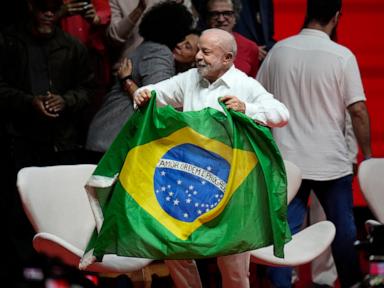
Nine days before Brazil's presidential election, President Luiz Inácio Lula da Silva signed an executive order that blew up a multi-billion-dollar industry overnight. He didn't tighten rules or raise taxes. He banned online fixed-odds betting across the entire country.
Most headlines framed Provisional Measure No. 1,394/2026 as a desperate campaign stunt. And look, the timing wasn't subtle. Lula was locked in a razor-thin race against Flávio Bolsonaro, and polling showed everyday Brazilians were fed up with gambling apps draining household paychecks. Calling betting "like a cancer" right before voters hit the polls was smart politics.
Except reducing this move to pure election theater misses the bigger story. Two months later—with Lula re-elected on October 25 and the ban extended for another 60 days—Brazil is living through a massive, real-time experiment in rolling back legalized online gambling. Nobody else has tried shutting down a regulated digital betting market of this scale after handing out licenses.
Why Lula Pulled the Plug in September 2026
Brazil only built its legal betting framework in 2023. Within three years, mobile sportsbooks and online casino games went from a gray-market novelty to a full-blown household crisis.
When Lula signed the ban on September 25, 2026, he pointed directly at what was happening inside ordinary homes. "The country brought the casino into people's homes," he said. "It is in the kitchen, it is in the living room."
The numbers backing up his frustration were brutal. Data cited by Brazil's Solicitor General's Office showed that betting drained over 62.5 billion reais—roughly $11 billion—from family budgets in 2025 alone. People weren't just throwing spare change at weekend soccer matches. Welfare recipients were betting federal aid money, forcing the Secretariat of Prizes and Bets to scramble with emergency restrictions before the outright ban even happened.
Unlike alcohol or cigarettes, mobile betting leaves zero physical trace. Take Leandro Valdivia, a 38-year-old from São Paulo whose story captured the quiet devastation hitting middle-class families. Before entering recovery, Valdivia lost $26,000, gave away his small media business, and watched his marriage collapse—all while staring silently at his phone. As he put it, gambling doesn't give you bad breath or make you slur your words, so nobody questions why you're glued to a screen all day.
Lula also shared that he had spoken with a young man who attempted suicide three times over gambling losses. Whether you view Lula as a populist opportunist or a leader reacting to a public health emergency, the social pressure had reached a boiling point. Even Flávio Bolsonaro, who called the timing hypocritical and election-driven, avoided attacking the core idea of reining in the apps.
How the Shutdown Actually Worked on the Ground
Governments love announcing crackdowns. Enforcing them on the internet is another story entirely.
Brazil didn't just ask operators to pack up nicely. The executive order set a strict, rapid timeline that forced banks, telecoms, and betting companies into an immediate wind-down.
- Immediate ad freeze: New advertising contracts became illegal the moment the measure was published on September 25. Companies had until October 5 to strip their logos off websites, social media, and broadcast sponsorships.
- Platform blackout: By October 6, all legal betting websites and mobile apps had to go offline. Within days of the order, federal authorities had already blocked over 500 rogue domains trying to stay active.
- Forced player refunds: Operators had 48 hours after shutting down to hand banks each user's remaining balance, taxpayer ID, and linked bank account. Banks were ordered to return those funds between October 9 and October 14, with state-owned bank Caixa Econômica Federal stepping in to handle leftover payouts.
- Payment rails cut off: The government banned domestic bank transfers to betting platforms, choking off Pix—Brazil's ubiquitous instant payment system—which had fueled impulsive 24/7 wagering.
That Pix cutoff is the detail most outside observers overlook. In markets where players rely on slow credit card settlements or wire transfers, blocking a site leaves plenty of workarounds. In Brazil, almost every betting deposit moved through instant central-bank-regulated Pix rails. Once the Central Bank and Treasury targeted payment processing, moving money onto betting apps got drastically harder overnight.
The $170 Million Licensing Mess and Industry Backlash
If you're an operator who played by the rules, this felt like daylight robbery.
Under the regulatory system launched after 2023, 85 companies paid 30 million reais each—about $5.7 million per license—for five-year operating rights. That's roughly 2.55 billion reais in upfront license fees collected by the state. When Lula signed the ban, the government made it clear those fees wouldn't be refunded.
The National Association of Games and Lotteries (ANJL) immediately sounded the alarm. By October 7, just a day after the platform blackout, ANJL reported that more than 3,500 industry employees had already lost their jobs. Legal teams for individual operators and trade groups began filing challenges in federal courts, arguing the executive branch can't sell five-year licenses and revoke them overnight without compensation.
Brazilian Soccer Took a Direct Hit
Nobody panicked louder than Brazil's top football clubs. Before September 25, 13 of the 20 clubs in Brazil's Série A first division wore an online betting company as their primary shirt sponsor. Stars like Neymar and Vinícius Júnior fronted massive ad campaigns.
Rio de Janeiro powerhouse Flamengo warned that tearing up sponsorship deals mid-season would cripple not just men's professional squads, but youth academies, women's teams, and Olympic sports programs. Their argument was simple—clubs built budgets around contracts the government itself had legalized.
Lula didn't flinch. He dismissed the clubs' warnings as "nonsense" and demanded an end to what he called the "shamelessness in soccer." On Brazilian social media, plenty of fans mocked the clubs too, pointing out that Brazilian football survived for a century without betting logos plastered across every jersey. Still, the financial hole left in club balance sheets is very real, and teams heading into the 2027 season are scrambling to replace tens of millions of dollars in lost sponsor revenue.
Does Banning Legal Apps Actually Stop Gambling?
Here's where things get messy, and where honest observers have to admit nobody has a clean answer.
Industry groups like ANJL, joined by eight other trade associations, warned before the ban took effect that shutting down licensed sites wouldn't cure addiction. Instead, they argued, it would push problem gamblers straight into unregulated offshore sites operated by organized crime.
They have a point. When you ban a digital product, demand doesn't evaporate. Offshore crypto casinos and unlicensed Telegram bookies don't check taxpayer IDs, don't enforce deposit limits, and certainly don't refund balances when things go south.
Yet the counterargument carries serious weight in Brazil's specific context. Before 2023, gambling existed in the shadows. Legalization didn't just regulate existing gamblers—it unleashed an advertising tsunami across television, stadium boards, TikTok, and Instagram. Suddenly, millions of people who never would have sought out an illegal bookie were spinning virtual slot machines between work shifts because their favorite soccer player told them to.
Removing legal marketing and blocking Pix transfers won't stop hardcore addicts determined to find an offshore mirror site. It does drastically reduce impulse betting among casual users and teenagers who only downloaded apps because they were everywhere. Both things can be true at once.
Where the Ban Stands Now After Lula's Re-Election
Lula won re-election in the October 25 runoff, guaranteeing that the presidential palace won't back down. Three days before the runoff, he doubled down publicly, saying betting wouldn't return and telling citizens who want to make money to go to work.
In Brazil, a Provisional Measure takes effect immediately, but it isn't permanent law. Congress has an initial 60-day window—automatically extendable by another 60 days—to vote on it. In November 2026, Congress extended the measure for that second 60-day period, pushing the final deadline for permanent conversion into law to early March 2027.
Right now, the ban sits trapped between three competing forces:
- Congressional gridlock and amendments: Lawmakers have filed nearly 100 amendments to the measure. A major faction, including Senator Hiran Gonçalves, wants a middle-ground compromise—keep fixed-odds betting alive for real sports events while permanently banning online slots and casino games. Other proposals focus on banning stadium naming rights and outlawing betting ads rather than killing the entire market. Because Congress hasn't even appointed a committee rapporteur yet and outgoing lawmakers have little appetite for a bruising fight before the new legislature takes office on February 1, 2027, the bill is stalled.
- The Federal Supreme Court (STF): Industry associations have petitioned Brazil's highest court to strike down the executive order as unconstitutional. Operators argue that banning a regulated economic activity by unilateral decree violates legal certainty and property rights, especially since the Constitution prevents executive orders from creating new criminal penalties.
- Irreversible market damage: Even if the Supreme Court overturns the ban or Congress lets it expire in March 2027, Brazil's betting sector won't bounce back overnight. All 85 licenses were revoked on October 25, staff have been laid off, sponsorship contracts were voided, and international operators are locked in bitter litigation over unreturned fees.
What You Should Watch If You Follow Global Gambling Policy
If you work in gaming, finance, or public policy—or if you're watching similar debates heat up in the United States and Europe—Brazil is now the test case you can't ignore.
Track three specific signals over the next few months. First, watch whether Brazil's Congress appoints a rapporteur for Provisional Measure 1,394/2026 before the February 2027 legislative turnover; without a committee report, the measure risks expiring by default in March unless lawmakers rush a floor vote. Second, monitor Central Bank payment data and illegal domain blocking reports from the Ministry of Finance to see if blocking Pix transfers actually keeps money out of offshore casinos or simply pushes volume into crypto. Third, pay close attention to how the Federal Supreme Court rules on the unrefunded 30-million-real license fees. If the court forces Brasília to compensate operators, any other government thinking about banning an already-licensed betting market will think twice before pulling the trigger.