The air in Tehran during the transition from winter to spring has a specific, biting clarity. It carries the scent of exhaust fumes, blooming jasmine from the northern hills, and the quiet, vibrating tension of a city that has learned to live with its eyes perpetually scanning the horizon. On this particular night, that tension didn't just vibrate. It snapped.
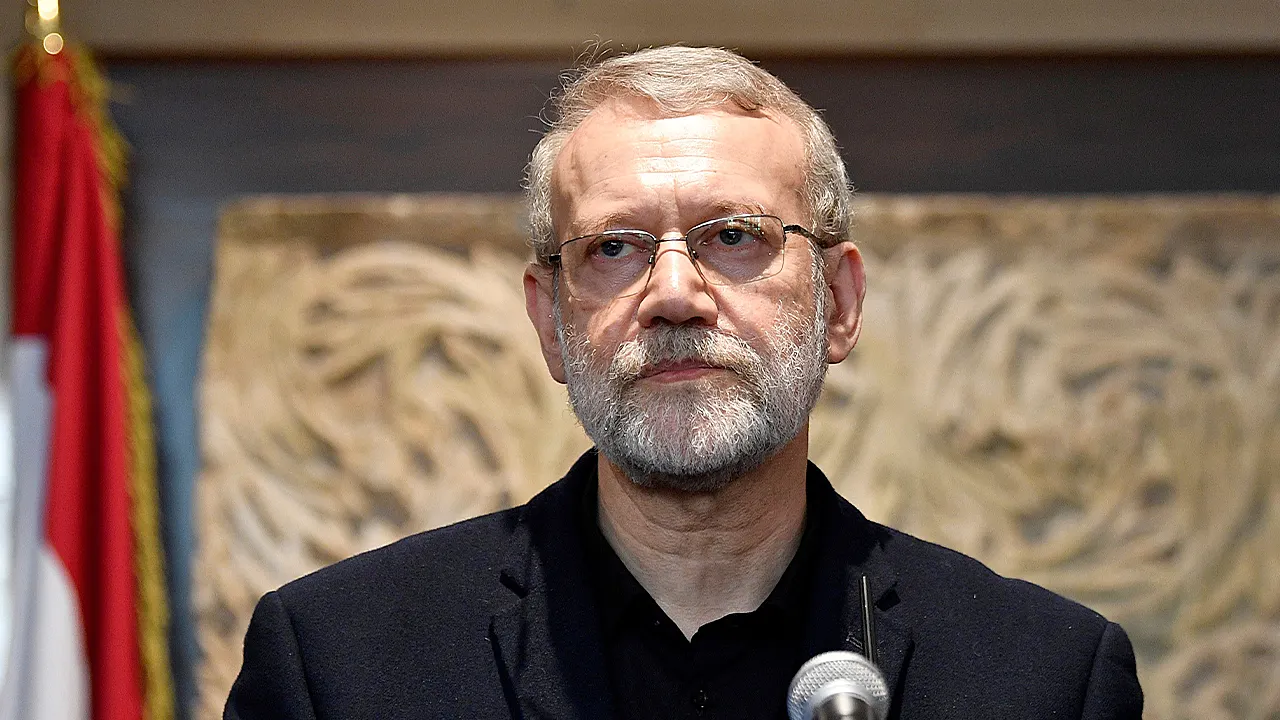
In the high-walled compounds where the architecture of regional power is designed, the silence is usually a sign of control. But when the news filtered through the encrypted channels of the Iranian state apparatus, the silence became something else. It became a vacuum. Ali Larijani, a man whose name was synonymous with the very bedrock of the Islamic Republic’s security internal and external strategy, was gone.
Israel’s announcement was not a whisper; it was a thunderclap. They claimed the life of the security chief, a man who functioned as the central nervous system of Iran's regional ambitions. Alongside him, the commander of the Basij—the paramilitary force that serves as the regime's iron fist in the streets—had also been neutralized. This was not a tactical skirmish. This was a decapitation of the invisible ink that writes Iran’s history.
The Ghost in the Machine
To understand why this matters, you have to look past the military fatigues and the official portraits. You have to look at the shadow.
Imagine a master weaver standing before an ancient loom. Every thread represents a proxy militia in Lebanon, a shipment of precision-guided missiles in Syria, or a digital offensive launched against a rival’s power grid. Ali Larijani was that weaver. He didn't just hold a title; he held the institutional memory of forty years of shadow warfare.
When a figure like Larijani is removed from the board, the loom doesn't just stop. It tangles. The threads he was holding—delicate, dangerous, and highly personal—drop to the floor. The replacement might know the mechanics of the loom, but they don't know the tension of the individual strings.
The precision of the strike serves as a chilling reminder of the transparency of modern borders. For the men sitting in the inner sanctum of Tehran’s security council, the realization is visceral: if the most protected men in the country are reachable, then no one is truly alone. The walls of the bunker feel thinner. The encryption on the phone feels like a toy.
The Fist and the Fear
If Larijani was the mind, the Basij commander was the muscle. The Basij is not just a military unit. It is a presence that lives on every street corner and in every university hallway. It is the neighbor who watches what you wear and the stranger who decides if your protest ends in a chant or a hospital bed.
Killing the head of the Basij is a message sent directly to the foot soldiers. It is an injection of doubt into a system built entirely on the projection of invincibility. When the person responsible for maintaining domestic order is himself unable to maintain his own safety, the psychological contract of the state begins to fray.
Consider a hypothetical young officer in the Basij, stationed at a checkpoint in Isfahan. For years, he has believed he is part of an untouchable, divinely protected vanguard. Today, he looks at the sky differently. He wonders if the technology watching him from above is more powerful than the ideology he carries in his heart.
This isn't just about two men being removed from the census. It is about the collapse of a specific kind of certainty.
The Invisible Stakes of Precision
We live in an era where war is increasingly fought with the surgical coldness of a scalpel rather than the blunt force of a sledgehammer. The technology required to identify, track, and eliminate a high-value target in the heart of a hostile capital is staggering. It involves a fusion of human intelligence—the "007" style informants whispering in shadows—and signals intelligence that can pick a single voice out of a city of millions.
This level of capability creates a permanent state of paranoia. In the corridors of power, trust becomes the most expensive commodity in the world. Who talked? Was it a signal from a compromised laptop? Was it a dry-cleaner with a grudge?
The real casualty in these strikes is often the ability of a government to function. When leaders are terrified to meet in person, and even more terrified to speak over the radio, the speed of decision-making slows to a crawl. In the high-stakes game of Middle Eastern geopolitics, a delay of five minutes can mean the difference between a successful maneuver and a catastrophic failure.
The Echoes in the Street
Away from the situation rooms, the ordinary citizen in Tehran or Tel Aviv feels the weight of this news in their chest. For the Iranian shopkeeper, this is a harbinger of more sanctions, more isolation, and the terrifying possibility of a broader conflagration. They see the headlines and wonder if the bread will be more expensive tomorrow, or if the lights will stay on.
For the Israeli family in a border town, there is a grim satisfaction mixed with a deep, gnawing anxiety. They know that every action has a reaction. They know that a wounded regime often strikes back with desperate, unpredictable ferocity. The elimination of a general is a victory in the morning and a reason to check the batteries in the flashlight by evening.
The world watches these events as if they are a chess match played on a screen. But for those on the ground, the board is their home. The pieces are made of flesh and blood.
The tragedy of the shadow war is its circularity. One side achieves a brilliant tactical success, only to find that they have cleared the path for a successor who may be younger, more radical, and even more determined to prove their worth.
The security chief is dead. The commander is gone. But the ghosts they created and the systems they built remain, fueled now by a potent mixture of grief and a frantic need for revenge.
As the sun rises over the Alborz mountains, the city of Tehran wakes up to a different reality. The seats at the table are empty. The orders are not coming. For a brief, terrifying moment, the machine of state is holding its breath, waiting to see who will be the first to exhale.
The most dangerous thing in the world is not a man with a plan. It is a powerful system that has suddenly lost its way in the dark.