The radiator in Elena’s Washington Heights apartment does not hum. It screams. Every winter, it bangs against the floorboards like an angry ghost, a metallic clanking that has served as the soundtrack to her life for forty-two years. She knows exactly how many layers of chipped off-white paint coat its iron ribs. She knows the precise angle you have to wedge a folded piece of cardboard under its left foot to keep it from leaking rusty water onto the linoleum.
For decades, that radiator was a minor nuisance compared to the true terror of her apartment: the mailbox downstairs.
Every June, the mailbox transformed into a ticking clock. Inside its cramped, dented metal slot sat the fate of her budget. A single sheet of paper from the Rent Guidelines Board would dictate whether she could afford to keep buying the fresh produce from the corner bodega or if she would have to rely entirely on boxes of dried pasta. A three percent increase meant cutting back on her blood pressure medication. A five percent increase meant wondering if this was the year she would finally be pushed out to an unfamiliar corner of Pennsylvania or upstate New York, stripped of the neighborhood that knew her name.
Then came the freeze.
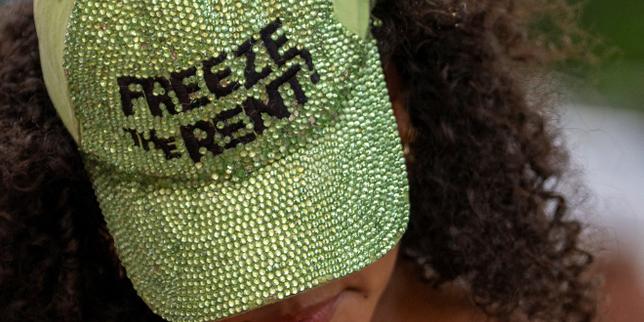
It did not arrive with a theatrical flourish or a sudden explosion of bureaucratic generosity. It arrived because a political earthquake, years in the making, finally rattled the upper floors of City Hall. When Mayor Zohran Mamdani signed the executive order freezing rents for roughly one million rent-stabilized apartments across the five boroughs, the immediate reaction in neighborhoods like Washington Heights, Astoria, and Flatbush was not a collective cheer. It was a collective exhale.
Silence.
To understand what it means to freeze the rent for one million homes, you have to look past the dense ledgers of real estate lobbyists and the triumphant press releases of progressive organizers. You have to look at the anatomy of anxiety.
The Mathematics of Survival
Housing in New York City has long operated under a cruel sort of physics. For the better part of a generation, the prevailing political wisdom dictated that rents must always climb. Property taxes rise, fuel costs fluctuate, water bills tick upward, and therefore, the human beings living inside these brick boxes must pay more simply to exist in the space they call home.
Consider the mechanics of a standard rent hike. To a policy analyst sitting in a climate-controlled office in Lower Manhattan, a three-percent increase on a $1,600 apartment looks like a negligible adjustment. It is forty-eight dollars. The price of a dinner out. A couple of trips to the grocery store.
But look closer at the ledger of a family living on the edge.
Forty-eight dollars a month is a pair of sturdy winter boots for a growing child. It is the difference between a reliable internet connection for high school homework and a teenager huddling outside a closed library to catch a faint Wi-Fi signal. When you compound those forty-eight dollars year after year, the city becomes a slow-motion eviction machine. It chips away at families until there is nothing left to chip, and they vanish into the shelter system or behind the statistics of outward migration.
The real estate industry argued that a total freeze would spell disaster. They painted a bleak picture of crumbling buildings, deferred maintenance, and bankrupt mom-and-pop landlords who could no longer afford to fix the roofs. They warned that the city’s housing stock would deteriorate into a pre-1980s wasteland of broken boilers and abandoned properties.
That argument assumes a balance that hasn't existed for decades. The reality on the ground told a vastly different story. For years, tenants in rent-stabilized units watched their rents climb while the ceilings cracked, the mold bloomed behind the bathroom tiles, and the super took three weeks to answer a text message about a broken stove. The connection between higher rent and better living conditions had already severed. The money was going somewhere, but it wasn't going back into the bricks and mortar.
The Shift in the Wind
Political campaigns in New York are usually won in the living rooms of wealthy donors or through massive television ad buys funded by special interest groups. The ascent of Zohran Mamdani bypassed that traditional architecture entirely. His trajectory was fueled by a distinct kind of anger—the quiet, burning resentment of people who felt like guests in their own hometown.
For years, the political establishment treated rent stabilization as a safety net that needed to be managed, adjusted, and occasionally trimmed. It was a compromise between human survival and corporate profit. The conventional wisdom held that landlords required constant incentives to keep their buildings habitable, and those incentives always came out of the pockets of the working class.
Mamdani’s administration flipped the script. They treated housing not as an investment vehicle that happened to shelter humans, but as a public utility essential to the survival of the city’s soul.
When the freeze was officially announced, the corporate boardrooms reacted with predictable fury. Lawsuits were threatened. Press conferences were held on the steps of City Hall, featuring small-scale property owners who claimed they would be ruined by the decision. The narrative of the struggling landlord was pushed to the forefront of every local news broadcast.
But the administration held a vital piece of data that the opposition could not erase: the sheer volume of human suffering under the old system. Eviction courts were perpetually backlogged. The city was spending billions of dollars annually to manage a homelessness crisis that was fundamentally caused by a lack of affordable housing. Preventing a family from being displaced is infinitely cheaper, more humane, and more stable for the city's economy than trying to piece their lives back together after they have been thrown onto the street.
What Happens When the Pressure Drops
The true impact of this policy cannot be measured solely in dollars saved. It must be measured in psychological relief.
Hypothetically, imagine a bus driver named Marcus who lives in the Bronx. Every month, Marcus plays a high-stakes game of financial Tetris. He pays the rent first, always. Then he pays the electricity. Then he allocates whatever is left to food, transit, and his daughter’s school supplies. If his transmission blows out or his daughter needs a root canal, the entire puzzle collapses.
Under the old regime of predictable, annual rent increases, Marcus lived in a state of perpetual anticipation. He was constantly bracing for the blow that would unbalance his life. That kind of chronic stress does not stay confined to a spreadsheet. It lives in the lower back. It colors the way a parent speaks to their child at the end of a exhausting shift. It turns the home from a sanctuary into a temporary camp where the lease is always running out.
The rent freeze changed the atmosphere inside those rooms. It didn't make Marcus rich. It didn't fix his daughter's school district or repair his bus route. But it gave him something he hadn't possessed since he signed his first lease: predictability.
Suddenly, the horizon extended beyond the next twelve months. For the first time in a generation, a million New Yorkers could look at their apartments and see a future that wasn't defined by an inevitable retreat to the outer edges of the map. They could plant roots. They could buy furniture they intended to keep. They could become a permanent part of the fabric of their neighborhoods, rather than transient residents waiting for the market to price them out.
The Invisible Stakes of a Living City
Critics of the freeze often look at New York as an abstract collection of economic indicators. They track the gross metropolitan product, the volume of luxury condo sales in Hudson Yards, and the tax revenue generated by Wall Street bonuses. From that altitude, a rent freeze looks like an artificial distortion of a free market, a clumsy intervention that stifles growth.
But a city is not a corporation. It cannot survive if the people who clean the offices, cook the food, drive the subways, and teach the children can no longer afford to live within its borders.
When a neighborhood loses its long-term residents, it loses something irreplaceable. It loses the institutional memory of the block. It loses the neighbor who watches the kids after school, the store owner who extends credit when times are tough, and the community leaders who know which city agencies to harass when the streetlights go dark. The hyper-gentrification of New York has spent twenty years burning through that social capital, replacing vibrant, interconnected communities with sterile corridors of bank branches and high-end coffee shops that sit empty for half the year.
The rent freeze is an emergency brake applied to that destruction. It is a declaration that the culture, history, and stability of working-class New York are worth more than the projected profit margins of institutional real estate investors.
The battle is far from over. The real estate lobby continues to challenge the decision in every available legal venue, arguing that the freeze constitutes an unconstitutional taking of property. The political opposition is already mobilizing for the next election cycle, aiming to frame the policy as an ideological experiment that will bankrupt the city’s middle-class property owners.
But back in Washington Heights, Elena does not spend her evenings reading legal briefs or tracking municipal bond ratings.
Yesterday, she walked past the mailboxes in her lobby without stopping to peer through the small plastic window to see if a notice from the landlord had arrived. She didn't feel that familiar, sharp tightening in her chest. She climbed the stairs to her third-floor apartment, unlocked her door, and sat down at her kitchen table. The radiator gave a loud, defiant clang against the floorboards. She smiled, reached for her coffee, and listened to the sound of her neighborhood continuing to exist exactly where it belonged.