The seams on the mass-produced blouse always gave way first. Three washes, perhaps four if the detergent was gentle, and the polyester threads would begin to fray like loose nerves. It was not merely the poor construction that rankled. It was the knowledge that millions of identical garments were hanging in closets across the globe, destined for landfills, churned out by a machine that valued speed over substance.
Fast fashion had promised an endless wardrobe at zero moral cost, but the bill was arriving. And young women in China were no longer paying it.
Instead, they were threading needles.
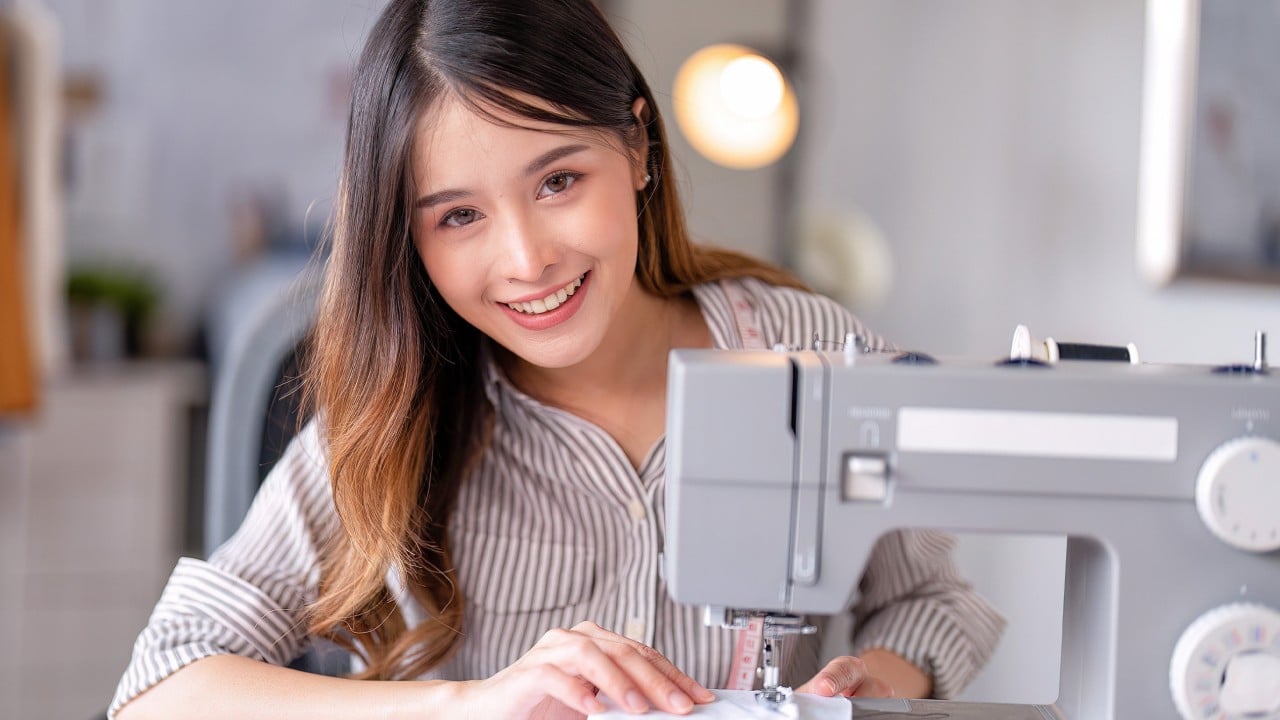
Consider a hypothetical apartment in downtown Chengdu, though the scene repeats nightly from Hangzhou to Guangzhou. The floor is scattered with remnants of heavy cotton, raw linen, and discarded paper patterns. A twenty-four-year-old graphic designer named Lin sits hunched over a secondhand sewing machine, its rhythmic clack-clack-clack competing with the hum of the city outside. On her phone, a tutorial plays at double speed. She is not trying to launch a boutique or monetize a side hustle. She is simply making a pair of trousers that will fit her shoulders, her waist, and her conscience.
This is not a quaint hobbyist movement. It is a quiet, domestic rebellion.
To understand why a generation raised on e-commerce convenience is turning back to the hand-cranked rhythm of tailoring, you have to look at what fast fashion became. It morphed into an exhausting conveyor belt of micro-trends, where styles shift weekly and quality evaporates. Clothes became disposable plastic wrappers. They pills, they shrink, they smell of industrial dyes that refuse to wash out. Worse, they treat the wearer as an interchangeable demographic rather than an individual body.
Frustration bred invention. When the market offers only synthetic homogeneity, creating your own becomes the ultimate assertion of agency.
Social media platforms like Xiaohongshu became the digital town squares for this counter-culture. Millions of users began sharing not hauls of cheap purchases, but the labor of creation. They posted photos of crooked hems, botched darts, and eventual triumphs—garments crafted from scratch or thrifted fabrics redesigned into something entirely unique. Hashtags celebrating handmade clothing accumulated billions of views.
The appeal goes deeper than economics, though the math certainly helps. While buying raw fabric and notions can sometimes cost as much as a clearance-rack shirt, the garment that emerges possesses durability that corporate boardrooms abandoned decades ago. When you spend six hours wrestling with a stubborn collar, you do not throw the shirt away because a button pops off. You fix it.
Repair is an act of defiance against a throwaway economy.
Anthropologists call this behavioral shift a reclaiming of time. In an era where white-collar work is increasingly abstract, digital, and detached from physical outputs, there is a profound psychological grounding in touching fabric. The weight of heavy wool, the snap of a thread pulled taut, the exactitude of a French seam—these are tactile realities. They anchor the mind.
Lin remembers the first skirt she made entirely by hand. It took an entire weekend. The waist was slightly uneven, and she had pricked her left index finger three times with a stray pin. Yet when she wore it out to dinner, the compliments felt different. They were not about looking trendy. They were about looking real.
Critics might dismiss this as a niche aesthetic movement, a fleeting antidote to digital fatigue. But history suggests otherwise. Whenever industrial systems overreach, homogenize, and degrade the everyday experience, a vernacular counter-revolution follows. People remember how to bake their own bread, grow their own herbs, and stitch their own clothes.
The machine age promised liberation through mass production. It delivered mountains of discarded polyester and closets full of clothes that nobody loves.
Now, the needle moves back and forth, slow and deliberate, stitching a new kind of independence into the dark.