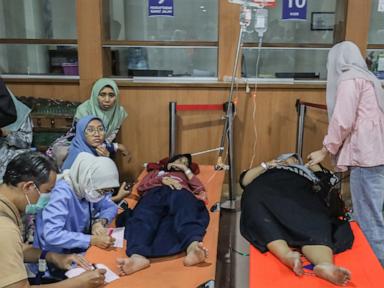
The smell of chlorine never really leaves your skin. It settles into the pores of your hands, clings to the fibers of your collar, and stays long after you have stripped off your PPE and walked away from the red zone. It smells like safety, but it tastes like fear.
Most people only see the numbers on a screen. A ticker tape of rising totals, a map colored in terrifying shades of crimson, a distant outbreak contained within neat statistical boxes. They do not see the grease on the zipper of a biohazard suit. They do not hear the sound of their own breath echoing inside a plastic hood, wet and heavy, ticking down the minutes until the oxygen runs thin or the heat forces them to break the seal.
And they certainly do not see the empty bank accounts.
Consider what happens next: a disease that liquefies organs begins to spread through a densely packed village where running water is a luxury and a handshake is a birthright. The international community panics. Flights are grounded. Aid packages are promised on television by men in suits standing behind polished mahogany desks thousands of miles away. Billions of dollars are allocated.
Yet on the ground, in the muddy alleyways where the fever actually burns, the person holding the bleach bucket has not been paid in four months.
This is the hidden architecture of epidemic response. We romanticize the medical worker as a saint in white rubber, impervious to earthly concerns, driven solely by altruism. It is a comforting lie. Saints do not have rent to pay. Saints do not have children crying for rice. Frontline workers are human beings caught in the grinding gears of a bureaucratic machine that moves at the speed of a glacier while the virus moves like wildfire.
To understand this, you have to look past the global health reports and stand where they stand.
(Note: The following character is a composite based on documented testimonies from West African responders during major viral outbreaks, designed to illustrate the lived reality of unpaid hazard work.)
Imagine Aminata. Before the outbreak reached her district, she sold dried fish at the local market. She knew the weight of a basket, the chatter of the morning traders, the rhythm of a normal life. When the first cases appeared, the local clinic put out a call for volunteers. Soon, volunteering turned into twenty-hour workdays. Soon, the market was closed, and her only income was a stipend promised by regional health authorities—a stipend that existed proudly on paper and vanished completely in practice.
Every morning, Aminata wakes up before dawn. She walks past shuttered stalls. She puts on layers of plastic that turn her own sweat into a personal rainstorm. She enters isolation wards where the air is thick with the groans of the dying and the quiet, terrible acceptance of families waiting outside. She holds trembling hands. She cleans vomit and blood. She sanitizes cots. She risks her life, her family's social standing, and her own sanity.
Then she goes home to a dark house because the utility company cut the power.
Why do they stay? That is the question outsiders always ask with a tilt of the head, as if observing an exotic species. Why stay when your pockets are empty, when your community ostracizes you out of fear that you carry the plague on your clothes, when the government treats your labor as infinite and free?
They stay because the alternative is unthinkable. If Aminata walks away, who washes the sheets? Who tells the frightened mother that her child is going to make it, even when Aminata is privately calculating the odds and coming up empty? They stay out of a fierce, stubborn love for their neighbors. They are the human tripwire. They are the only thing standing between an isolated cluster of infections and a global catastrophe.
And the system knows it. It relies on it. There is a dark, unspoken exploitation embedded in global health emergency responses. Authorities budget for equipment, for vaccines, for airfreight, and for public relations campaigns. But human payroll administration? That always seems to get lost in translation between the capital city and the rural districts. Funds get bottlenecked in administrative mazes, swallowed by middlemen, or simply delayed by institutional indifference.
The workers strike, of course. How can they not? They march through the streets in their faded scrubs, holding cardboard signs with trembling hands, demanding the wages they were promised.
And how does the world react? Often with indignation. How dare these heroes strike while people are dying?
Read that sentence again. Let the hypocrisy sink in. We demand martyrdom while denying bread. We expect individuals who cannot afford a sack of flour to shoulder the burden of global biosecurity. It is a grotesque inversion of justice. When a nurse who has not been paid since the rainy season lays down her bucket to demand food for her children, she is branded as reckless. But the institutions that failed to disperse funds? They issue press releases.
History tells us this story on a loop. Every time an ancient pathogen rattles its cage and spills over into human populations, we scramble. We throw money at the fire after the house has already caught. We praise the frontline fighters with poetic adjectives while starving them of nouns and verbs—specifically, a steady paycheck.
We got this backward from the very beginning. We treat human capital as an infinite, self-sustaining resource, like sunlight or rain. But human capital has limits. It breaks. It starves. It grows bitter.
When you leave people under attack and unpaid, you are not just committing an administrative error. You are fracturing the very immune system of civilization. A nurse worrying about how to afford dinner tonight cannot give one hundred percent of her focus to managing a biosafety protocol with zero margin for error. One slip of a glove, one moment of distracted exhaustion, and the virus wins.
The stakes are invisible until they are catastrophic. Every time an outbreak is stopped quietly in a remote village, the world sleeps soundly, completely unaware of how close the cliff's edge really was. We owe those quiet victories entirely to people like Aminata—people who work through hunger, through fear, and through institutional betrayal.
The chlorine smell eventually fades from your skin, but the memory of what it costs to keep the world safe does not. The next outbreak is not a matter of if, but when. And when it arrives, the real question will not be whether our laboratories are advanced enough, or whether our vaccines are strong enough.
The question will be whether we finally decided to pay the people holding the line.
The silence in the ward is heavy, broken only by the steady, mechanical hiss of an oxygen tank and the ragged breathing of a patient fighting for his next inhalation. Aminata adjusts her face shield, wiping away the fog with a gloved finger that smells faintly of bleach and exhaustion. Outside, the sun is beginning to set, casting long, bruised shadows across the courtyard where families wait in agonizing suspense. Her stomach twists with hunger, and her pocket remains as empty as it was yesterday. Yet she steps forward into the red zone once more, because the dark is waiting, and she is the only wall left.