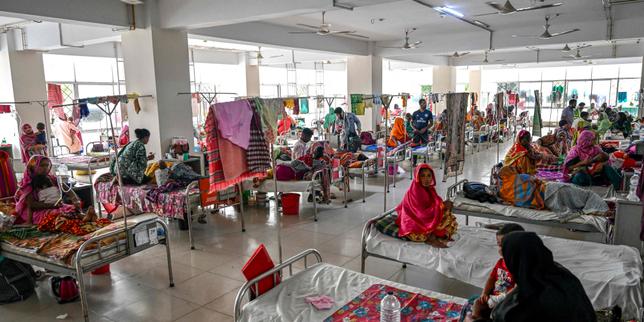
Children are dying in Bangladesh. Since March, over a hundred families have buried their children because of a disease we thought was under control. It is measles. It is preventable. It is a tragedy that shouldn't happen in 2026, yet here we are. This isn't just a minor flare-up or a localized issue. It’s a loud, painful signal that the public health safety net has huge, gaping holes.
We often think of measles as a childhood rite of passage from the past. It isn't. It is one of the most contagious viruses on the planet. When vaccination rates drop even slightly, the virus finds the unprotected with terrifying speed. In Bangladesh, the current crisis is hitting hardest in areas where the immunization coverage has slipped below the critical threshold needed for herd immunity. Meanwhile, you can find other events here: The Stethoscope and the Shield.
The math behind the measles outbreak in Bangladesh
To stop measles, you need roughly 95% of the population to be vaccinated. It's a high bar. Anything less and you're basically leaving the door unlocked for an intruder. In recent months, several districts in Bangladesh have seen these numbers dip. The result? Since March, the death toll has climbed past 100 children.
The virus spreads through respiratory droplets. You breathe, you cough, you talk—the virus hangs in the air for up to two hours. If you aren't immune, and you walk into that space, you're almost guaranteed to catch it. For a malnourished child in a crowded urban slum or a remote village, measles isn't just a rash and a fever. It is a death sentence through pneumonia, encephalitis, or severe dehydration. To understand the full picture, check out the detailed article by Mayo Clinic.
Why the vaccination gap is widening
You might wonder how a country that was once a poster child for successful immunization programs ended up here. It’s complicated. It isn't just one thing. It's a mix of logistics, misinformation, and the long shadow of global health disruptions.
Logistics in rural Bangladesh are a nightmare. Transporting vaccines requires a "cold chain"—a constant, refrigerated path from the lab to the child's arm. If a fridge breaks or a monsoon washes out a road, the vaccines spoil or never arrive. We've seen reports from the ground indicating that reaching "zero-dose" children—those who haven't received a single shot—is becoming harder as resources are stretched thin.
Then there’s the trust factor. Even in remote areas, rumors spread faster than the virus. I've seen how a single viral video or a misinterpreted religious stance can make a mother hesitate. That hesitation is all the virus needs. When you combine that with the fact that many families live in extreme poverty, taking a day off work to travel to a clinic is a massive financial hit. If the clinic is out of stock when they get there, they probably won't come back.
The silent impact of malnutrition
Measles and malnutrition are a deadly duo. It’s a vicious cycle. Measles causes diarrhea and vomiting, which strips the body of nutrients. A child who is already malnourished has a weakened immune system, making them more likely to suffer the worst complications of the disease.
In the camps and crowded settlements where this outbreak is simmering, Vitamin A deficiency is a huge problem. The World Health Organization (WHO) has long recommended Vitamin A supplements during measles treatment because it slashes the mortality rate. But if the healthcare system is overwhelmed by the sheer number of cases, these basic life-saving measures fall through the cracks.
What the authorities are missing
The government response has been to launch "mop-up" campaigns. These are emergency vaccination drives meant to catch everyone who was missed. They are necessary, but they're reactive. We’re playing whack-a-mole with a virus that’s already three steps ahead.
The real failure is in the routine systems. You can't just wait for an outbreak to start caring about immunization. You have to build a system that is boringly consistent. That means paying health workers a living wage, ensuring they have functional motorbikes to reach remote villages, and keeping the shelves stocked 365 days a year.
Right now, the focus is on the death count. But for every child who dies, dozens more are left with permanent disabilities. Measles can cause blindness. It can cause permanent brain damage. It can even "erase" the immune system’s memory, making children vulnerable to other diseases they had already fought off. This is an invisible tax on the future of the country.
Breaking the cycle of infection
If we want to stop the burials, we have to change the strategy. It’s not just about more needles; it’s about better communication and smarter logistics.
- Mobile Clinics: Stop expecting the poorest people to come to the city. We need refrigerated vans that go into the heart of the slums and the furthest corners of the Chittagong Hill Tracts.
- Community Leaders: We need to stop talking at people and start talking with them. Imams, village elders, and local teachers are the ones who can break through vaccine hesitancy. If they say the shot is safe, people listen.
- Data Integration: We need real-time tracking. If a child misses their first dose at nine months, a health worker should be at their door by month ten.
The cost of doing nothing
This isn't just a Bangladesh problem. In an interconnected world, an outbreak in one place is a threat everywhere. But more importantly, it’s a moral failure. We have a vaccine that costs less than a cup of coffee. It has been around for decades. It works.
The fact that over 100 children have died since March is a choice we made by not prioritizing their health. It’s time to stop looking at these children as statistics in a report and start seeing them as a preventable catastrophe.
Check your local community’s vaccination rates. Support organizations like Gavi or Médecins Sans Frontières (MSF) that are on the front lines in Bangladesh. Demand that global health funding remains a priority. The virus doesn't care about borders or budgets, but we should.