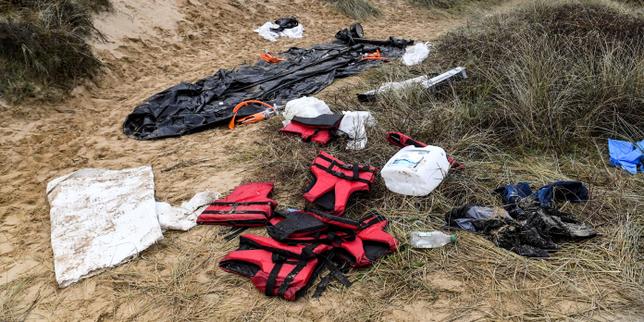
Thirteen individuals received prison sentences stretching up to ten years in a Paris courtroom following the catastrophic November 2021 English Channel disaster that claimed thirty-one lives. This landmark verdict marked the culmination of a grueling judicial reckoning over the single deadliest maritime incident involving migrants attempting to cross from northern France to British shores. Yet behind the prison doors and the legal pronouncements lies a far darker structural reality. The courtroom proceedings exposed an industrial-scale enterprise built on human desperation, operational negligence, and a continuous supply of vulnerable customers willing to gamble everything on unseaworthy vessels.
The Economics of Extraction
The financial architecture underpinning these clandestine operations operates with cold, corporate precision. Criminal syndicates treat human cargo as a high-margin commodity with negligible overhead costs. Investigators uncovered networks where desperate families in regions torn apart by conflict funneled thousands of dollars into underground banking channels to finance a single seat on a flimsy rubber dinghy. The mathematics of the trade are brutally simple. A generic inflatable craft purchased cheaply in bulk, paired with a low-grade outboard motor, can generate hundreds of thousands of dollars in illicit revenue across a single night of multiple launches.
Risk is externalized entirely onto the passengers. The organizers remain safely ashore, directing operations via encrypted messaging applications while young recruits or coerced individuals handle the physical launch from dark, muddy beaches. When law enforcement agencies announce major asset seizures or high-profile convictions, the leadership structures of these smuggling rings often remain intact, immediately adapting their supply chains and shifting their staging grounds further along the coastline. The kingpins rarely touch the water. They manage supply inventories of life jackets, engines, and hulls from urban safehouses miles away from the freezing surf.
For the migrants themselves, the financial investment represents years of accumulated savings or crushing familial debt. They arrive in northern France having survived grueling overland journeys, only to find themselves at the mercy of middlemen who view them as disposable units of transaction. The transaction is final before the boat ever pushes off the sand. Once the cash changes hands through hawala networks or digital intermediaries, the smugglers bear no financial liability for failure. If a boat is intercepted or deflates before reaching international waters, the loss is absorbed entirely by the migrants, who must then find a way to pay for a second or third attempt.
Anatomy of an Avoidable Disaster
The specifics of the November 24 tragedy reveal the systemic flaws inherent in every single crossing attempt. Survivors and investigators reconstructed how fifty-three people were initially crowded onto an inflatable boat that was fundamentally unsuited for open-sea navigation. The vessel lacked rigid flooring, proper buoyancy chambers, and certified life jackets. Instead, cheap foam vests bought in bulk were distributed to passengers who had no prior experience on financial or maritime risk management. When the boat cleared the surf and hit the rough open currents of the Channel, the structural strain proved catastrophic.
Water began seeping into the sagging hull within hours. The outboard motor failed, leaving the overloaded craft drifting helplessly at the mercy of unpredictable tides and commercial shipping lanes. As freezing water pooled inside the floorboards, panic consumed the passengers. Multiple individuals attempted to contact emergency services on both sides of the maritime border, placing frantic calls to French and British rescue coordination centers. Those desperate pleas collided with institutional hesitation, bureaucratic buck-passing, and a profound failure of communication between agencies operating under separate national jurisdictions.
Hours ticked away in darkness. Cargo ships passed by without spotting the low-profile rubber craft, and the rescue services failed to mount a timely interception. By the time assistance finally materialized, it was too late for thirty-one souls, predominantly Iraqi Kurds, who perished in the icy water. That human cost triggered not only the recent criminal trials of the logistics handlers but also a secondary, highly contentious judicial inquiry focusing on the actions and inactions of military personnel and coastguard operators.
The Institutional Vacuum at Sea
The investigation into the rescue response opened a deep fracture within public trust. Survivors and advocacy groups argued that institutional apathy played a direct role in maximizing the death toll. Coastguard officials testified about conflicting protocols, missing radar tracks, and confusion over maritime zones. This ongoing probe highlights a grim institutional truth. The tragedy was not merely the result of criminal greed on the beaches; it was compounded by a safety apparatus that struggled to recognize or respond to the sheer volume of maritime distress unfolding daily along one of the busiest shipping channels on earth.
Maritime rescue coordination centers face an impossible operational burden. Thousands of small boats push off from desolate stretches of coastline under cover of night. Authorities are forced to triage distress calls in real time, often prioritizing vessels taking on water while others drift without power in heavy shipping traffic. The absence of a unified, cross-border command structure between France and the United Kingdom creates dangerous gaps in accountability. When a boat straddles the median line between French territorial waters and British waters, hesitation over jurisdiction can cost precious minutes.
This bureaucratic friction is well understood by the smuggling networks. They factor response times and rescue gaps into their operational planning. Boats are frequently launched with just enough fuel to drift into international shipping lanes or British waters, compelling rescue authorities to intervene. The safety net provided by state rescue services is effectively weaponized by criminal syndicates as an informal component of their transport model, assuring clients that someone will eventually pick them up even if the boat fails.
The Limits of Judicial Retribution
Prison sentences reaching ten years deliver a stark symbolic message, but they fail to alter the underlying market dynamics. Demand remains entirely unbroken. Thousands of individuals continue to arrive at the northern French littoral, fleeing political instability, economic collapse, and systemic violence across multiple continents. For these people, the risk of drowning in the English Channel represents a quantified gamble they are prepared to take against the certainty of the misery they left behind. Smugglers exploit this exact calculation, branding their dangerous crossings as the only viable exit route from protracted displacement.
The courtroom drama in Paris provided a rare window into the mechanics of the underground economy, yet prosecutors acknowledged that the defendants in the dock represented only the middle tier of a sprawling transnational network. The masterminds directing the procurement of engines and boats often operate from outside French jurisdiction, utilizing encrypted communications and nominee accounts to shield their identities. Extradition is complex, and international police cooperation moves at a fraction of the speed required to disrupt agile criminal enterprises.
Without dismantling the financial pipelines that feed these syndicates, legal penalties function as a revolving door. For every convicted smuggler removed from the French coastline, another recruit steps forward, enticed by the extraordinary profit margins. The economic incentive completely overshadows the deterrent effect of prison sentences, particularly in regions where legal employment opportunities are scarce and underground economies offer immediate wealth.
The Unbroken Line of Supply
Border enforcement strategies implemented over the past decade have consistently chased symptoms rather than causes. Increased police presence on French beaches has not stopped departures; it has merely driven smugglers toward riskier tactics, faster launches under hostile weather conditions, and even more overcrowded vessels. When one smuggling cell is dismantled by law enforcement, another immediately steps into the vacuum, drawn by the staggering profit margins and the absence of any structural alternative for legal migration channels.
The coastline remains a militarized zone of confrontation. Searchlights sweep the dunes at night, patrol vehicles churn up the sand, and reconnaissance aircraft monitor the gray waters. Yet just out of sight, in quiet industrial estates and rural barns across northern France, the next shipment of inflatable hulls and outboard motors is quietly assembled. The machinery of illegal transport adapts with chilling efficiency to every new security measure introduced by the state.
The courtroom in Paris closed its doors on this chapter with severe penalties for the thirteen defendants found guilty of organized smuggling leading to death. Yet the grey waters of the Channel continue to churn under heavy skies. Patrol boats sweep the horizon, advocacy groups sound constant alarms, and underground networks calculate their next profit margin in hidden warehouses across Europe. The verdict offers a measure of legal retribution, but it leaves the fundamental crisis entirely unaddressed, suspended between a closed courtroom and an open, unforgiving sea.