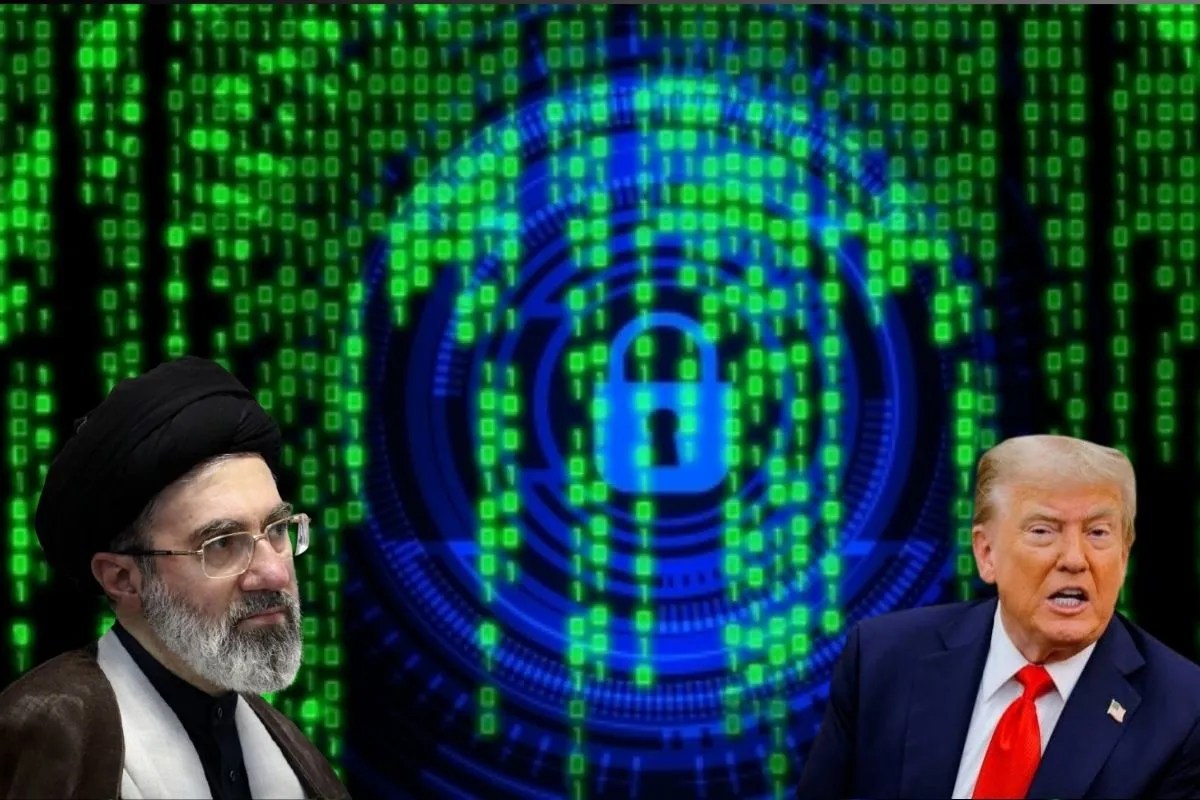
Tehran faces an unprecedented wave of digital incursions, prompting authorities to maintain round-the-clock surveillance to counter escalating cyber threats against critical national infrastructure. Amid ongoing regional conflicts, the Iranian government has openly acknowledged that its networks face continuous hostile probing, forcing a structural shift in how military and civilian authorities defend their digital borders.
For years, analysts viewed state-sponsored cyber warfare as a secondary tactic used primarily for espionage or sporadic disruption. That framework is obsolete. Modern cyber defense in contested regions operates under the assumption of permanent siege. When physical infrastructure faces kinetic threats, the invisible battlefield of routers, firewalls, and server racks becomes the primary arena for deterrence and survival. You might also find this related coverage insightful: The Structural Mechanics of Diaspora Mobilization Quantifying the New Jersey Flagpole Record.
The Shift Toward Permanent Digital Defense
The modern operational reality inside Iran's technical command centers involves constant triage. State agencies report millions of connection attempts daily originating from external actors targeting energy grids, financial institutions, and telecommunication backbones. Security teams no longer look for an end date to these campaigns. They manage an ongoing state of digital attrition.
Consider how a standard utility grid operates under this pressure. A hypothetical example illustrates the vulnerability: an automated substation relying on legacy industrial control systems receives thousands of unauthorized packet requests per second, designed to map vulnerabilities rather than launch an immediate destructive payload. Defense teams must filter signal from noise without disrupting power distribution to millions of citizens. As discussed in recent reports by USA Today, the effects are widespread.
This environment demands an institutional pivot. Traditional bureaucratic procurement cycles for security software cannot keep pace with adversaries deploying automated exploit scripts. Authorities have had to delegate tactical authority down to operational units, permitting rapid patching and network segmentation on short notice.
Anatomy of State-Sponsored Intrusions
State-backed threat actors rarely rely on simple brute-force attacks. They utilize multi-stage intrusion operations that often begin months before an overt incident occurs.
- Supply Chain Compromise: Attackers target third-party vendors supplying software or hardware maintenance to critical facilities, bypassing perimeter defenses.
- Living off the Land: Intruders use native administrative tools already installed on target networks to avoid triggering traditional signature-based security alerts.
- Zero-Day Exploitation: Sophisticated groups deploy previously unknown vulnerabilities in operating systems to establish persistent footholds before vendors can issue patches.
These methods blur the line between espionage and sabotage. A persistent presence inside a telecommunications network grants an adversary the ability to intercept communications, map infrastructure dependencies, or deploy logic bombs designed to detonate during future escalations.
Geopolitical Friction and the Proliferation of Cyber Capabilities
The intersection of kinetic warfare and digital operations has fundamentally altered state calculations regarding retaliation. Historically, attributing a cyber attack took months, allowing plausible deniability to protect aggressors from direct escalation. Today, automated telemetry and threat intelligence sharing among allied security firms mean attribution happens almost in real time.
Despite this transparency, deterrence remains elusive. Traditional mutually assured destruction doctrines do not translate neatly into the digital domain. The cost of entry for sophisticated cyber operations is lower than that of conventional weaponry, allowing mid-tier regional powers and non-state proxies to punch far above their weight.
Iran’s domestic cybersecurity apparatus has evolved out of necessity. Following high-profile incidents like the Stuxnet worm over a decade ago, state researchers systematically rebuilt their industrial control security protocols. They isolated critical networks from the global internet where possible, transitioned toward indigenous operating systems for sensitive military applications, and established specialized academic research centers focused exclusively on offensive and defensive cyber operations.
Yet, complete isolation remains impossible. Modern supply chains require global software components, hardware imports, and international data exchanges. Every imported microcontroller or open-source software library introduces potential attack vectors that resourceful adversaries can exploit.
The Problem with Attributing Digital Aggression
Public statements from officials regarding round-the-clock monitoring serve a dual purpose. They signal readiness to domestic audiences while warning foreign adversaries that their actions are detected and logged. However, attribution is rarely straightforward in practice.
"In modern cyber conflicts, the hardest part is not detecting the intrusion; it is proving who ordered it with enough certainty to justify kinetic or diplomatic retaliation."
Proxy groups, rented infrastructure, and false-flag operations deliberately muddy the digital waters. A malicious payload routed through servers in neutral European nations or commercial cloud providers masks the true origin point. Consequently, defenders often spend weeks reverse-engineering binary code to trace compilation timestamps, language artifacts, and specific coding styles back to known state-sponsored developer groups.
Infrastructure Hardening Under Fire
Securing a nation's digital backbone during active geopolitical conflict requires compromises between security and operational efficiency. When networks must remain operational 24/7, rolling out a critical security patch carries the inherent risk of system instability. System administrators frequently face an impossible choice: leave a known vulnerability unpatched or risk cutting off essential public services through a botched update.
The pressure on technical personnel is immense. Burnout rates among government and critical infrastructure security workers in contested regions have soared. Retaining elite talent is difficult when private sector opportunities offer higher compensation without the immediate stress of national security incidents.
To bridge this gap, state institutions increasingly rely on automated monitoring tools powered by basic heuristics and anomaly detection. These systems flag unusual data traffic spikes or unauthorized login attempts outside normal working hours. Yet, automation introduces its own vulnerabilities. Over-reliance on automated filters can lead to false positives, locking legitimate administrators out of critical systems during emergency responses.
The Reality of Cyber Resilience
Resilience is not about preventing every breach. That standard is practically unattainable against well-funded state actors. True resilience measures a system's ability to maintain core functions while compromised, isolate infected segments instantly, and recover full operations without data loss.
Many organizations fail this test because they focus entirely on perimeter defense. Once an attacker breaches the outer firewall, they often find flat internal networks with minimal segmentation, allowing lateral movement across the entire enterprise. Modern defense architecture requires zero-trust frameworks where every device and user must continuously authenticate their identity, regardless of whether they reside inside or outside the physical facility.
Implementing zero-trust across legacy infrastructure is expensive, disruptive, and technically daunting. For nations operating under severe economic sanctions, acquiring the latest hardware components or proprietary security suites presents a massive hurdle. Workarounds—such as relying on older hardware, open-source auditing tools, and homegrown patching frameworks—fill the gap, but they introduce new risks regarding unpatched legacy vulnerabilities.
The Broader Implications for Global Security
What happens within Iran's digital borders serves as a bellwether for the future of international conflict. As more nations militarize their cyberspace, the threshold for deploying destructive payloads lowers. The distinction between peacetime espionage and wartime sabotage is evaporating.
International bodies have attempted to establish norms of behavior in cyberspace, such as prohibiting attacks on critical civilian infrastructure like hospitals, power grids, and water treatment plants. These agreements carry little weight during active geopolitical crises. When survival is on the line, traditional diplomatic norms are often the first casualty.
The ongoing vigilance in Tehran highlights a permanent condition of the modern state. The digital front line is no longer a theoretical concept discussed in academic symposiums or military colleges. It is an active, noisy, and relentless environment where monitoring never stops, defenses are tested every second, and the margin for error is effectively zero.