The frost here does not just coat the windows; it clings to the margins of every calculation.
Step outside into the crisp, biting air of Nuuk, and the scale of the silence strikes you first. It is an ancient, heavy quiet, broken only by the low rumble of diesel engines and the distant, thunderous crack of a glacier calving into the dark sea. To stand on the dock is to realize how small human ambition looks against a wall of blue-veined ice towering a hundred feet above the water. Yet, beneath that ice lies something the modern world hungers for so desperately that it is willing to redraw the map of geopolitics. If you liked this article, you might want to look at: this related article.
minerales. Rare earths. Critical metals. The invisible alphabet of our phones, our electric motors, and our defense systems.
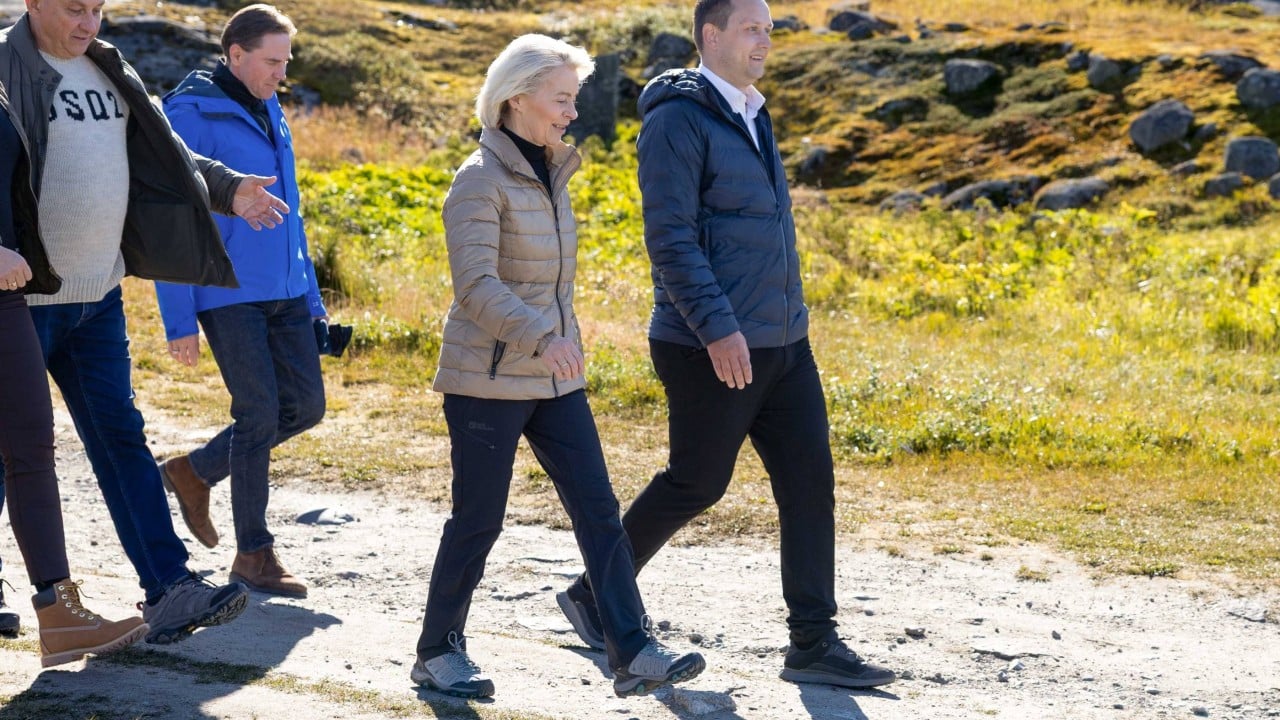
When European Commission President Ursula von der Leyen touched down on this remote runway, she was not merely visiting a quiet island at the top of the globe. She was executing a desperate migration. For decades, Europe built its industrial engine on a simple, fragile bargain: outsource the dirty work of mining and refining to nations thousands of miles away, and enjoy the clean, green fruits of consumption at home. That bargain shattered. Supply chains snapped. Dependencies turned into vulnerabilities. For another perspective on this development, refer to the latest update from Reuters.
Suddenly, the world realized that the future does not belong to those who can design a battery. It belongs to those who own the dirt it is made from.
Consider what happens next: a continent of four hundred million people must look north, toward an autonomous territory of barely fifty-seven thousand souls, and ask for a seat at the table.
Nuuk is changing. Walk down the main street, past the brightly painted wooden houses clinging to the jagged rock, and you can feel the friction between two entirely different timelines. On one side is a deep, generational connection to the land and sea—hunting seals on drifting floes, listening to stories passed down through endless winter nights, protecting a fragile ecosystem that has sustained an Inuit culture for millennia. On the other side is the hum of heavy machinery, foreign investors in tailored suits stepping carefully over frozen slush, and the intoxicating, terrifying prospect of economic independence.
For Greenland, self-reliance has always been an elusive ghost. Subsidies from Copenhagen keep the lights on, but they also keep the chains of colonial history intact. True sovereignty requires money. Real money. The kind found buried deep beneath the permafrost, locked away in complex geological formations that have remained untouched since the dawn of time.
This is the central tension of our era. How do you dig for the future without destroying the very foundation you stand on?
When von der Leyen signed the new partnership deal alongside Greenlandic leaders, the ink on the parchment represented far more than a bureaucratic trade agreement. It was a mutual lifeline. Europe gets access to raw materials critical for the green transition, moving away from its heavy reliance on Asian supply chains. Greenland gets foreign investment, infrastructure development, and a partner willing to treat them not as a distant dependency, but as an equal player on the world stage.
Critics worry, and rightly so. Environmental groups watch the advancing drills with dread, knowing that open-pit mines leave scars that do not heal easily. Local residents voice a quiet, persistent anxiety: will the wealth generated by these projects actually filter down to the people who call this ice home, or will it vanish into the vaults of multinational corporations, leaving behind polluted fjords and empty promises?
These are not abstract policy questions. They are kitchen table conversations happening right now in homes heated by oil stoves across the coast.
I remember talking to a fisherman in a small settlement north of the capital, a man whose family has navigated these icy waters for generations. He looked out over the steel-gray ocean, his face lined with the map of a thousand winter gales, and he said something that stayed with me.
"The world wants our rocks," he murmured, pulling his thick wool collar tighter against the wind. "They think it will save them. But they forget that we have to live with the dust."
That is the hidden cost of the transition. Every wind turbine spinning in the North Sea, every electric vehicle gliding silently down a European boulevard, has a shadow. And that shadow falls long and cold across the Arctic.
Yet, to stand still is not an option. Greenland knows that climate change is melting its traditional way of life faster than any mining operation ever could. The ice is retreating. The fish stocks are shifting. A modern economy must be built, or the younger generation will continue to pack their bags for Denmark, leaving behind an aging population in ghost towns.
So the deal moves forward.
The partnership commits both sides to sustainable development, strict environmental standards, and local job creation. Whether those promises survive the brutal reality of extraction economics remains to be seen. Capital has a way of eroding good intentions, grinding them down finer than glacial flour.
Yet watching the delegations shake hands beneath the pale Arctic sun, I felt a strange shift in the air. For the first time, the dialogue felt different. It was not a conversation of charity or paternalism. It was a cold, hard calculation born of mutual necessity. Europe needs Greenland's earth. Greenland needs Europe's trust.
The planes will take off. The ministers will return to Brussels and Copenhagen. The cameras will pack away.
Back in Nuuk, the snow will keep falling, blanketing the new docks, the prospecting maps, and the ancient stone alike. The ice will crack in the distance, a sharp reminder of forces far greater than any treaty or ledger. And out on the dark water, a lone boat will push off from the shore, its engine stuttering to life against the quiet, waiting sea.