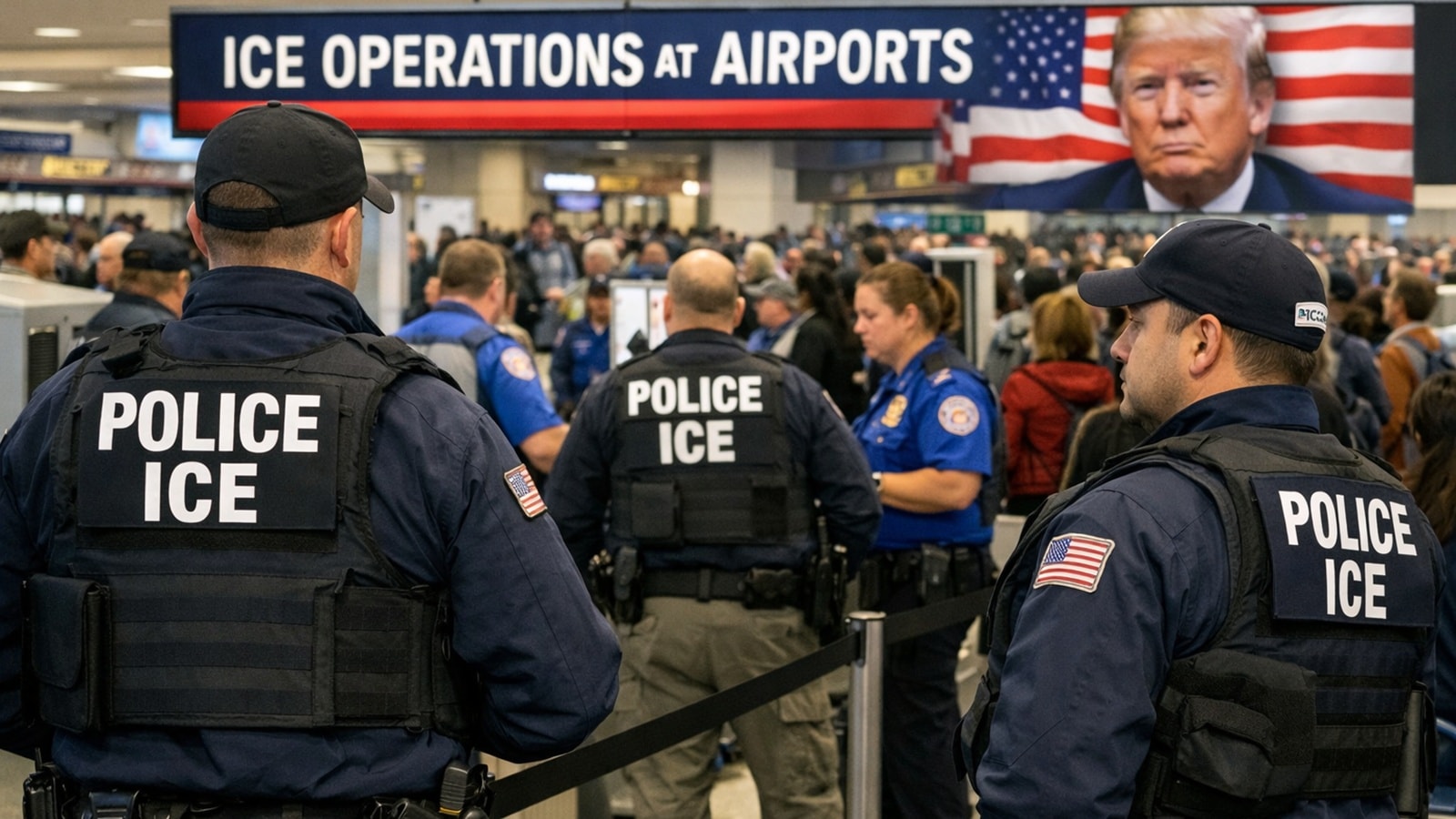
If you're flying out of a major U.S. hub this week, don't be shocked if the person checking your ID or guarding the terminal exit is wearing an ICE jacket instead of the usual blue TSA uniform.
President Trump and his border czar, Tom Homan, confirmed on Sunday that Immigration and Customs Enforcement (ICE) agents will officially deploy to American airports starting Monday, March 23, 2026. It’s a radical move born out of a desperate situation. A weeks-long partial government shutdown has left thousands of TSA workers without pay, causing them to quit or call out sick in record numbers. The result? Security lines that wrap around terminals and wait times hitting the three-hour mark at places like Atlanta's Hartsfield-Jackson.
Homan isn't sugarcoating it. He says the administration is using ICE as a "force multiplier" to prevent the nation's air travel system from grinding to a halt. But while the White House frames this as a logistical rescue mission, critics see a massive overreach that could turn travel hubs into enforcement zones.
How the ICE deployment actually works
Let’s get one thing straight: you won't see an ICE agent operating the X-ray machine. They aren't trained for it, and Homan admitted as much during his appearance on CNN’s State of the Union. The plan is to put ICE officers in "non-specialized" roles.
Think of it as a tactical reshuffle. By having ICE agents handle the "grunt work" of airport security, the administration hopes to move the few remaining paid TSA officers back to the actual screening technology. Here’s what ICE will be doing:
- Guarding Exit Lanes: Preventing people from entering the secure side of the terminal through the exits.
- Document Verification: Checking boarding passes and IDs at the start of the security line.
- Line Management: Directing passenger flow to keep the crowds moving.
It sounds simple, but it’s causing a political firestorm. House Minority Leader Hakeem Jeffries slammed the move, calling the agents "untrained" for a civilian airport environment. The friction stems from a deeper conflict. Senate Democrats have blocked funding for the Department of Homeland Security (DHS) because they want stricter rules on how immigration agents operate, especially following the high-profile deaths of two U.S. citizens, Renee Good and Alex Pretti, during enforcement actions earlier this year.
The shutdown context you need to know
The reason we're even talking about ICE at the airport is that the TSA is bleeding staff. Since the shutdown began in mid-February, more than 400 TSA agents have resigned. Thousands more are working without a paycheck for the second month in a row. When people don't get paid, they don't show up.
Trump is using this deployment to bypass the funding deadlock in Congress. By moving ICE agents—who are already part of DHS—into these roles, he's trying to show that the administration can maintain "border security" at the airports regardless of whether Democrats sign a funding bill.
Honestly, it’s a high-stakes gamble. If ICE agents manage to cut down the wait times without any major incidents, the administration wins a PR battle. But if an encounter at a checkpoint goes south, the political fallout will be nuclear.
What this means for travelers
If you're a traveler, your main concern is probably making your flight. Does this help? Maybe. Homan mentioned that the priority will be "large airports where there's a long wait." If you’re flying out of JFK, LAX, or O'Hare, you might see a slight dip in wait times if these agents successfully free up TSA screeners.
However, there’s a massive elephant in the room: immigration enforcement.
While Homan says the goal is to "help TSA move those lines," Trump’s rhetoric on Truth Social has been much more aggressive. He’s teased that these agents will do "security like no one has ever seen before." For undocumented immigrants or those with complicated visa statuses, the presence of ICE at the very first step of the security process adds a layer of extreme risk. ICE agents have the legal authority to arrest anyone they suspect of being in the country illegally. Even if they're there to "guard an exit," they are still law enforcement officers with a specific mandate.
Survival tips for the airport this week
Don't expect the "ICE help" to fix everything overnight. The system is still under immense pressure. If you have to fly, here’s how to handle the new reality:
- Arrive four hours early: I'm not kidding. Even with ICE reinforcements, staffing is at a skeleton level.
- Have your papers perfect: If you’re a non-citizen, ensure your green card, visa, or DACA paperwork is physically on you and valid. This isn't the time for "I have a photo of it on my phone."
- Expect a different vibe: TSA agents are usually stressed but generally focus on "shoes off, laptops out." ICE agents come from a culture of enforcement and interrogation. Keep your cool and be polite, but know that the atmosphere will likely feel more intense.
The administration expects to have the full list of participating airports finalized by the end of Sunday. If the Senate doesn't reach a deal on DHS funding by Monday morning, the "ICE-ification" of American travel becomes the new standard.
Check your airline’s app for real-time gate and terminal updates before you leave for the airport, as some checkpoints may open or close abruptly based on how many ICE agents actually show up for their new "temp jobs."