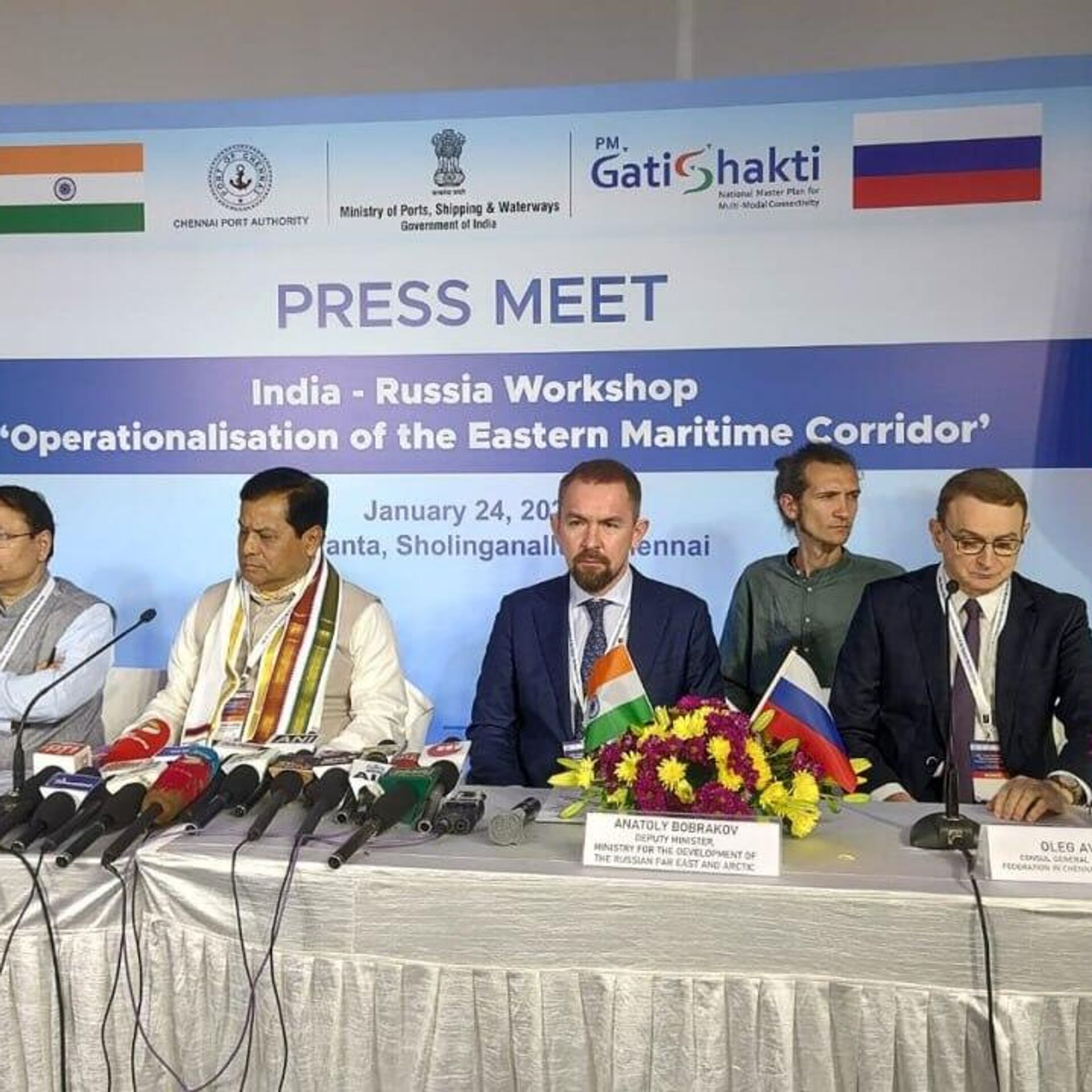
Foreign Minister S. Jaishankar is heading to yet another conference to talk about trade volumes and connectivity with Russia. The mainstream press will dutifully report on the "historic highs" of bilateral trade, currently sitting near $65 billion. They will talk about the International North-South Transport Corridor (INSTC) as if it’s a finished highway to prosperity. They are looking at the spreadsheet and missing the ledger.
This isn't a trade boom. It is a massive, structural imbalance disguised as a partnership. We aren't building a bridge; we are building a one-way pipeline for discounted Urals crude that India can’t even pay for in a currency Russia actually wants.
The Rupee-Rouble Trap
The lazy consensus suggests that "de-dollarization" is a win for Indian sovereignty. In reality, the surge in trade has created a comical surplus of Indian Rupees sitting in Russian bank accounts—roughly $40 billion equivalent by some estimates—that Moscow has no idea how to spend. Russia doesn’t want to buy Indian tractors or textiles at that scale. They want high-end electronics and dual-use technology that India, fearing secondary sanctions from the West, refuses to provide.
When you have a trade deficit this lopsided, you don’t have a partner; you have a liquidator. India is essentially performing a massive arbitrage play on Russian energy, refining it, and selling it to Europe. This keeps the lights on in Delhi and the profit margins high for private refiners, but it does nothing to build a sustainable, two-way economic ecosystem. To call this "robust trade" is like calling a fire sale a "successful retail strategy."
The INSTC is a Logistics Fairy Tale
Every year, we hear about the INSTC—the 7,200-kilometer multi-mode network connecting Mumbai to Saint Petersburg via Iran. It sounds brilliant on a map. In practice, it is a logistical nightmare buried under layers of bureaucracy, incompatible rail gauges, and the persistent shadow of the U.S. Treasury Department.
- The Iran Bottleneck: Chabahar port is the supposed crown jewel. But every time a new administration moves into the White House, the "sanctions-exempt" status of the port comes under threat. Global shipping giants won't touch it. You can't run a global supply chain on "maybe."
- The Infrastructure Gap: There are missing rail links in the Rasht-Astara segment in Iran. We’ve been talking about finishing those for a decade.
- The Insurance Ghost: Even if you move the cargo, who insures the hull? Who provides the reinsurance when the cargo is destined for a sanctioned Russian entity?
The reality is that 90% of trade still relies on the Suez Canal. The INSTC is currently more of a diplomatic talking point than a viable commercial artery.
The Defense Divorce
For decades, the "special and privileged strategic partnership" was held together by the glue of Sukhoi jets and S-400 missile systems. That glue is drying up. Russia’s defense industrial base is currently cannibalizing its export capacity to feed the front lines in Ukraine.
I have watched Indian procurement officers scramble as delivery timelines for spares and components stretch from months to years. New Delhi knows it cannot rely on a supplier that might be forced to seize its own export orders for national survival. The "China factor" also looms large. As Moscow becomes more beholden to Beijing for economic survival, India’s "all-weather friend" is increasingly looking like a tenant in China’s backyard. If a border skirmish breaks out in the Himalayas, can India truly trust a Russia that depends on Chinese chips and yuan?
The Energy Illusion
India’s appetite for Russian oil is opportunistic, not structural. We are buying because it is cheap. The moment the "Urals discount" narrows or the Western price cap mechanisms become too cumbersome to bypass, the trade volume will crater.
$$Price_{India} = Price_{Brent} - (Discount_{Russia} + Risk_{Sanctions})$$
If $Discount_{Russia}$ approaches zero, the entire logic of the current trade surge evaporates. We haven't built a deep economic integration; we’ve built a bargain-hunting expedition.
The Missing Private Sector
Look at the attendee list for these conferences. It is always government officials and heads of State-Owned Enterprises (SOEs). Where are the Indian tech unicorns? Where are the private pharmaceutical giants? They are absent because they have global ambitions. They know that getting too cozy with the Russian market means being locked out of the $27 trillion U.S. economy and the EU single market.
Indian industry is not stupid. It sees Russia as a market of 145 million people with a shrinking middle class and a volatile currency. Compare that to the West or even Southeast Asia. The private sector has already voted with its feet. The government is the only one left in the room trying to make the "partnership" happen.
Dismantling the "Pivot to the East"
People often ask: "Isn't India just balancing its interests?"
The answer is that you can't balance on a seesaw where one side is sinking.
- Premise: Russia provides a hedge against Western overreach.
- Reality: Russia’s isolation makes it a liability for India’s global leadership aspirations.
We are not "multi-aligning" here. We are clinging to a legacy relationship while the rest of the world rewires itself. The real move isn't to hold more conferences about trade connectivity; it’s to admit that the old Indo-Russian model is dead and we are just arguing over the inheritance.
Stop looking for the "game-changing" announcement from this summit. It isn't coming. The paperwork will be signed, the photos will be taken, and the $40 billion in trapped rupees will continue to gather digital dust in Moscow.
Would you like me to analyze the specific impact of the BRICS currency proposal on this lopsided trade balance?