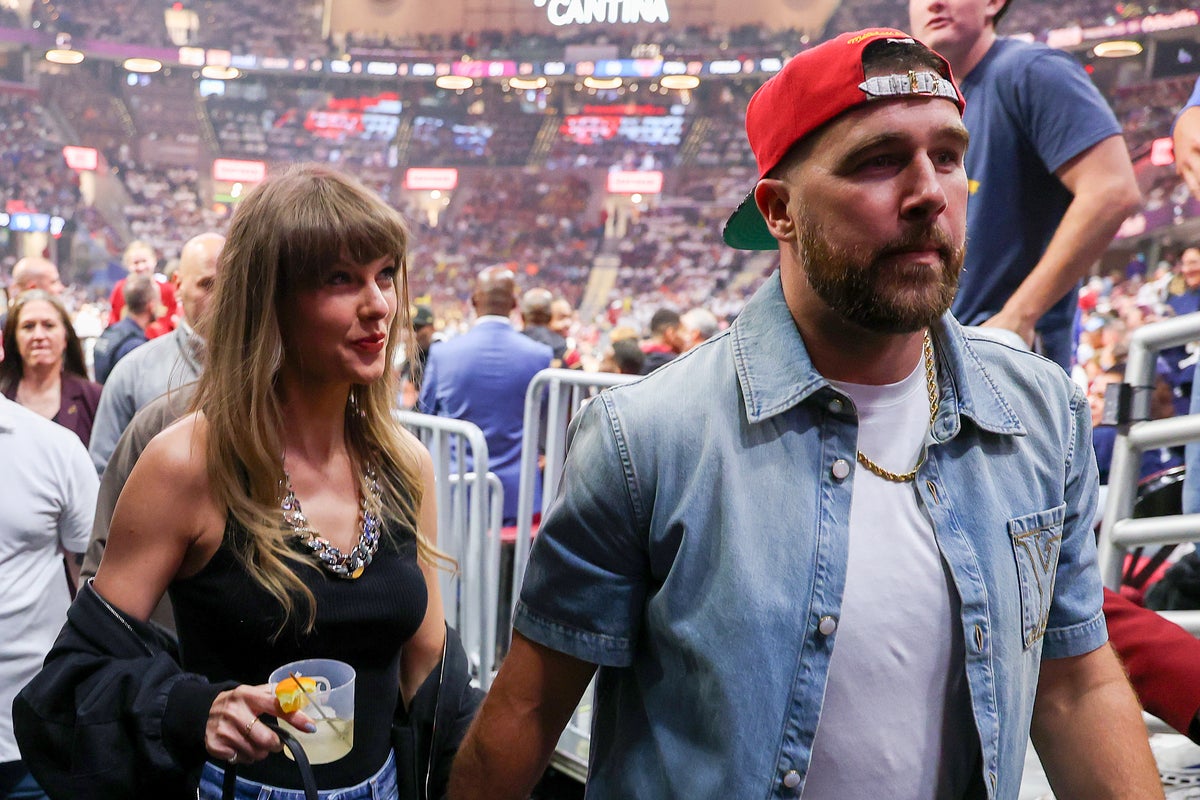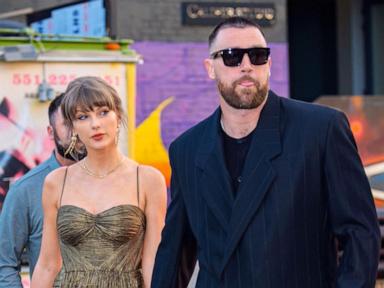
The flashing lights never actually turn off. They just dim slightly, casting long, distorted shadows across the pavement outside Arrowhead Stadium and the backstage corridors of sold-out European arenas. To the casual observer, the phenomenon of Taylor Swift and Travis Kelce is a masterclass in modern branding. It is a billionaire pop icon and a future Hall of Fame tight end colliding to create an unprecedented ecosystem of merchandise sales, NFL ratings boosts, and social media engagement metrics.
But look past the spreadsheets. Step away from the data points tracking the exact percentage increase in viewership among teenage girls since September 2023.
When you strip away the noise, you are left with something far more ancient, far more terrifying, and deeply human. You are looking at two people trying to build a private life inside a glass house while millions of people throw rocks—not to break the glass, but simply to hear the sound it makes.
Lately, the nature of that noise has shifted. The speculative whispers have hardened into a relentless, ticking clock. Tabloids run literal countdowns. Digital media outlets publish daily updates with titles shouting about the final moments before a rumored wedding. The collective cultural appetite has moved from "Are they dating?" to "When is the ring?" with an insatiable intensity that reveals less about the couple themselves and more about our own desperate need for a definitive happy ending.
The Industrial Complex of a Modern Fairy Tale
Every great story requires a certain architecture. In the case of Swift and Kelce, the cultural narrative caught fire because it mirrored an archetype embedded deep within our collective psyche: the prom queen and the football star. It is a trope as old as mid-century Americana, reinvented for an era dominated by algorithmic feeds.
Consider the sheer scale of the spectacle. When a single relationship can influence the stock value of cosmetics brands worn in the luxury suites, or cause a sudden spike in the sales of Kansas City Chiefs jerseys globally, it ceases to be a mere romance. It becomes an economy.
Metaphorically speaking, the public has treated this relationship like a high-stakes corporate merger. Analysts track their joint appearances with the same intensity Wall Street applies to quarterly earnings reports. If she attends a game, the narrative rises. If he misses a concert due to training camp, the internet dissects the absence like a sudden drop in tech stocks.
But this economic machinery creates a dangerous byproduct. It detaches the human beings at the center from the reality of their own lives. We forget that behind the meticulously curated public appearances and the security details, there are two individuals navigating the complex, often messy reality of blending two fiercely independent lives.
The pressure of the countdown turns every milestone into a performance metric. A quiet dinner becomes a strategy meeting in the eyes of the public. A vacation becomes a pre-wedding scouting trip. The invisible stakes are incredibly high; if they succeed, they validate a global fantasy. If they fail, they break a mirror that millions of people are using to look at themselves.
The Weight of the Invisible Audience
Imagine standing in a room where every whisper is amplified by a factor of a million. For someone like Swift, this has been the background radiation of her entire adult existence. She has written an entire discography about the suffocating nature of public scrutiny, the way love can be crushed under the weight of outside opinions.
Then enter Kelce. He is a man accustomed to a very different kind of spotlight. In the NFL, the scrutiny is physical, tactical, and immediate. You are judged by the yards you gain, the blocks you make, the championships you win. It is brutal, but it is bound by the rules of the game.
When these two worlds collided, the rules vanished. Kelce was thrust into a realm where his every gesture, his choice of clothing, and the tone of his voice on a podcast were analyzed by millions of amateur detectives looking for clues about a impending proposal.
The human cost of this is isolation. Trust becomes a rare commodity. When your life is a countdown clock for public consumption, your inner circle must become a fortress. The irony of the ultimate public romance is that it forces the participants to retreat further into secrecy just to survive.
Consider what happens next when the countdown supposedly ends. The public assumes a wedding is the final act of the play. The curtain falls, the crowd applauds, and everyone goes home. But in reality, that is when the actual work begins. The transition from a hyper-visible courtship to a sustainable, lifelong partnership is difficult under the best circumstances. Doing it while the entire world watches to see if the fairy tale holds up is a burden few could bear.
Why We Cannot Look Away
Our obsession with the clock ticking down on this relationship is not really about Taylor Swift or Travis Kelce. It is about us.
We live in a deeply fractured cultural moment. The news cycle is a relentless barrage of crisis and division. In the midst of that chaos, the human brain craves narrative satisfaction. We want to believe that true love, grand gestures, and uncomplicated joy still exist. We have projected our collective desire for stability onto this couple.
They have become our avatars of happiness. If the girl who wrote the sad songs finally gets the fairytale ending with the guy who catches the winning touchdown, then maybe, just maybe, the world makes sense again.
It is a heavy burden to place on two people.
The truth is, there is no clock. There is no countdown except the one manufactured by digital platforms hungry for clicks and engagement. There are only two people, remarkably successful and intensely scrutinized, trying to figure out if their futures fit together when the cameras finally stop rolling.
The real story isn't the wedding that may or may not happen on a specific date. The real story is the quiet defiance required to hold onto love when the entire world is trying to turn it into a commodity. It is the realization that the most valuable moments are the ones that never make the grid, the ones that happen in the quiet spaces between the stadium lights and the stadium stage. That is where reality lives. And that is the only place where a relationship can actually survive.