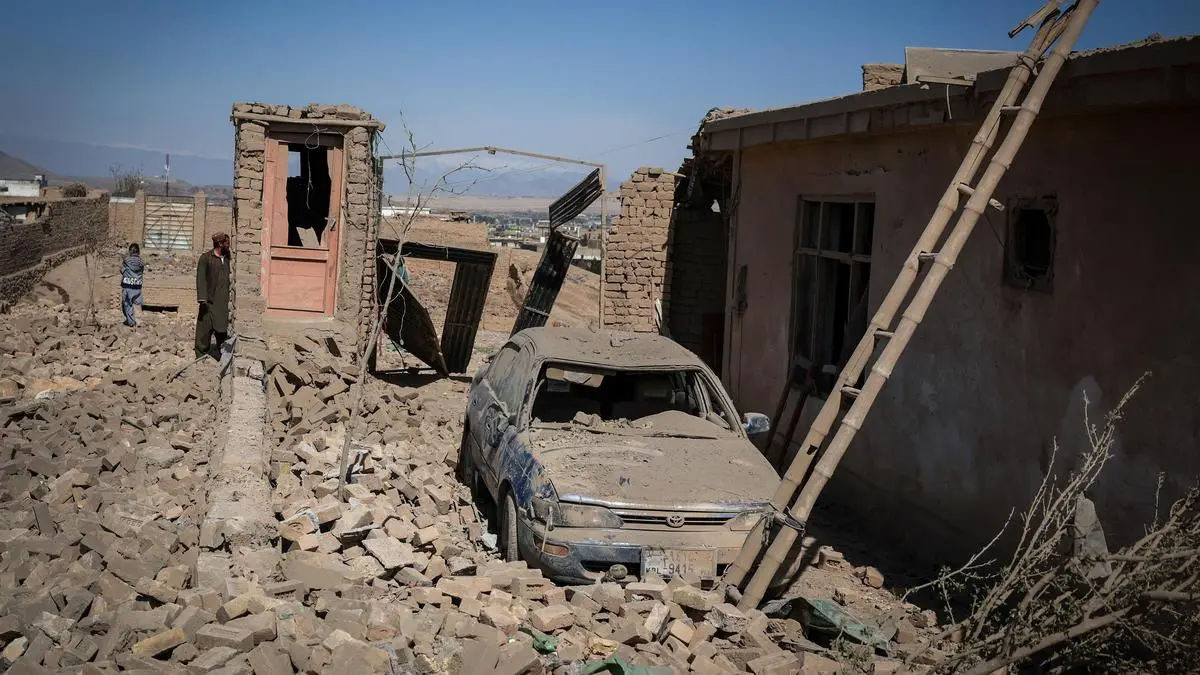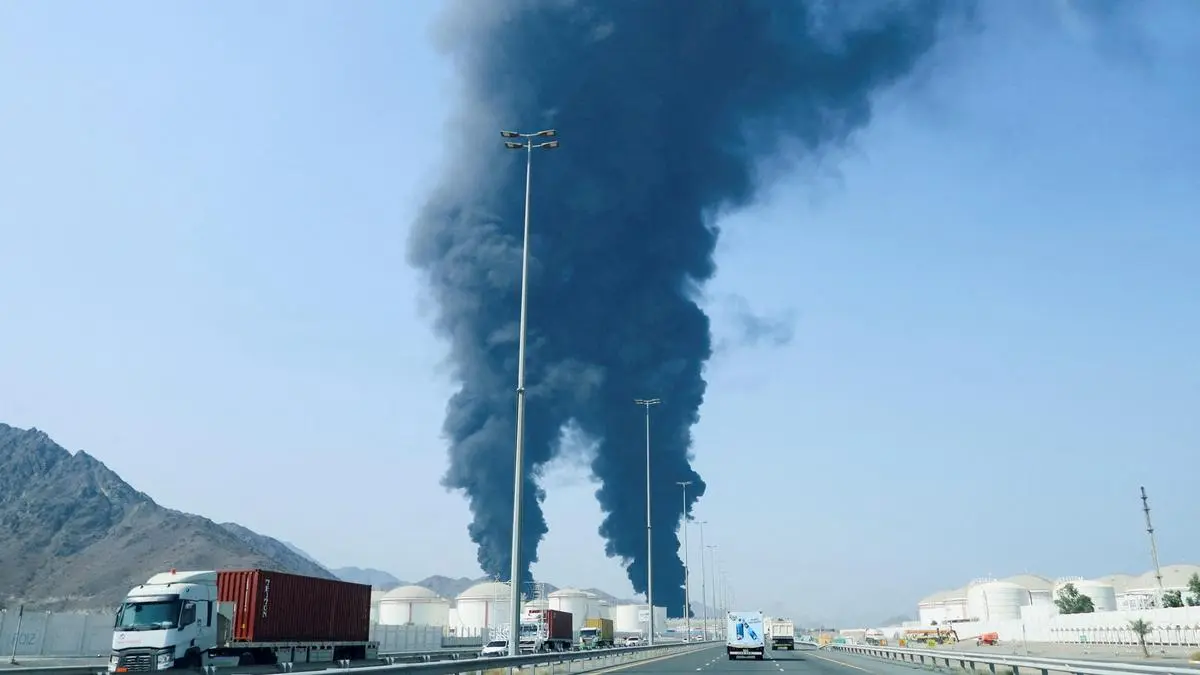
The recent drone strike on the Fujairah Oil Industry Zone (FOIZ) did more than just ignite a physical fire. It scorched the long-standing assumption that the United Arab Emirates’ eastern coast is a safe haven from the volatility of the Persian Gulf. While official statements emphasize that there were no casualties and that operations have resumed, the mechanical reality of the attack suggests a shift in the regional risk profile that cannot be managed with simple press releases. Fujairah is not just another port. It is the world’s third-largest bunkering hub and the terminus for the Habshan-Fujairah pipeline, which allows millions of barrels of crude to bypass the narrow, vulnerable Strait of Hormuz.
This attack targets the very heart of global energy bypass strategies. If Fujairah is reachable and breakable, the strategic insurance policy held by global markets is effectively void.
Anatomy of the Vulnerability
Fujairah’s rise was built on its geography. By sitting outside the Persian Gulf, it offered a logistical "out" for tankers wary of Iranian naval presence or mine-laying operations in the narrows. However, the proliferation of low-cost, long-range unmanned aerial vehicles (UAVs) has rendered that geographical distance less relevant. The strike on the FOIZ facility demonstrates that the "off-ramp" for global oil is now just as exposed as the "on-ramp."
Current defense systems are often optimized for high-speed ballistic threats or traditional aircraft. They are less effective against "low, slow, and small" targets. A drone costing less than a high-end SUV can disable a storage tank holding millions of dollars in inventory. The thermal signature of an oil farm is massive, making it an easy mark for even primitive GPS-guided systems. We are seeing a mismatch between the billion-dollar infrastructure of the energy industry and the thousand-dollar tools of disruption.
The Cost of Continuity
When a fire breaks out in a concentrated industrial zone like FOIZ, the immediate concern is containment. But for the analysts watching the London and New York exchanges, the concern is the "risk premium." Every time a drone finds its mark, the cost of insuring a hull or a cargo in these waters ticks upward.
Insurance syndicates like Lloyd’s of London have already been eyeing the Gulf of Oman with skepticism. A successful strike—even one without casualties—forces a reassessment of "War Risk" premiums. These costs are never absorbed by the oil majors. They are passed down the supply chain, eventually manifesting at the pump and in the manufacturing costs of energy-intensive goods.
Beyond the Official Narrative
The "no casualties" refrain is a standard de-escalation tactic. It is designed to signal stability to the markets and prevent a panic sell-off. However, an investigative look at the site reveals that the damage to infrastructure has longer-term implications than the brief disruption of a work shift.
Refining and storage equipment is not off-the-shelf. Replacing damaged valves, manifolds, or specialized lining in storage tanks can take months due to specialized engineering requirements and current global supply chain lags. If multiple tanks are taken offline, the "swing capacity" of the port is diminished. This reduces the flexibility of the global supply chain at a time when energy markets are already incredibly tight.
The Problem of Proximity
One of the overlooked factors in the Fujairah incident is the density of the Industry Zone. The FOIZ is a marvel of efficiency, with tanks packed closely to maximize the limited flat land between the Hajar Mountains and the sea. This density is an operational dream but a kinetic nightmare.
A fire in one section of the farm creates a massive radiant heat threat to adjacent tanks. While the FOIZ has world-class fire suppression systems, those systems are designed for accidental industrial mishaps, not coordinated external strikes. The "why" of this attack is clear: it is a demonstration of reach. The "how" suggests that the attackers are well aware of the limitations of point-defense systems in mountainous coastal terrain.
The Technological Arms Race
To secure a facility like Fujairah, the industry must move beyond traditional radar. We are looking at a requirement for multi-layered electronic warfare (EW) suites and kinetic interception tools that can operate in a dense civilian environment.
- Acoustic Sensors: Detecting the specific frequency of drone motors before they enter visual range.
- Electronic Jamming: Creating "no-fly" bubbles that sever the link between the drone and its pilot or GPS satellites.
- Directed Energy: The use of high-power microwaves or lasers to disable electronics mid-flight.
The difficulty lies in the fact that Fujairah is a busy commercial environment. Indiscriminate jamming can disrupt the very tanker communications and GPS navigation systems the port relies on to function. It is a delicate balance between protection and paralysis.
The Shift in Maritime Strategy
For decades, the United States Fifth Fleet and regional navies focused on blue-water threats—submarines, destroyers, and large-scale blockades. The Fujairah strike proves that the threat has moved to the "littoral" and the "aerial." The shadow war is being fought in the gray zone, where attribution is difficult and the weapons are disposable.
Ship owners are now faced with a grim calculation. Do they continue to rely on the perceived safety of UAE ports, or do they look for even more distant alternatives? The problem is that there are no easy alternatives. Fujairah’s infrastructure is peerless in the region. You cannot simply build a deep-water port and a massive pipeline terminal overnight somewhere else.
Hardening the Target
Expect to see a massive investment in physical hardening. This includes:
- Reinforced Roofing: Concrete or steel shields over critical pumping stations.
- Redundant Piping: Underground routes for oil transfer that cannot be targeted from the air.
- Active Decoys: Using heat-generating "fake" targets to draw away infrared-guided munitions.
These measures are expensive and take time to implement. In the interim, the industry remains in a state of high-alert vulnerability.
The Geopolitical Fallout
This incident places the UAE in a difficult position. It prides itself on being a "safe" node in a dangerous neighborhood. To maintain that reputation, it must not only stop these attacks but also demonstrate a level of defensive "overmatch" that makes future attempts look futile.
The silence regarding the exact origin of the drones is telling. Identifying the source leads to a requirement for retaliation, and retaliation leads to escalation. For a country focused on economic diversification and tourism, a shooting war is the worst-case scenario. Therefore, the strategy will likely remain one of "silent hardening"—quietly upgrading defenses while publicly downplaying the severity of the incidents.
The reality of 21st-century energy security is that there is no such thing as a "safe" zone. The lines between the front line and the fuel line have blurred entirely.
If you are an investor or an industry stakeholder, the takeaway is clear: ignore the "no casualties" headlines and watch the "Force Majeure" clauses and insurance adjustments. That is where the real impact of the Fujairah strike is being measured. The fire might be out, but the heat on the regional energy infrastructure is only increasing.
Verify your own supply chain resilience by auditing the physical security of your primary transit hubs.