In a quiet control room tucked away in a coastal city you’ve likely never visited, a digital screen flickers with a series of pulsing green dots. Each dot represents a vessel the size of a skyscraper, laden with millions of barrels of crude oil, navigating a strip of water so narrow that a single misplaced wreck could upend the global economy. This is the Strait of Hormuz. For most, it is a geography lesson long forgotten. For those steering the ship of state in Washington, it is a juggernaut that never sleeps.
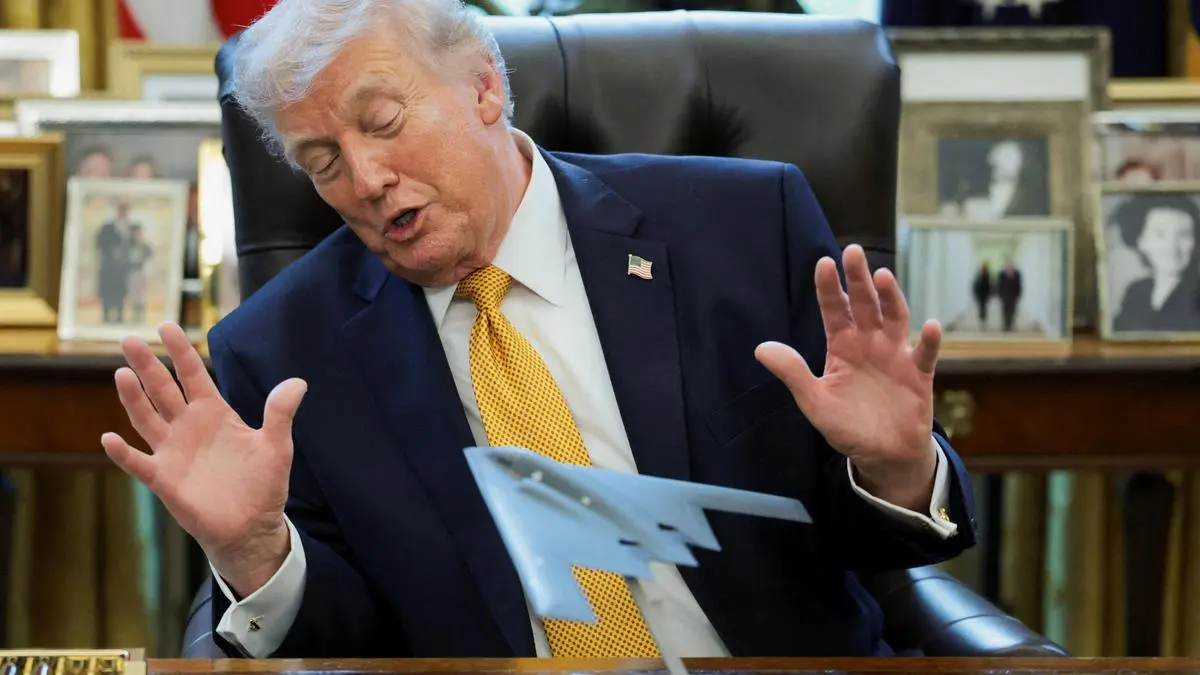
Donald Trump has once again turned his gaze toward this twenty-one-mile-wide needle’s eye. His recent demands for international "help" in the region, coupled with the looming shadow of further strikes on Iran’s Kharg Island, aren’t just about military posturing. They are about the visceral, terrifying reality of how fragile our modern life truly is.
Consider a truck driver in Nebraska named Elias. Elias doesn't track Iranian naval maneuvers. He tracks the price of diesel at the pump. When the tension in the Persian Gulf spikes, the cost of moving grain from his trailer to your table climbs. The "invisible stakes" are found in his checkbook. They are found in the heating bills of families in Europe and the manufacturing costs of tech giants in Seoul.
The Strait is a pressure point. If you press it hard enough, the world stops breathing. Trump’s rhetoric suggests he is tired of the United States acting as the sole lifeguard for a pool everyone is swimming in. He argues that if the world wants the oil to flow, the world must pay the entry fee—or bear the burden of the defense.
The Scorched Earth of Kharg Island
To understand the weight of the threat against Kharg Island, you have to look at the dirt and the steel. Kharg is not just a piece of land; it is Iran’s economic lungs. Roughly 90 percent of their oil exports pass through this terminal. When Trump hints at more strikes there, he isn't just talking about destroying infrastructure. He is talking about a complete economic blackout for a nation already teetering on the edge of isolation.
Imagine the sheer scale of a terminal that handles over five million barrels a day. The air smells of salt and heavy sulfur. The heat is oppressive. Now, imagine that machinery—the labyrinth of pipes, the massive storage tanks—becoming a target. If those lungs are punctured, the secondary effects ripple outward with a speed that no stock market algorithm can fully predict.
The strategy is clear: maximum pressure. By threatening the very source of Iran’s liquidity, the administration seeks to force a hand that has remained stubbornly closed. But every action in these waters has an equal and potentially catastrophic reaction.
The Burden of the Watchman
For decades, the U.S. Fifth Fleet has patrolled these waters. It is an expensive, grueling, and often thankless vigil. The American argument, sharpened by Trump’s blunt delivery, is that the era of the "free rider" must end. Why should American taxpayers foot the bill for the security of tankers destined for China, Japan, or India?
It is a question of fairness that resonates with a specific kind of logic. Yet, the answer is messy. If the U.S. pulls back, who fills the vacuum? Does a coalition of the willing emerge, or do we see a frantic, every-nation-for-itself scramble that leads to more conflict, not less?
The stakes aren't just about ships. They are about the precedent of global commerce.
The Human Cost of High-Stakes Poker
Behind the headlines of "demands" and "threats" are the sailors. There are thousands of merchant mariners from the Philippines, India, and Eastern Europe currently on those tankers. They are the ones who look at the horizon and wonder if a drone or a mine is waiting for them. For them, the Strait of Hormuz isn't a strategic asset on a map. It’s a hallway where the lights might go out at any moment.
When we talk about "Kharg strikes," we are talking about fire. We are talking about the potential for environmental disasters that could choke the Persian Gulf for a generation. The fish die. The desalination plants—which provide drinking water for millions in the region—clog and fail. The human element is often buried under the mountain of geopolitical analysis, but it is the most volatile part of the equation.
The tension is a living thing. It grows in the silence between diplomatic cables. Trump’s approach is a sledgehammer in a room full of glass. It is designed to break the status quo because, in his view, the status quo is a losing deal for America.
A World Held in Suspense
What happens if the help doesn't come? What happens if the strikes move from a threat to a reality?
The global energy market is a nervous creature. It doesn't like uncertainty. Even the rumor of a strike sends ripples through the trading floors in London and New York. We are witnessing a game of brinkmanship where the players are betting with the livelihoods of people who will never see the Persian Gulf.
The reality of the situation is that there are no simple exits. You cannot move the oil elsewhere. You cannot easily bypass the Strait. You can only manage the tension or break it.
Trump is betting that by threatening to break it, he can force a new kind of management—one where the costs are shared and the risks are acknowledged by everyone with skin in the game. It is a high-wire act performed without a net.
As the sun sets over the Gulf, the green dots on those control room screens continue their slow, rhythmic crawl. They move through the heat, through the salt, and through the crosshairs of a conflict that has been simmering for forty years. The world watches, waits, and hopes that the pulse of the Strait continues to beat, however faintly, for one more night.
The silhouette of a lone tanker on the horizon serves as a haunting reminder: our comfort is built on the stability of a shadow-drenched waterway thousands of miles away, guarded by men who hope the orders to fire never actually come.