The air inside a campaign war room doesn't smell like democracy. It smells like stale coffee, overpriced takeout, and the distinct, ozone-heavy scent of server racks humming at maximum capacity. This is where the world is translated into data. This is where human complexity is stripped down into colored blocks on a digital map. For months, the narrative pushed from the podiums was one of an inevitable tidal wave—a "wipeout" that would leave the opposition scoured from the earth.
But maps don't vote. People do. And sometimes, the most sophisticated polling models in the world are dismantled by four simple words spoken in a quiet room.
Consider a hypothetical voter named Elias. He lives in a town where the main street looks like a mouth with half its teeth missing. He isn't a political operative. He doesn't look at "swing state aggregates." Elias spends his Tuesday nights worrying about the cost of a gallon of milk and whether his radiator will survive another February. When he hears a candidate scream about a "landslide victory," he doesn't feel powerful. He feels ignored. To him, the talk of a wipeout feels like a victory lap taken before the race has even started. It feels like arrogance.
The gap between the rhetoric of a "wipeout" and the reality of the ballot box is where political legacies go to die.
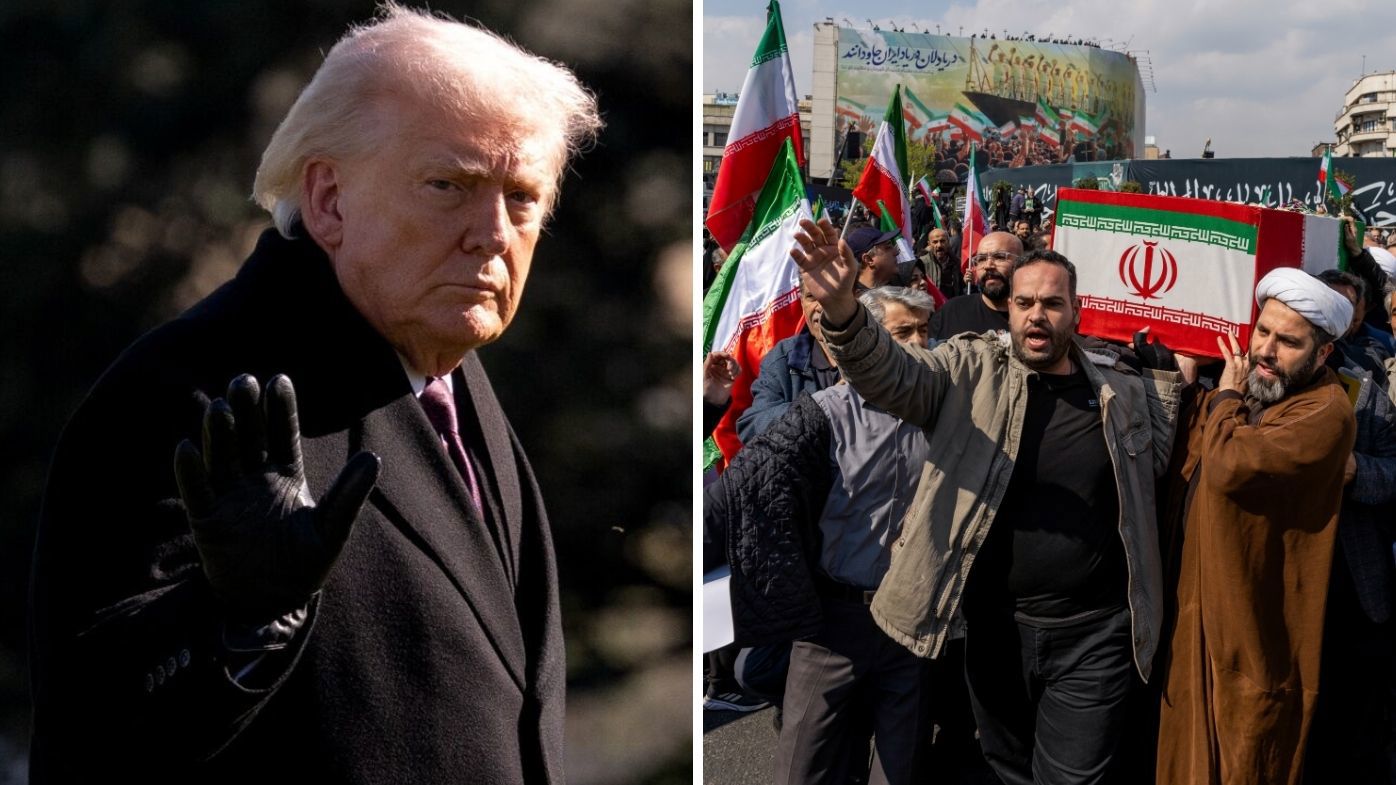
The math of a political collapse is rarely about a single scandal or a botched debate. It is a slow leak. When Donald Trump leaned into the imagery of a total, crushing victory, he wasn't just rallying his base. He was inadvertently setting a trap for himself. The "four words" that dismantled this narrative aren't a magic spell. They are a reflection of a fundamental truth that many leaders forget: The voters decide last.
Those four words—the voters decide last—act as a cold bucket of water on the fever dream of inevitability.
When a leader claims a wipeout is coming, they stop trying to persuade. They start trying to command. This shift in tone is subtle, but voters like Elias have a high-frequency internal antenna for it. They can hear the difference between a candidate asking for their trust and a candidate demanding their submission. The moment a campaign assumes the result is a foregone conclusion, it stops looking at the person behind the ballot. It starts looking at them as a decimal point.
The data suggests that the "wipeout" narrative was built on a series of shaky assumptions. First, it assumed that the opposition would simply stay home out of fear. Second, it assumed that the middle—that narrow, exhausted strip of the American electorate—wanted a revolution rather than a resolution.
The numbers tell a different story.
In the quiet precincts where the cameras rarely go, the turnout didn't mirror the "wipeout" projections. Instead, it showed a stubborn, quiet resistance to the idea of being told how the story ends before they’ve finished reading it. The polling errors of the last decade have taught us one thing: people lie to pollsters because they want to keep their secrets. They save their truth for the curtained booth.
Think about the psychology of the "underdog" versus the "titan." Americans, by and large, have a historical allergy to the titan. We are a nation built on the backs of people who were told they would be wiped out. When a political figure adopts the language of an unstoppable force, they inadvertently cast everyone else—including the undecided—as the "movable object." Nobody likes being told they are going to be moved.
The four words that blew up the claim of a wipeout functioned like a pin to a balloon.
It wasn't just about the numbers; it was about the feeling of the numbers. When the actual returns began to trickle in—slow, agonizingly steady, and decidedly not a landslide—the disconnect became a canyon. A candidate can survive being wrong. They can even survive being unpopular. What they rarely survive is looking out of touch with the very people they claim to lead.
The invisible stakes here aren't just about who sits in the Oval Office. They are about the health of our public discourse. When we allow "wipeout" rhetoric to dominate, we flatten the human experience. We turn a complex, multi-layered society into a binary of winners and losers. We ignore the guy at the gas station who is voting for a candidate he doesn't even like, simply because he wants the shouting to stop.
We often talk about "momentum" as if it’s a physical law. It’s not. In politics, momentum is a ghost. You can feel it, you can chase it, but you can't bottle it. The moment you think you’ve caught it, it’s already gone. The claim of a wipeout was an attempt to bottle that ghost. It failed because it ignored the friction of reality.
The friction is found in the grocery store aisles. It's found in the school pickup lines. It's found in the hushed conversations between neighbors who don't agree on everything but agree that they are tired of being told what's inevitable.
The strategy of projecting total dominance is designed to project strength. But true strength in a democracy is found in humility—in the realization that you are an applicant for a job, not a king claiming a throne. The four words that broke the narrative served as a reminder that the job interview isn't over until the last person leaves the room.
We have seen this play out before. The 1948 headline "Dewey Defeats Truman" is the patron saint of political arrogance. It’s a grainy black-and-white photograph that should be pinned to the wall of every campaign headquarters. It is a reminder that the loudest voice in the room is often the one most shocked by the silence that follows the final count.
The "wipeout" didn't happen because the math was slightly off. It didn't happen because of a tactical error in a swing county. It didn't happen because the four words—the voters decide last—are more than just a phrase. They are a boundary. They are the line where the fantasy of the politician ends and the reality of the citizen begins.
When you strip away the pundits, the flashy graphics, and the screaming headlines, you are left with a single person holding a pen. That person isn't a "demographic." They aren't a "data point." They are a human being with a life that exists entirely outside of the 24-hour news cycle. They are the ones who turned the "wipeout" into a whisper.
The next time you hear someone predict a landslide, or a crushing defeat, or an inevitable shift in the tectonic plates of power, remember the four words. Remember that the map is not the territory. Remember that the loudest roar often precedes the longest fall.
The pen is hovering over the paper. The curtain is drawn. The world is waiting.
And in that quiet, private moment, the noise of the "wipeout" fades into nothing at all.