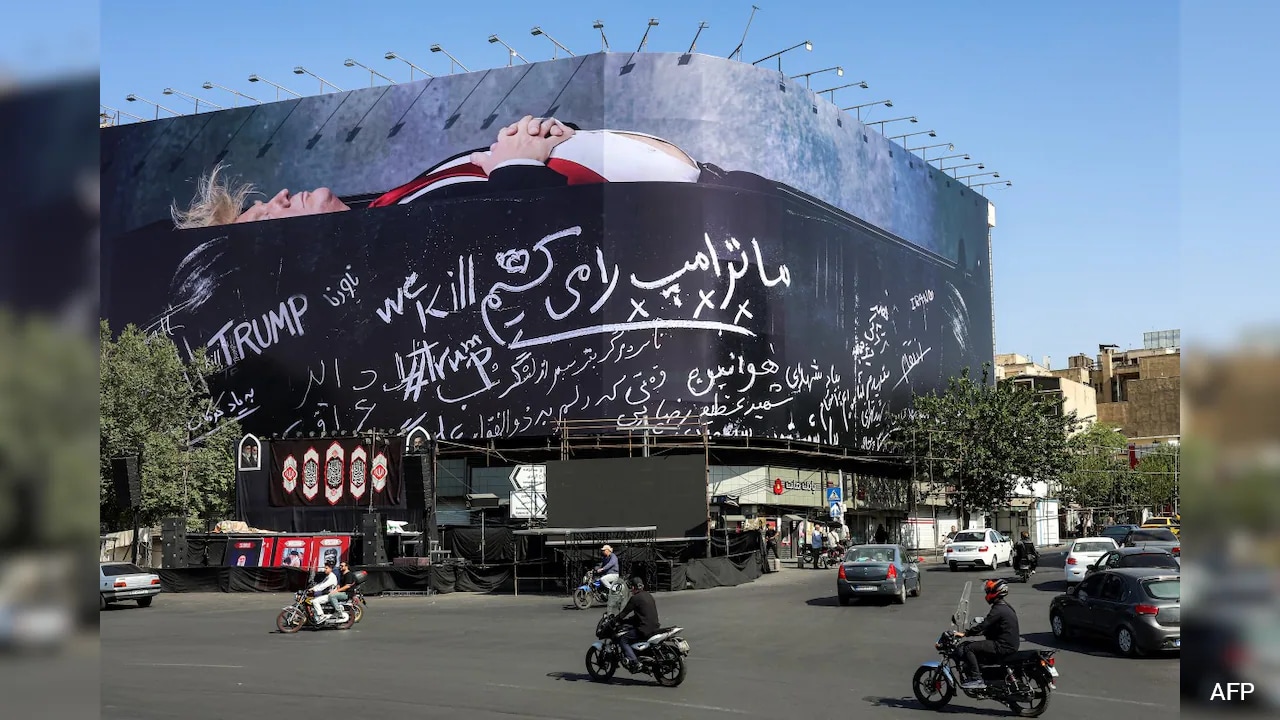
The foreign policy establishment has a favorite story. It is a comfortable, tidy narrative about the Middle East that gets repeated in every DC think tank and European embassy.
The story goes like this: Israel has spent decades trying to orchestrate regime change in Tehran, and Israel has failed. Analysts point to sabotaged centrifuges, assassinated scientists, and leaked intelligence memos as proof of a grand, frustrated strategy to topple the Ayatollahs. They look at the map, see the Islamic Republic still standing, and declare the Israeli strategy a historic flop.
This analysis is not just wrong. It completely misunderstands the nature of modern statecraft.
Israel never wanted to change the Iranian regime.
To believe that Jerusalem’s goal has been a democratic, Western-friendly Iran is to mistake theatrical political rhetoric for actual military doctrine. The reality is far colder, more cynical, and infinitely more successful. Israel’s true objective has always been containment, exhaustion, and management—not overthrow.
And by those metrics, the strategy is working exactly as intended.
The Myth of the Silver Bullet
The lazy consensus relies on a fundamental misunderstanding of how regional powers operate. Commentators write about "regime change" as if it is a discrete task on a checklist. They assume that because Israeli leaders occasionally make fiery speeches hinting at a post-clerical Iran, that is the operational goal of the Israel Defense Forces (IDF) or Mossad.
Let’s dismantle this premise.
When you look at the actual operations conducted over the last twenty years—the Stuxnet worm, the theft of the nuclear archives in Tehran, the targeted elimination of Mohsen Fakhrizadeh—none of these actions were designed to trigger a popular uprising.
If you want to spark a revolution, you do not quietly disable industrial equipment in a buried bunker. You do not carry out highly precise, low-collateral operations that the target regime can easily cover up or downplay to its domestic audience.
Those are defensive, friction-inducing delay tactics. They are designed to buy time, drain the adversary’s treasury, and force them to spend billions on internal security and air defense instead of regional expansion.
During my years analyzing these intelligence networks, I have watched analysts consistently misinterpret these speed bumps as failed attempts to derail the entire train. They are not. They are tollbooths. Israel is making the Iranian nuclear program the most expensive scientific endeavor in human history, forcing Tehran to pay the tax in blood, cash, and prestige.
Why a Collapsed Iran is Israel’s Worst Nightmare
Let’s run a thought experiment. Imagine a scenario where the Islamic Republic actually collapses overnight. The security apparatus dissolves. The Supreme Leader flees or is killed.
What happens the next morning?
You do not get a secular, peaceful democracy overnight. You get a massive power vacuum in a country of nearly 90 million people, sitting on top of vast oil reserves and some of the most dangerous military hardware on earth.
A sudden collapse of the Iranian state would trigger a catastrophic civil war. The Islamic Revolutionary Guard Corps (IRGC) would splinter into heavily armed regional warlords. The country's ethnic minorities—Kurds, Azeris, Baluchis, and Arabs—would immediately move for independence, drawing in neighboring Turkey, Iraq, and Pakistan.
More importantly for Israel, the command and control over Iran’s vast proxy network would vaporize. Groups like Hezbollah, the Houthis, and various Iraqi militias would not suddenly disband and lay down their arms. They would go rogue. Without a central benefactor in Tehran to restrain them or use them as diplomatic leverage, these highly armed non-state actors would become entirely unpredictable.
Israel’s security establishment is hyper-rational. They know that a centralized, rational, survival-focused adversary in Tehran is infinitely easier to deter than fifteen different heavily armed, unstable militias operating without a central command.
The status quo, as tense as it is, offers predictability. Total regime collapse offers absolute chaos. Israel knows this, which is why they have never pushed the button on true regime destabilization.
The Cost of the Status Quo
To be fair, this containment strategy is not free. It comes with massive, agonizing costs for Israel and the wider region.
The downside of choosing containment over confrontation is that you accept a permanent state of low-level war. It means living under the constant threat of rocket fire from Lebanon, drone strikes from Yemen, and cyberattacks on civilian infrastructure. It means an economy that must constantly adapt to the threat of mobilization.
But from the perspective of Israeli decision-makers, this is a calculated risk. It is the preference of a known, manageable chronic illness over a potentially fatal acute shock.
Western analysts love to ask: "What is the end game?"
They ask this because Western political culture is obsessed with closure. We want treaties signed on aircraft carriers. We want mission-accomplished banners.
But the Middle East does not do end games. It is an arena of constant, perpetual management. The goal is not to win; the goal is to play the next round from a position of relative strength.
Dismantling the PAA: "Can Sanctions Force Regime Change?"
If you look at the questions people actually ask about this conflict, the most common is whether economic pressure and sanctions can eventually force a change in Tehran.
The honest, brutal answer is no.
Sanctions have never, in modern history, forced a highly ideological, authoritarian regime to willingly give up power or its core strategic ambitions. Look at North Korea. Look at Cuba. Look at Venezuela.
What sanctions actually do is consolidate power within the regime. When the economic pie shrinks, the ruling elite ensures their slice remains the same size, while the civilian population starves. In Iran, the IRGC controls the black-market smuggling routes. The more formal trade is restricted, the more powerful and wealthy the IRGC becomes relative to the rest of society.
Israel knows this. They do not advocate for sanctions because they think it will make the Iranian public rise up. They advocate for sanctions because it deprives the regime of the excess capital required to fund foreign adventures. Every dollar that Iran does not have is a dollar they cannot send to Hezbollah to buy precision-guided munitions. It is about resource starvation, not political transformation.
Stop Looking for a Resolution
The competitor piece fails because it judges Israel by a standard Israel never set for itself. It assumes the theater of war is about ideological conversion.
It is not. It is about logistics, resource allocation, and threat mitigation.
The next time you see a headline about a covert strike in Esfahan or a cyber disruption in Tehran, do not ask if this is the spark that will finally bring down the regime. That is the wrong question.
Instead, ask how much time this buy. Ask how much it shifts the cost-benefit analysis for the decision-makers in Tehran.
Israel has not failed to change the Iranian regime because Israel is not trying to change it. They are simply ensuring that the regime remains too weak, too distracted, and too broke to ever pose an existential threat.
In the brutal logic of geopolitics, that is what winning looks like. Stop waiting for a grand finale that was never written into the script.