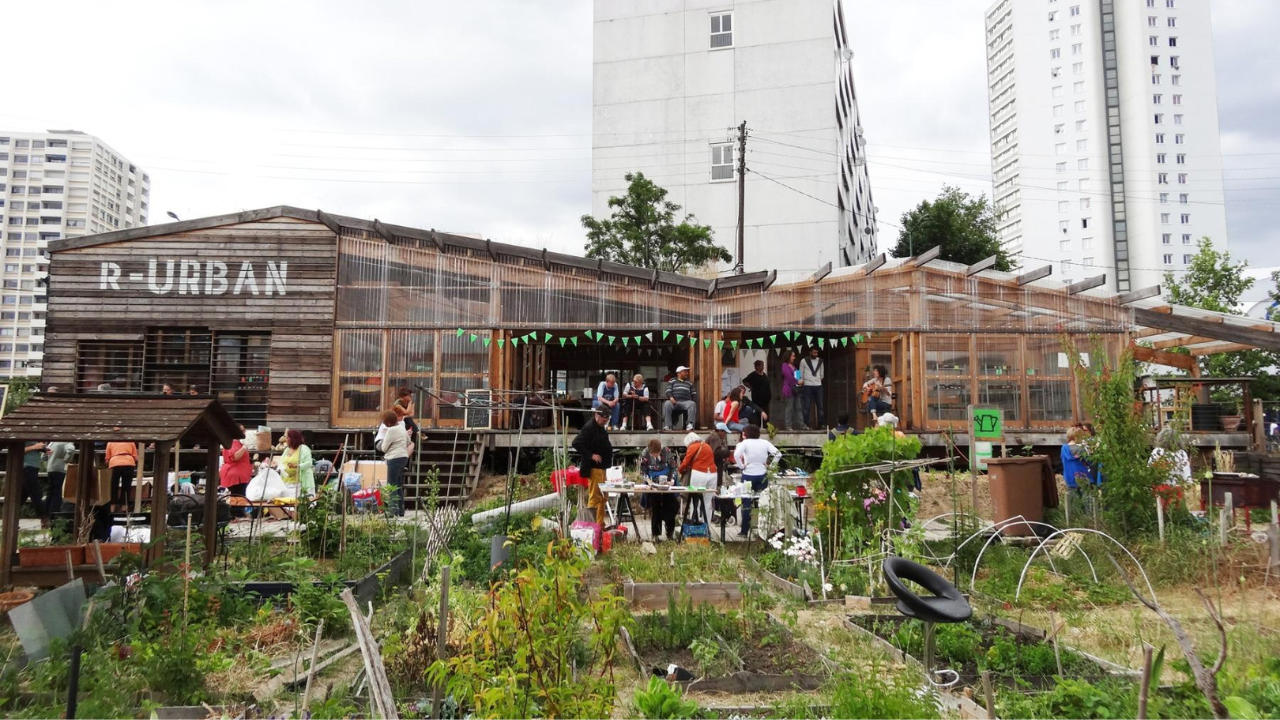
Picture a neighborhood where Sunday roast leftovers and carrot peels don't rot in a landfill. Instead, they steam up a wooden bench where you're sitting in a towel. That sounds like a sci-fi pitch, but it's happening right now in east London. Residents are taking absolute control of their local energy loop, and the results are turning heads across the city.
On the Teviot Estate in Poplar, an ecology hub called R-Urban Poplar has transformed a dusty former car park into a working laboratory for urban survival. The star of the show isn't just the raised garden beds or the mushroom farm. It's a localized anaerobic digester paired with a community sauna. People drop off organic waste, microbes break it down, and the captured gas gets piped straight into keeping a sweat lodge hot.
Most municipal waste systems rely on industrial juggernauts miles away from where you live. This project flips that script entirely. It asks a simple question: what happens if a community stops outsourcing its waste and starts treating it as local fuel?
The Mechanics of Neighborhood Bioenergy
Let's look at how you actually turn old lettuce and potato skins into usable heat without blowing up a housing estate. The process mimics a natural stomach, which is why project organizers often compare their setup to a cow.
First, neighborhood food scraps are collected and sorted to strip out non-organic trash. Next comes the shredding phase, which team members describe as chewing. That shredded organic material gets mixed into a slurry and pasteurized at seventy degrees Celsius for over an hour to knock out any harmful pathogens like E. coli.
Once it's sanitized, the pulp enters the main digester tank. Microbes go to work in an oxygen-free environment, breaking down the waste and releasing methane gas, which is safely captured in storage containers. Nothing gets wasted here. The leftovers don't just vanish; they yield a nutrient-rich liquid biofertilizer used to feed local hydroponic and soil gardens.
Tower Hamlets has plenty of high-density housing where about four out of five households live in apartments. Finding space for large-scale green initiatives is tough. Yet this micro-scale approach fits snugly into a tight urban footprint, proving you don't need acres of land to build a circular economy.
Why Urban Saunas Are Having a Moment
Saunas used to feel like luxury items tucked away in high-end gyms or boutique Scandinavian hotels. London has seen a massive shift lately with grassroots bathhouses popping up in industrial yards and neglected parks, making heat therapy accessible to ordinary folks.
Adding a biogas engine to the mix takes the concept from wellness trend to environmental statement. When you sit in a hot room powered by your neighbor's potato peelings, the climate crisis stops feeling like an abstract headline on the BBC. It feels tangible. It smells like damp cedar and organic decomposition, and it works.
Of course, getting a system like this off the ground isn't simple. The site lacks a standard foul drain, forcing the team to invent clever, low-tech workarounds. They use human hair in their greywater systems to trap grease, alongside terracotta balls, reed beds, and gravel filters to clean wastewater naturally before it supports plant growth. It’s gritty, hands-on engineering that relies on community dedication rather than corporate grants.
The Reality Check Behind the Tech
Before you think every block in London is going to run on banana peels tomorrow, let's look at the numbers. The pilot at R-Urban Poplar is designed to handle roughly nine hundred kilograms of food waste a week when fully integrated with existing composting systems. That is a drop in the ocean compared to the millions of tonnes of food waste the UK generates annually.
Critics might call it a drop in the bucket, a cute neighborhood science project that won't move the needle on national emissions. Methane rotting away in traditional landfills contributes heavily to greenhouse gas emissions, and a single community sauna won't fix a broken municipal infrastructure overnight.
Yet dismissing these hyper-local projects misses the point entirely. They serve as test beds. They teach urban residents how energy generation actually works, stripping away the mystery of the grid. When people see their household waste heat a bench they sit on with their neighbors, behavioral change follows naturally. You stop throwing away food so casually when you know it has a job to do down the path.
Where Micro-Energy Goes From Here
Scaling these systems across dense cities means cutting through mountains of red tape, building codes, and safety regulations. Local authorities are notoriously cautious about anything involving methane gas collection in residential areas, no matter how small the scale.
Yet the appetite for decentralized public spaces is growing fast. Organizations like the Women's Environmental Network have spent years backing dozens of similar sites across Tower Hamlets, weaving together food security, waste management, and social justice.
If you want to see how cities adapt to a warming planet, stop looking at giant offshore wind farms for a second. Look at empty car parks in east London turning garbage into steam. Drop by a local workshop, find out how your borough handles organic waste, or see if your neighborhood has a community composting scheme you can plug into today. Real change starts long before it hits the policy papers.