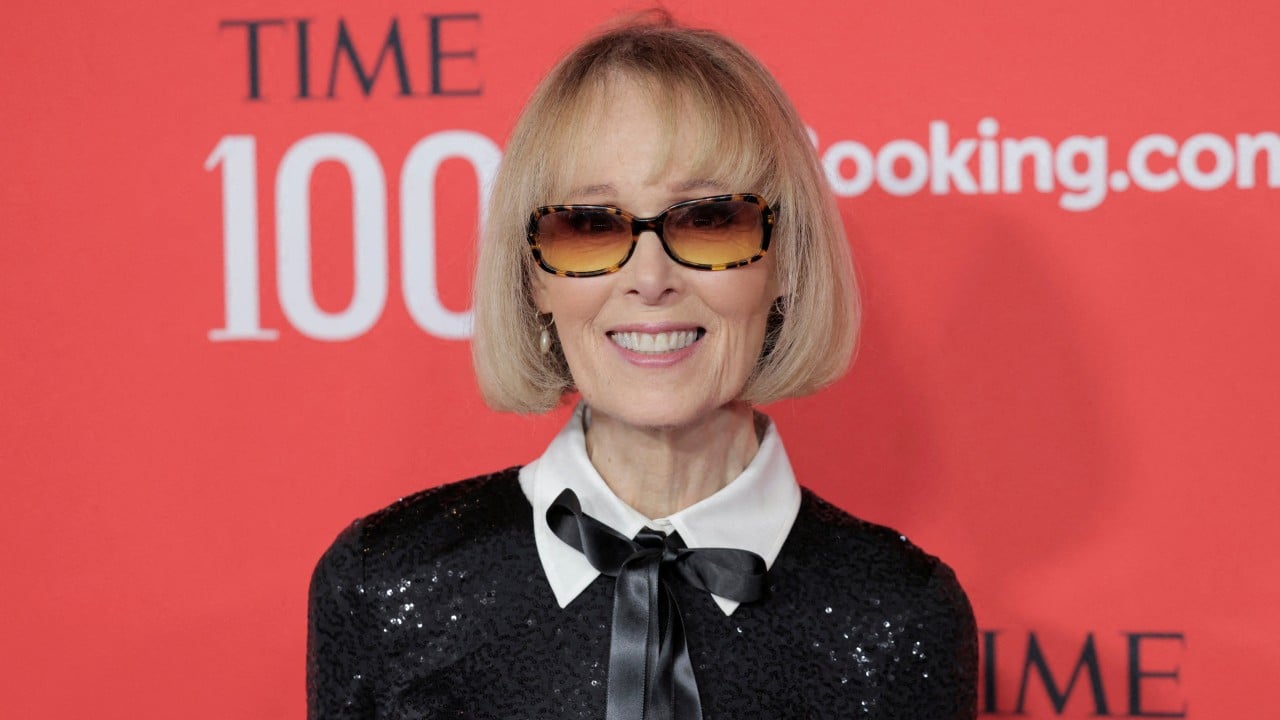
Donald Trump finally had to pay up. After three years of aggressive appeals, delays, and courtroom drama, the writer E. Jean Carroll received a payout of exactly $5,625,05.48.
A lot of people think this is just another political headline, but it’s a massive moment in modern legal history. For the first time, the former president's legal stall tactics hit a hard wall. The money, which grew from a $5 million jury award to over $5.6 million because of accrued interest, has officially been cleared from a court-controlled escrow account and transferred to Carroll.
But how did this actually happen despite Trump’s army of lawyers? Why did his typical playbook of endless delays fail? Understanding the mechanics of this payout reveals why this case is different, and what it signals for Trump’s other massive legal debts.
The Escrow Trap That Caught Trump
If you have ever been sued, or if you just follow high-profile litigation, you know that losing a trial is rarely the end of the road. Rich defendants often tie up judgments in appeals court for years, hoping the plaintiff runs out of money or patience. Trump tried to do exactly that.
But Carroll’s legal team, led by attorney Roberta Kaplan, anticipated this move.
They agreed to let Trump deposit his original $5 million jury award into the court’s Registry Investment System (CRIS) while his appeals played out. CRIS acts like a secure escrow agent. Once the money is in there, the defendant no longer controls it. They can't use financial tricks, shell companies, or bankruptcy threats to hold it hostage.
Trump and his attorneys signed an agreement stating that the money would be released immediately if the U.S. Supreme Court refused to hear his appeal.
When the Supreme Court officially declined to take the case on June 29, 2026, the trap snapped shut. Trump's legal team scrambled, asking the high court to reconsider and begging U.S. District Judge Lewis A. Kaplan to block the transfer.
Judge Kaplan denied the request. On July 9, 2026, the court authorized the release of the $5.6 million, and by July 14, Carroll's team confirmed that the eagle had landed.
What the Verdict Actually Established
To understand why this is such a huge deal, we need to go back to 2023.
A unanimous nine-person federal jury in Manhattan found Trump civilly liable for sexually abusing Carroll in a Bergdorf Goodman dressing room back in 1996. Because the statute of limitations had long passed, Carroll brought the case under New York’s Adult Survivors Act, which temporarily opened a window for victims of older sexual offenses to sue.
The jury also found Trump liable for defamation. When Carroll first went public with her story in 2019, Trump called her a liar, claimed he didn't know her, and famously said she wasn’t his "type".
The jury rejected his excuses. They ordered him to pay $5 million in damages.
Over the three years that Trump spent appealing the decision, the money sat in the court-controlled account, earning interest. Trump's delays ended up costing him an extra $625,000.
This Is Just the First Act
If you think $5.6 million is a major financial blow, it’s nothing compared to what’s coming down the pipeline.
This specific payout only covers the first trial, often referred to as "Carroll I". Trump still faces a massive, looming $83.3 million judgment from a second defamation trial that concluded in 2024.
In that second case, a different jury punished Trump for continuing to trash Carroll’s reputation from the White House briefing room and social media. The federal appeals court is currently looking at that $83 million judgment. Trump is using the exact same strategy there: appealing the ruling and fighting to keep from paying.
But the $5.6 million payout has established a powerful precedent. It proves that the judicial system can, and will, force collection on judgments against him once the appeals process is exhausted.
What Happens to the Money Now
So, what is E. Jean Carroll going to do with a $5.6 million wire transfer?
Trump’s legal team repeatedly claimed that Carroll brought this lawsuit for fame, book sales, and political gain. They even asked the court to place restrictions on how she could spend the money.
The judge rejected that request completely. The court’s order placed zero conditions on the funds.
According to her lawyers, Carroll plans to park the money in an interest-bearing retirement account for now, at least until the final, minor post-payment appeals from Trump’s team are completely cleared away.
For Carroll, who is now 82 years old, the victory is less about the cash and more about the accountability. She celebrated the payout by thanking her legal team and writing a note to her readers: "This win is for every woman in the world".
The immediate next step in this legal saga moves to the 2nd U.S. Circuit Court of Appeals. Trump's attorneys are fighting to overturn the much larger $83.3 million judgment. If they lose that appeal, Trump will face a financial reckoning that makes this $5.6 million payout look like pocket change.

