The paper arrived without ceremony.
In the late-night quiet of Capitol Hill, when the tourists have long departed and the marble corridors echo only with the hum of floor polishers, a courier delivered a document. It was a standard, high-grade bond sheet, slid into a folder, passed from one hand to another. It bore the signature of the President of the United States.
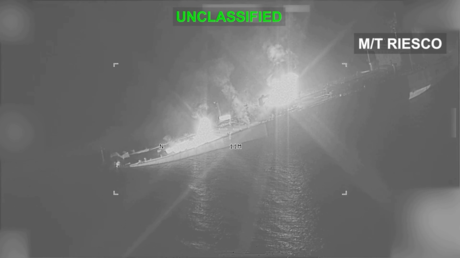
To an outsider, it looked like any other piece of executive correspondence—perhaps an appointment to a federal board or a routine policy update. But this page carried a different weight. It was the formal, legally mandated notification to Congress that the nation had once again crossed a threshold. The United States had initiated military action against Iran.
Under the War Powers Resolution of 1973, a president has exactly forty-eight hours to explain themselves after sending American forces into hostilities. The clock is relentless. Tick. Tick. Tick.
While the administration’s lawyers in Washington adjusted their ties and reviewed the precise, sterilized phrasing of the memo, thousands of miles away, the air tasted of sulfur and dust.
The Forty-Eight Hour Clock
For decades, the War Powers Resolution has functioned as a fragile constitutional safety valve. Born in the bitter aftermath of the Vietnam War, it was designed to prevent a single branch of government from sliding silently into endless conflict. The concept is simple: if the president orders a strike, they must tell Congress what they did, why they did it, and under what authority they acted.
But the law cannot measure the human pulse.
Consider a congressional staffer—let’s call her Sarah. She has worked on the Hill for six years. She is used to reading dry, bureaucratic prose. She knows the jargon of "imminent threats" and "proportional responses." Yet, when this specific notification landed on her desk, the dry language of Section 4(a)(1) suddenly felt heavy.
The document asserted that the military action was a defensive measure, authorized by Article II of the Constitution to protect American personnel from ongoing attacks by Iranian-backed militias. It spoke of deterrence. It spoke of strategic necessity.
But Sarah's brother is a forward-deployed intelligence analyst stationed in the region. To her, the document was not a legal brief. It was a countdown.
She stared at the signature at the bottom of the page. The ink was dry. The consequences, however, were just beginning to ripple outward.
Dust and Concrete on the Edge of the World
To understand what those sixty words of formal notification actually mean, you have to leave the carpeted offices of the Capitol and travel to the western desert of Iraq, to places like Al Asad Airbase.
Imagine a young specialist named Marcus. He is twenty-one, from a small town in Ohio where the loudest sound on a Friday night is the high school football siren. Right now, he is sitting in a concrete bunker that smells of stale sweat, damp sand, and the faint, chemical tang of bug spray.
The sirens are wailing.
A high-pitched, warbling scream that means only one thing: incoming.
When a missile is launched from across the border, there are no legal debates. There is no discussion of Article II or statutory authority. There is only the physical reality of waiting. Marcus presses his back against the reinforced concrete wall. He can feel the vibrations of the impact through his spine before he hears the sound.
Boom.
The earth shudders. Dust drifts down from the ceiling, dusting his eyelashes like gray snow. He holds a photo of his daughter in his gloved hand. He does not know if the strike the president just notified Congress about has neutralized the threat, or if it has merely kicked a hornet’s nest.
This is the translation of foreign policy. On paper, it is "renewed military action." In the dirt, it is a twenty-one-year-old praying that the overhead concrete holds against thirty-four hundred pounds of high explosives.
The Ghost of 1973
The tension between the executive branch and the legislature is as old as the republic itself. The founders intentionally split the war powers. They gave Congress the power to declare war, and the president the role of Commander-in-Chief. It was a deliberate system of friction, meant to slow down the march to violence.
But modern warfare does not move at the speed of an eighteenth-century horse and rider.
When drone strikes can be ordered from an air-conditioned trailer in Nevada and executed in minutes over the Persian Gulf, the constitutional friction begins to wear thin.
The executive branch often argues that the modern world requires instantaneous action. Threat detected, threat neutralized. Congress, on the other hand, frequently feels left in the dark, forced to read about military engagements in the news before receiving the official, classified notification.
In this instance, the formal notice was sent under a shroud of classification. This meant that while congressional leaders could read the full justification, the American public—the people whose sons, daughters, and tax dollars are sent into the fray—were left to piece together the truth from leaked reports and brief television statements.
This secrecy creates a profound sense of isolation. It forces us to ask: who are we actually protecting with this silence? Is it the security of the operations, or is it the political capital of those who ordered them?
The Weight of the Invisible Stakes
We tend to view geopolitics as a massive, abstract chess game. We analyze the move of a carrier strike group or the economic sanctions levied against a foreign central bank as if they are mere pieces on a board.
But every move on that board has a human cost.
When the United States strikes an Iranian-linked target, the chess pieces do not simply disappear. The family of an Iraqi civilian living near an ammunition depot hears the windows shatter in the middle of the night. An Iranian conscript, nineteen years old and miles from home, is caught in the blast radius. An American family in North Carolina stops answering calls from unknown numbers, terrified of who might be on the other line.
The formal notification sent to Congress is designed to make this messiness orderly. It fits the chaos of war into a neat, numbered format. It satisfies the letter of the law.
But it cannot satisfy the human need for certainty.
As the sun rose over Washington the morning after the notification arrived, the city went about its business. Commuters poured out of Union Station. Baristas steamed milk. Members of Congress gave speeches on the house floor about agriculture bills and tax reform.
Yet, in the offices where the classified document now sat in a secure drawer, the air remained tense. The paper had been filed. The legal box had been checked. The forty-eight-hour clock had stopped ticking, but the real timer—the one counting down to the next inevitable escalation—was still running silently in the dark.