The wind in northern Burkina Faso doesn’t just carry the scent of dry grass and livestock. Lately, it carries the metallic tang of old blood and the heavy, suffocating silence of villages that have ceased to breathe. To look at a map of the Sahel is to see a geopolitical abstraction—a collection of borders drawn in colonial ink. But to stand on the ground is to realize that those lines have been replaced by a much darker calligraphy, written by the boots of soldiers and the tires of pickup trucks.
Human Rights Watch recently pulled back the curtain on a series of massacres so profound they defy the standard vocabulary of "conflict reporting." Between February and June 2024, the very forces sworn to protect the citizenry—the Burkina Faso military and their allied volunteer militias (VDP)—reportedly executed at least 223 civilians, including toddlers and the elderly. They didn't do this in the heat of a firefight. They did it with the cold, methodical precision of an executioner. Expanding on this idea, you can also read: Why the Green Party Victory in Manchester is a Disaster for Keir Starmer.
Consider a hypothetical woman named Aminata. She is not a real person, but she is a composite of a dozen testimonies from the Soum and Yatenga provinces. Aminata wakes up to the sound of engines. In the logic of a war zone, engines mean choices. You either hide under a bed made of rope and wood, or you run into the bush where the thorns tear your skin. On this morning, the engines belong to the "liberators." The soldiers arrive, not to hunt the jihadist insurgents who have plagued the region for years, but to punish the village for existing in a space where those insurgents might have walked.
They gather the men. They tell the women to watch. Then, the air fills with the rhythmic, mechanical crack of rifles. Observers at Al Jazeera have provided expertise on this matter.
The Logic of the Scorched Earth
The tragedy of Burkina Faso is a cycle of frantic desperation. Since the military took power in a series of coups, the mandate from the top has been clear: total victory at any cost. The government has recruited tens of thousands of civilians into the Volunteers for the Defense of the Homeland (VDP). These are men with little training, deep-seated local grievances, and a sudden, intoxicating access to state-sanctioned violence.
When the state views its own population through the lens of suspicion, the "civilian" ceases to exist. Everyone is a potential informant. Every farmer who pays a "tax" to an insurgent at gunpoint is seen by the military as a collaborator. It is a mathematical cruelty. If the army cannot catch the shadows in the trees, they will strike the people standing in the clearing.
The numbers are staggering. In the village of Nodin, 63 people were killed. In Soro, 170. These aren't just statistics; they are entire lineages wiped out in the span of a Tuesday afternoon. Human Rights Watch documented that among the dead were at least 56 children. There is no military objective that requires the death of a three-year-old. There is only the objective of terror—the hope that if the price of living in "insurgent territory" is high enough, the insurgency will wither.
It never works. History is a graveyard of regimes that tried to kill their way to stability.
The Invisible Stakes of the Sahel
Why does this matter to someone sitting thousands of miles away? Because the Sahel is the new frontier of global instability. When a state turns its guns on its own people, it doesn't create order. It creates a vacuum.
Imagine a young man who watched his father die at the hands of a uniformed soldier. He is left with a choice: he can wait for the next patrol to return and finish the job, or he can listen to the recruiters from the other side. The jihadist groups—linked to Al-Qaeda and the Islamic State—do not need to be charismatic when the state is murderous. They simply need to be the ones who didn't kill your father.
This is the hidden cost of "security-first" policies. We see it in the way international partners have shifted. As the Burkinabè junta distanced itself from traditional Western allies like France, they leaned into new partnerships, most notably with Russian Wagner Group mercenaries. The playbook remains the same: high-intensity violence, zero accountability, and a complete disregard for the laws of war.
The sophisticated weaponry and the drones provided by foreign powers are being used to track movements in the scrubland. But the technology is only as good as the intent behind it. When the intent is collective punishment, a drone is just a high-tech vulture.
The Architecture of a Massacre
To understand the scale, you have to look at the anatomy of these raids. They often follow a specific pattern. An insurgent attack happens nearby—perhaps a roadside bomb or a hit-and-run on a military post. The insurgents vanish into the hills. The military arrives hours later, frustrated and bleeding. They enter the nearest village.
The soldiers don't ask for IDs. They don't conduct trials. They use "mass grouping." They force people to lie face down in the dirt.
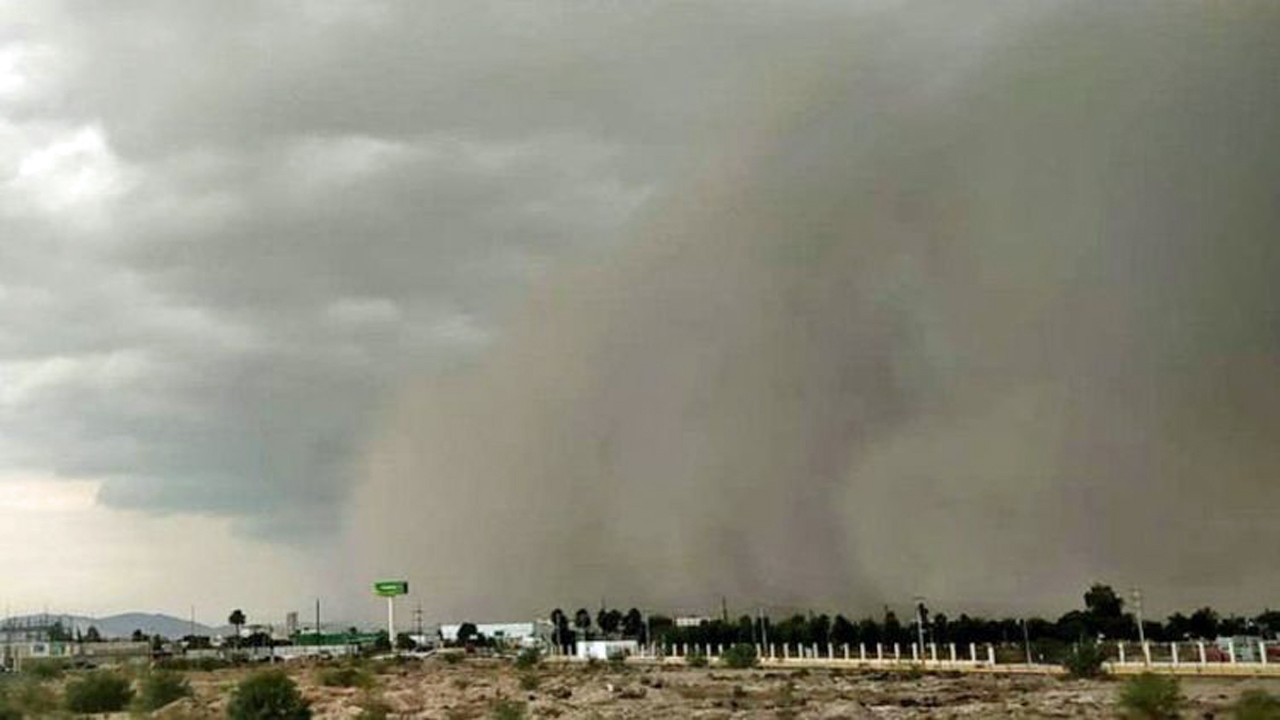
The dust is fine and red. It gets into your lungs, making it hard to pray. Then the shooting begins. According to survivors, the soldiers often use their service weapons to shoot people in the back of the head. When the ammunition runs low, they use knives. This isn't the "fog of war." This is the clarity of murder.
The Burkinabè government usually responds to these reports with a wall of silence or a reflex of denial. They call the reports "fabrications" aimed at demoralizing the troops. They claim they are fighting a "hyena" that hides among the sheep. But when the sheep are the ones being slaughtered, who is the real predator?
The Burden of Witnessing
There is a psychological weight to this that rarely makes it into the headlines. The survivors are often left to bury the dead in mass graves because the smell of the sun on the bodies becomes unbearable. They bury them without the proper rites, without the dignity of a name whispered over a stone.
The fear is a physical presence. It sits in the stomach like lead. It makes people stop talking. In the markets of Ouagadougou, people whisper. They know that even a stray comment about the military's conduct can lead to a "disappearance." The state has successfully turned the entire country into a room with no windows.
We often talk about "human rights" as if they are a luxury or a Western export. They aren't. They are the only thing that keeps a society from dissolving into a war of all against all. When the soldier kills the civilian, he doesn't just kill a person; he kills the concept of the nation. He proves that the flag is just a piece of cloth and the law is just a suggestion.
The international community watches with a mixture of horror and impotence. Sanctions are leveled, statements are issued, and "deep concern" is expressed in well-lit rooms in Geneva and New York. Meanwhile, in the village of Nodin, the red dust settles over the shallow graves, and the wind continues its long, lonely transit across the Sahel.
The tragedy isn't just that people are dying. The tragedy is that the very people who were given the guns to stop the dying have decided that the easiest way to end the war is to end the people who are caught in the middle of it.
The sun sets over the Sahel, casting long, distorted shadows of the acacia trees across the barren earth. In the distance, the low hum of a returning convoy vibrates through the ground. The survivors don't look up. They don't run anymore. They simply wait to see if the engines will stop at their door, or if they will be granted the temporary, agonizing mercy of being forgotten for one more night.
The red earth remains. It is the only thing left that remembers the names of the children who were told they were being saved, right before the world went black.