The seizure of Iran’s enriched uranium inventory is not a singular event but a series of high-stakes physical and political bottlenecks. Current geopolitical discourse often treats "seizure" as a monolithic military objective, yet an analytical decomposition reveals it is a multifaceted logistics problem governed by the laws of nuclear physics and urban warfare. To remove 60% Highly Enriched Uranium (HEU) from a hardened facility requires the simultaneous management of three distinct variables: physical extraction, radiological containment, and the neutralization of the rapid breakout capability.
The Triad of Proliferation Constraints
The challenge of Iranian uranium is defined by three specific physical states: the volume of the stockpile, the chemical form (Uranium Hexafluoride vs. Metal), and the geographic distribution across the Fordow and Natanz complexes.
1. The Enrichment Gradient and Conversion Latency
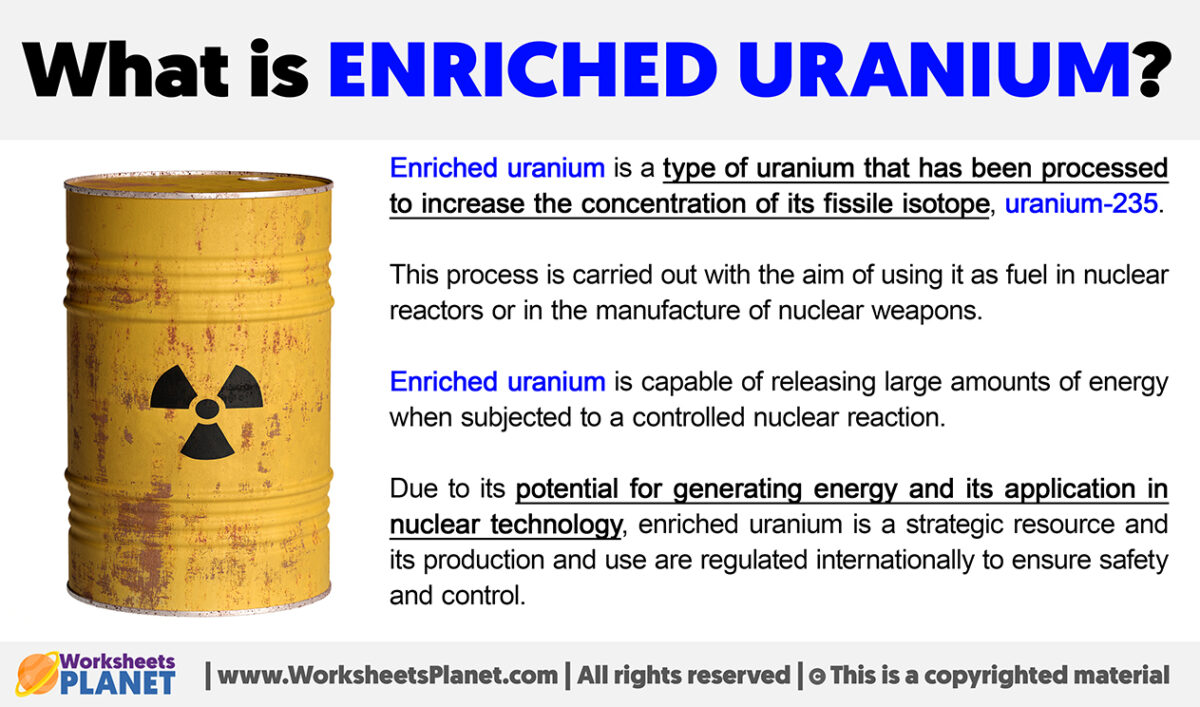
Iran’s stockpile of 60% enriched uranium represents a significant portion of the "work" required to reach weapons-grade levels (90%). In nuclear physics, the enrichment process is non-linear. Moving from natural uranium (0.7% $U^{235}$) to 4% requires significantly more Effort (measured in Separative Work Units or SWU) than moving from 60% to 90%.
The primary risk is the "conversion latency." If a seizure operation fails to secure the entire inventory, the remaining material can be fed into advanced IR-6 centrifuge cascades. Because the material is already highly enriched, the volume of feed material required is small, and the time to reach a "significant quantity" (SQ) for a nuclear device drops to days or even hours.
2. Geographic Hardening and the "Mountain" Problem
The Fordow Fuel Enrichment Plant (FFEP) is built deep into a mountain near Qom. Unlike Natanz, which is partially above ground and vulnerable to conventional kinetic strikes, Fordow was designed to withstand bunker-buster munitions.
A seizure operation at Fordow requires a ground-force presence to enter the tunnels, secure the cascades, and physically transport heavy, lead-shielded cylinders. The logistical footprint of such an operation is massive. You cannot simply "airlift" uranium out of a mountain while under fire; you must establish a "sterile corridor" that extends from the enrichment halls to an extraction point. This creates a massive target for counter-attacks, turning a surgical strike into a prolonged siege.
The Mechanics of Extraction: A Logistics Failure Point
Securing nuclear material is fundamentally different from capturing a traditional military objective. The material is toxic, radioactive, and often stored in a gaseous state ($UF_6$) within complex piping systems.
The Problem of State Transition
Uranium hexafluoride ($UF_6$) is the chemical form used in centrifuges. At room temperature, it is a solid, but it is processed as a gas. To "seize" it, one must either:
- Physically remove the cylinders: These are large, heavy steel containers. Moving them requires specialized cranes and transport vehicles.
- Cryogenic Desublimation: If the material is currently in the cascades, it must be cooled down to be "trapped" in cylinders. This requires power and time—two assets that are in short supply during a raid.
If the extraction team lacks the specific technical equipment to handle $UF_6$, they risk a chemical leak. When $UF_6$ contacts moisture in the air, it reacts to form hydrofluoric acid and uranyl fluoride, both of which are lethal. A botched seizure could result in a localized radiological and chemical disaster that renders the facility inaccessible to both the attackers and the defenders, effectively "denying" the material but failing to "secure" it.
The Escalation Calculus: Symmetry vs. Asymmetry
The decision to attempt a seizure rests on a risk-reward matrix where the cost of inaction (a nuclear-armed Iran) is weighed against the cost of the operation. However, this matrix often ignores the "Symmetry of Response."
Kinetic vs. Non-Kinetic Feedback Loops
A physical seizure is an act of war that transcends sabotage or cyber-attacks (like Stuxnet). It forces the Iranian leadership into a binary choice: total capitulation or total escalation. Because the Iranian regime views the nuclear program as its ultimate survival insurance, a seizure attempt likely triggers an asymmetric regional response.
- The Strait of Hormuz Bottleneck: Iran possesses the capability to mine the Strait of Hormuz, through which roughly 20% of the world's oil passes. The economic shock of a maritime blockade acts as a counter-leverage against any US-led seizure.
- Proxy Saturation: Using groups like Hezbollah or the Houthis, Iran can initiate multi-front conflicts that dilute US and Israeli military focus.
- The "Dirty Bomb" Contingency: If the Iranian military realizes the stockpile is about to be seized, they may choose to destroy the containers in situ. While this doesn't create a nuclear explosion, it creates a "dirty bomb" effect within the facility, contaminating the uranium and making recovery by the US impossible.
The Intelligence Gap and the "Ghost" Stockpile
A seizure operation is only as effective as the intelligence mapping the material's location. The International Atomic Energy Agency (IAEA) provides regular reports, but their access is limited and often delayed.
The greatest operational risk is the existence of clandestine facilities. If the US seizes all declared material at Natanz and Fordow but Iran has a hidden cache of HEU elsewhere, the operation achieves the highest possible level of escalation for a sub-optimal result. The "Breakout Clock" would be momentarily paused at the declared sites while accelerating at the hidden ones, now free from any remaining diplomatic or monitoring constraints.
Structural Vulnerabilities of International Law
The legal framework for seizing nuclear material is non-existent. Under the Treaty on the Non-Proliferation of Nuclear Weapons (NPT), a state’s sovereignty over its industrial assets is generally respected unless a UN Security Council resolution authorizes force.
A unilateral US seizure would likely be viewed by much of the Global South as an act of "nuclear piracy." This creates a long-term strategic cost: the erosion of the very international norms meant to prevent proliferation. If the precedent is set that "perceived intent" justifies the physical seizure of sovereign nuclear assets, other nuclear-threshold states may respond by further hardening their facilities or accelerating their breakout timelines to reach a "point of no return" before an intervention can occur.
The Cost-Benefit of Sabotage vs. Seizure
When compared to a seizure, kinetic sabotage (bombing) or cyber-sabotage remains the preferred military lever for a simple reason: Denial is cheaper than Possession.
To destroy a facility, you only need to hit it once with enough force. To seize the material, you must:
- Neutralize air defenses.
- Insert special operations forces.
- Secure a multi-level underground complex.
- Manage chemical/radiological hazards.
- Extract tons of material via slow-moving ground or air assets.
- Maintain a presence to prevent immediate re-occupation.
The "Cost Function" of a seizure is orders of magnitude higher than a strike. The only scenario where seizure becomes the logical choice is if the US requires the material for forensic analysis—to prove a specific foreign state provided the enrichment technology—or if the objective is to prevent any radiological release that would occur during a bombing.
Strategic Play: The Denial of Utility
The most effective strategy for managing the Iranian stockpile is not physical seizure, but the "Denial of Utility." This involves a three-pronged approach that targets the infrastructure rather than the material itself.
- Targeted Cascade Degradation: Instead of seizing the uranium, operations should focus on the "Bespoke Components" of the enrichment cycle. Centrifuges require high-strength carbon fiber, specialized maraging steel, and high-frequency inverters. By interdicting the global supply chain for these specific items, the utility of the 60% stockpile is neutralized because it cannot be moved to 90% without functioning cascades.
- In-Situ Neutralization: Developing capabilities to "poison" the uranium within the pipes. Introducing specific chemical contaminants into the $UF_6$ stream could make the uranium unusable for weapons without a massive, years-long purification process. This achieves the goal of non-proliferation without the logistical nightmare of extraction.
- The "Golden Bridge" for Material Export: Diplomacy has previously succeeded in moving enriched material out of Iran (as seen in the 2015 JCPOA where material was sent to Russia). The strategic play is to create a credible military threat of destruction that makes the "voluntary" export of material to a neutral third party (like Kazakhstan or China) the only viable path for the regime's survival.
The move to seize uranium must be viewed as the final step in a failed strategy, not a primary objective. The operational complexity and the certainty of a regional conflagration make it a "Pyrrhic Victory" unless the intelligence is 100% certain that a weaponization event is occurring within a 24-hour window. Outside of that narrow window, the focus must remain on degrading the industrial capacity to process the material, rather than the fool's errand of carrying it out of a mountain under fire.