There is a specific kind of silence that settles over an international airport terminal at three in the morning. It is not the peaceful quiet of an empty library, but a charged, humming vacuum. Overhead, the departure boards click and clack, a mechanical heartbeat tracking lives about to fracture across continents. Beneath those fluorescent lights, a traveler sits on a faux-leather bench, fingers tracing the gold foil seal on the front of a dark blue passport.
Inside that passport lies an assumption of invulnerability. For generations, an American passport functioned as an invisible skeleton key, a guarantee of safe passage written in the ink of diplomatic weight and historical dominance. You could board a flight to almost any corner of the globe, secure in the quiet belief that distant conflicts were cinematic spectacles happening behind glass screens, safely separated from your personal itinerary.
That illusion is becoming harder to maintain.
Consider David, a hypothetical structural engineer living in the heart of Riyadh. For two years, David’s world has been defined by the hum of air conditioning units, the sharp scent of cardamom coffee in morning meetings, and the endless expanse of desert highway stretching toward construction sites. His move to the Kingdom was supposed to be a chapter of professional expansion and quiet adventure. He knew the region carried friction, of course. Everyone knows the Middle East is a chessboard where pieces have moved violently for centuries. But David compartmentalized the risk. Risk was something that happened to other people, in other zip codes, on the evening news.
Then came the advisory.
When the United States Department of State updates its travel guidance, urging citizens to reconsider travel amid escalating security concerns and persistent Houthi attacks targeting Saudi Arabia, the notification does not arrive with the dramatic fanfare of a siren. It arrives as an email alert on a smartphone screen, polite and bureaucratic. Reconsider travel. Three innocuous words that carry the tectonic weight of an entire shifting geopolitical order.
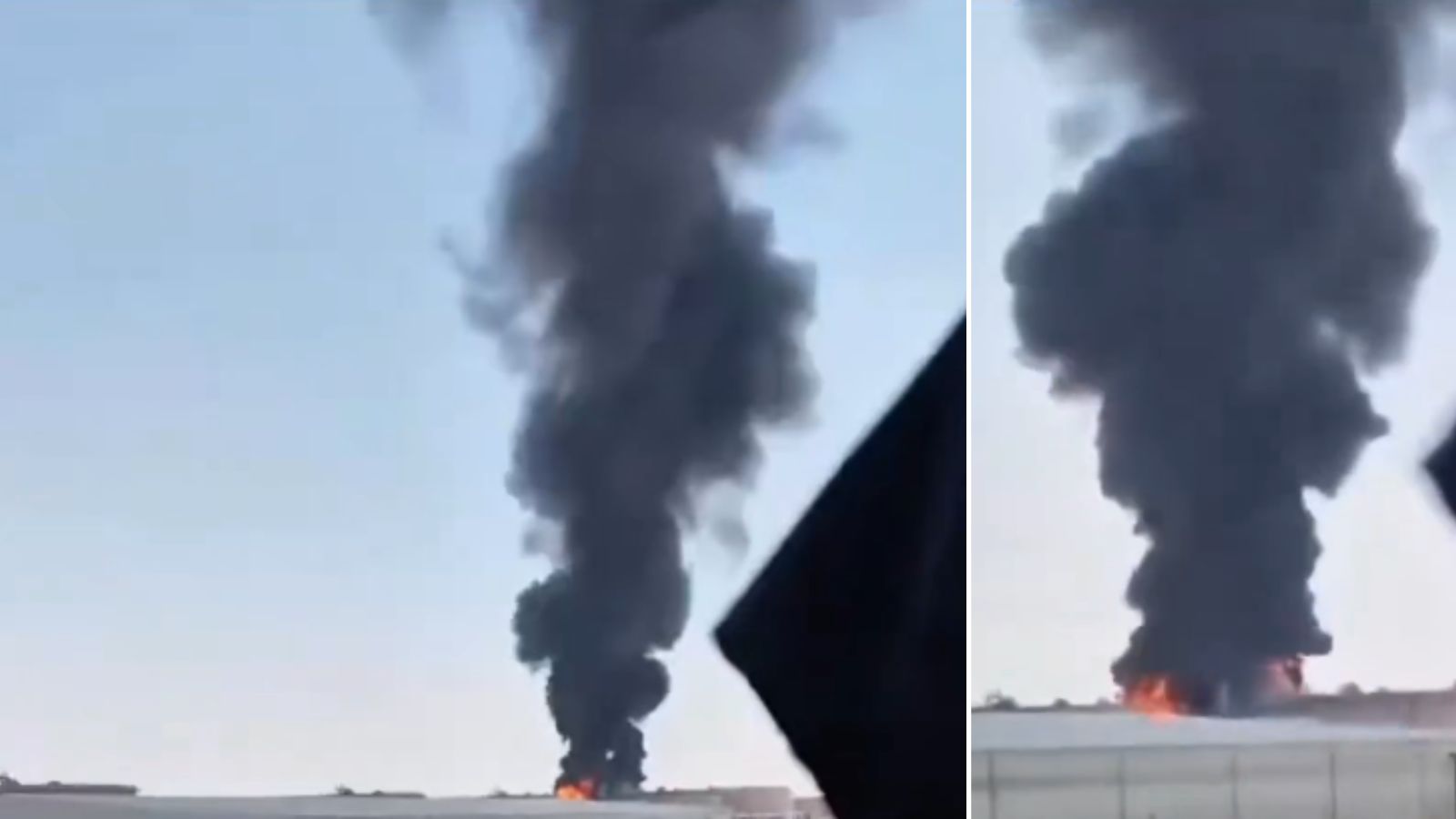
To understand why this advisory matters, one must look past the bureaucratic prose and examine the mechanics of modern vulnerability. For months, the skies above the southern Arabian Peninsula have been punctuated by invisible threats. Across the border in Yemen, the Houthi movement—backed by regional patrons and equipped with increasingly sophisticated loitering munitions and ballistic missiles—has repeatedly sought out strategic infrastructure. Oil facilities, desalination plants, international airports, and shipping lanes have all found themselves in the crosshairs of an asymmetrical war that refuses to stay contained within national boundaries.
When a drone or missile arcs through the night sky toward a civilian installation hundreds of miles away from active frontlines, the distance between diplomacy and danger collapses.
This is where the abstract statistics of foreign policy intersect with human reality. When the State Department issues a Level 3 travel advisory, it is not merely issuing a suggestion for cautious vacation planning. It is waving a yellow flag of profound caution, signaling that the local emergency infrastructure may soon find itself overwhelmed, and that the diplomatic safety net Americans traditionally rely upon could fray under the stress of sudden conflict.
David felt that shift on a Tuesday morning. He stood on the balcony of his eleventh-floor apartment, watching the morning haze mix with industrial dust over the city. A routine text message from his mother back in Ohio blinked on his screen: Saw the news about the attacks. Are you safe? When are you coming home?
That question is the crucible in which modern global anxiety is forged. Home. What does home mean when your livelihood, your apartment lease, and your daily routine are anchored ten thousand miles away from the country whose passport rests in your desk drawer?
The Houthi campaign against Saudi Arabia is not a localized skirmish; it is an economic and psychological pressure point in a wider regional struggle. By targeting the arteries of commerce and energy, the conflict seeks to demonstrate that no sanctuary is truly secure, no capital city completely insulated from the fallout of proxy warfare. When tankers are threatened in the Red Sea and air defense batteries light up the night over Saudi cities, the ripples are felt immediately in global markets, insurance boardrooms, and living rooms across the American heartland.
For decades, Americans traveling or working abroad operated under a tacit social contract. You respected local laws, kept a low profile, and trusted that the sprawling apparatus of American global power would keep the lights on and the skies clear. But the nature of conflict has evolved. The proliferation of low-cost, long-range unmanned aerial vehicles has democratized long-range destruction. State actors and non-state militias alike now possess the tools to project power far beyond their immediate borders, turning commercial hubs and urban centers into potential arenas.
This reality forces a difficult reckoning for the millions of expatriates, business travelers, and dual-national families whose lives bridge the United States and the Middle East. It transforms a simple airline ticket purchase into a complex moral and personal calculation.
What is the price of presence? How do you weigh the allure of career advancement, cultural immersion, and economic opportunity against the quiet, persistent hum of risk?
The advisory itself does not provide answers; it merely forces the questions into the open. It tells the traveler that the era of effortless global mobility is pausing for breath. It reminds us that borders are porous not just to commerce and culture, but to the consequences of unresolved geopolitical fractures.
Imagine standing in David's shoes for a moment longer. He looks at his passport again. The gold foil catches the harsh light of the apartment lamp. He is not panicked. There is no immediate scramble for the airport, no cinematic rush through barricaded streets. Real crises rarely announce themselves with explosions; more often, they arrive as a heavy, dragging realization that the ground beneath your feet is no longer quite as solid as it used to be.
He sets the passport down. He opens his laptop to check flight availability, hotel cancellation policies, and the latest embassy updates. The romantic notion of the carefree global nomad recedes, replaced by the sober, deliberate posture of someone who understands that security is not a permanent condition, but a fragile equilibrium maintained by vigilance.
When governments urge their citizens to reconsider travel, they are acknowledging the limits of their own protection. They are whispering a hard truth across the oceans: the world is getting smaller, noisier, and less forgiving of misplaced confidence.
The horizon remains visible from that eleventh-floor balcony in Riyadh. The sun rises, burning through the desert haze, casting long shadows across a landscape of steel and sand. The infrastructure hums, the traffic flows on the highway below, and life continues with its stubborn, resilient momentum. Yet, the air feels different now. Charged. Watched.
The advisory is out. The choice belongs to the individual. And in that quiet space between hesitation and action, the modern traveler learns the true cost of distance.