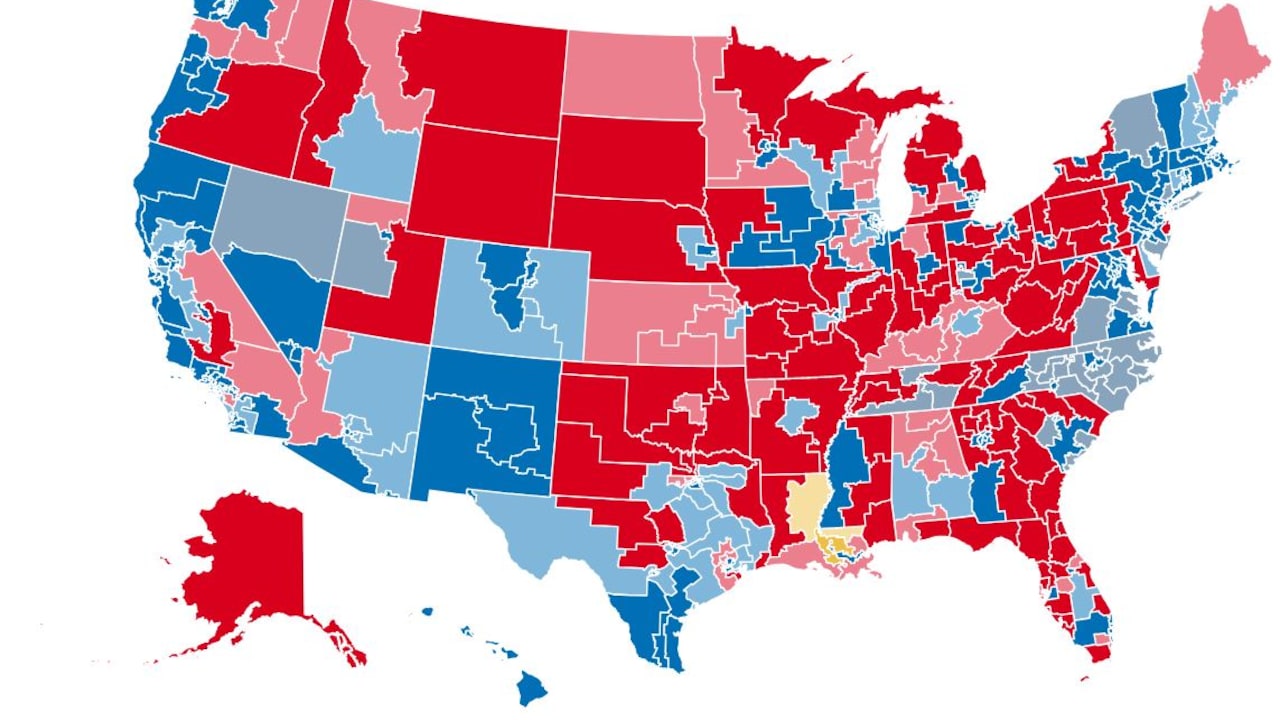
Democrats did not win back rural America by abandoning their core platform or miraculously converting deep-red strongholds into progressive bastions. They expanded their electoral map by narrowing the margin of defeat in non-metro counties—shifting losses from seventy-thirty blowouts to sixty-forty battles—while deploying year-round local organizing, hyper-localized economic messaging, and candidates who actually share the cultural DNA of the districts they seek to represent.
For two decades, the conventional wisdom in Washington was simple. Write off the countryside, run up the score in the cities, and hope the suburbs break your way. That math stopped working the moment suburban growth plateaued and rural margins turned into insurmountable landslides. Every percentage point lost in a county of thirty thousand people had to be clawed back at exorbitant cost in expensive metropolitan media markets.
The shift required dismantling the consultant-driven playbook that had dominated national politics since the turn of the century.
The Math of Losing Less
In modern American politics, winning a statewide race in a battleground state rarely means turning a rural county blue. It means losing that county by twelve points instead of twenty-eight.
Consider the arithmetic of a state like Pennsylvania, Wisconsin, or Michigan. A Democratic candidate does not need to win a majority in counties dominated by agriculture, manufacturing, or timber. When a campaign invests enough resources to peel away just five or six percent of rural voters—people who might otherwise vote straight-ticket Republican or stay home—the statewide math changes entirely. Those marginal gains compound across dozens of sparsely populated counties, neutralizing the opposition's built-in geographic advantage before a single urban ballot is even counted.
Margin compression is the quiet engine behind electoral map expansion. National pundits obsessed over flipping suburban cul-de-sacs often miss the structural reality that a vote gained in a rural township carries the exact same weight in a statewide tally as a vote gained in a downtown high-rise. Yet for years, campaign finance committees treated rural voters as a sunk cost, starving county parties of basic funding for yard signs, local radio ads, and voter registration drives.
Once strategists realized that ceding eighty percent of the geographic territory meant needing near-impossible turnout in urban cores just to break even, the calculus shifted. Money began flowing back into county-level infrastructure, not with the delusion of sweeping farm country, but with the cold, hard objective of stopping the bleeding.
Abandoning the Parachute Strategy
For generations, national campaigns practiced what local organizers bitterly call parachute politics. Six weeks before Election Day, twenty-something field organizers from coastal cities would drop into rural towns, rent a temporary storefront, mispronounce the names of local landmarks, and vanish the morning after the polls closed.
Voters noticed. In tight-knit communities where trust is built over decades rather than news cycles, transactional campaigning breeds deep resentment. It signals that the party only cares about rural residents when it needs their signatures or their ballots.
To break that cycle, successful state parties fundamentally altered their operational timelines. They shifted toward permanent field infrastructure. Instead of hiring temporary outsiders in September, they began funding local residents—retired teachers, union stewards, small business owners—to organize their own neighbors twelve months a year.
When the person knocking on your door attends your church, shops at the same hardware store, and sends their kids to the same consolidated high school, the conversation changes. Political disagreements do not magically evaporate, and deep ideological divides remain intact. However, the caricature of the opposing party as an alien, hostile force becomes much harder to sustain when its representative is your neighbor.
The Collapse of Local News and the Rise of Relational Organizing
This ground-level presence became even more critical as local journalism hollowed out across the American heartland. Hundreds of county-seat newspapers have shuttered over the past fifteen years, leaving vast stretches of the country as news deserts. When local papers die, national cable news and algorithmic social media feeds fill the vacuum.
Nationalized media turns every school board race and state legislative contest into a proxy war over the loudest cultural grievances in Washington. A voter in rural Ohio or North Carolina hears endlessly about national immigration battles or coastal campus protests, while hearing almost nothing about how state-level policy affects their county hospital or local water infrastructure.
Relational organizing—the structured practice of mobilizing voters through their existing personal networks—emerged as the primary antidote to media nationalization. Campaign apps and data tools were redesigned not to help strangers cold-call reluctant voters, but to map out who already knew whom inside a given zip code. A text message from a cousin or a conversation at a Friday night high school football game carries exponentially more persuasive power than a thirty-second television spot funded by an out-of-state super PAC.
Kitchen-Table Economics Over Cultural Abstraction
Messaging in rural districts underwent an equally ruthless overhaul. For years, national messaging consultants tested slogans in focus groups that sounded polished in Washington boardrooms but fell completely flat at rural diners. Talking about macroeconomic indicators, GDP growth, or sweeping federal climate initiatives meant very little to a family watching their local manufacturing plant shutter or struggling to find reliable broadband internet.
The campaigns that successfully expanded the map stripped away the abstract policy jargon and focused relentlessly on tangible local friction.
They talked about corporate consolidation in agriculture, pointing directly to how massive meatpacking conglomerates squeeze independent cattle ranchers while driving up grocery prices. They attacked pharmaceutical middlemen and private equity firms buying up rural hospitals, stripping them for parts, and leaving counties without emergency obstetric care. They framed infrastructure spending not as a grand legislative achievement, but as fixing the specific bridge that school buses could no longer safely cross and bringing high-speed fiber optic lines to farms so kids wouldn't have to sit in fast-food parking lots to finish their homework.
Let us take a hypothetical example to illustrate how this framing works in practice. Imagine two candidates running in a rural agricultural district. The first campaigns on broad national themes, discussing federal green energy mandates and abstract protections for democratic norms. The second talks specifically about the "right to repair" farm equipment, challenging manufacturers who lock farmers out of fixing their own tractors without paying exorbitant dealership fees. Both positions stem from a broader philosophy of checking corporate power and protecting working people. Yet the first sounds like a lecture from a distant bureaucracy, while the second addresses an immediate, infuriating obstacle in a voter's daily livelihood.
By anchoring their platform in local economic self-interest, candidates gave culturally moderate and conservative voters a compelling reason to split their tickets.
Candidate Recruitment and Cultural Fluency
The sharpest message in the world will fail if the messenger triggers an immediate cultural rejection. One of the most significant shifts in expanding the Democratic map involved a radical rethinking of candidate recruitment.
State parties stopped waiting for polished, resume-driven politicians to step forward and began actively recruiting non-traditional candidates who possessed organic credibility in rural spaces. Veterans, farmers, volunteer firefighters, rural educators, and local small-business owners were persuaded to run for state legislative and congressional seats that had gone uncontested for cycles.
These candidates did not run away from their backgrounds, nor did they adopt the sanitized, focus-grouped cadence of career politicians. They spoke the local vernacular. They understood the rhythms of rural life, from hunting season to county fairs, because they lived them.
Crucially, party leadership gave these candidates the breathing room to break from national orthodoxy when local realities demanded it. A candidate in a rural timber or mining district could forcefully advocate for union protections, public school funding, and accessible healthcare while expressing skepticism toward specific federal regulations that threatened local jobs. National purity tests were quietly shelved in favor of a simple metric. Does this candidate reflect the values and priorities of the people who actually live in the district?
Contesting Every Seat on the Ballot
A critical, often overlooked component of this strategy was the decision to stop leaving rural races uncontested. For years, state parties left dozens of state house, county commissioner, and sheriff races completely blank on the Democratic side of the ballot, reasoning that running a candidate in a seventy-percent Republican district was a waste of donor money.
That vacuum proved devastating. When one party runs unopposed cycle after cycle, the opposition party effectively ceases to exist as a civic institution in that community. There are no local fundraisers, no debates, no voter registration drives, and no reason for sympathetic voters to show up at the polls. Worse, uncontested down-ballot races depress turnout for the top of the ticket, costing statewide candidates thousands of votes they desperately need.
By recruiting sacrificial lambs—or better yet, genuine community leaders willing to run lean, grassroots campaigns in tough districts—parties forced the opposition to spend money defending turf they once took for granted. Every dollar a dominant party has to spend protecting a safe rural seat is a dollar it cannot spend attacking a vulnerable swing district.
The Structural Limits and Ongoing Friction
Pretending this approach is a silver bullet would be dishonest. The rural-urban divide in American politics remains deeply entrenched, driven by decades of demographic sorting, educational polarization, and media fragmentation.
Even the most disciplined, locally rooted campaign runs into hard ceilings. National political gravity is powerful, and in presidential election years, straight-ticket voting surges dramatically. A popular rural state representative who wins by appealing to local agricultural interests can still get swept away by a national wave fueled by polarizing presidential politics.
Furthermore, internal party tensions constantly threaten to unravel the coalition. Progressive activists in urban centers frequently clash with rural moderates over energy policy, gun regulations, and social issues. Building a tent wide enough to hold both a tenant organizer in a major metropolis and a cattle rancher in the plains requires constant, exhausting negotiation. Donors, too, remain impatient, often preferring the immediate gratification of flashy digital ad buys over the slow, unglamorous work of funding county party offices for years without an immediate return on investment.
Yet the alternative—retreating behind metropolitan borders and surrendering vast swathes of the country—is a guaranteed path to permanent minority status. Expanding the map requires showing up in places where the welcome is cold, listening without condescension, and doing the unglamorous, incremental work of earning back trust one town at a time.