The tea in Tehran goes cold faster when you are watching a screen from six thousand miles away.
Picture a kitchen in northern Tehran, just past midnight. Let us call the man sitting at the table Dariush—a hypothetical composite drawn from dozens of real conversations with middle-class engineers, teachers, and shopkeepers living under the weight of endless geopolitical brinkmanship. Dariush is thirty-eight. He remembers the blackouts of his childhood, the hollow thud of distant sirens, and the slow, grinding erosion of his savings as sanctions chewed through the Iranian rial like rust through iron. Tonight, his phone is propped against a sugar bowl. He is not watching state television. He is refreshing a live feed of American polling data, translating percentages into the only currency that matters to him anymore.
Survival.
In Washington, those numbers are treated like sport. Pundits dissect demographic crosstabs, swing-state margins, and approval ratings with the clinical detachment of meteorologists tracking a storm that will never touch their own roofs. When major American polls showed a decisive majority of voters rejecting military escalation with Iran—and dealing a sharp political setback to Donald Trump’s maximum-pressure posture—the headlines in the West framed it as a domestic referendum. A political stumble. A shift in the electoral wind.
In Tehran, people read those same numbers as a stay of execution.
"Americans said no to war," one user wrote on Persian-language social media as the polling averages settled, a phrase that ricocheted across encrypted messaging apps from Mashhad to Shiraz within hours. It was not an endorsement of any government. It was not a celebration of political victory. It was the sound of millions of ordinary people realizing that, for at least one more news cycle, the sky above their apartment buildings might remain empty.
The Invisible Math of Distance
To understand why a dip in an American opinion poll can trigger quiet euphoria in a city under sanctions, you have to understand the asymmetry of modern conflict. For an American voter sitting in Ohio or Pennsylvania, foreign policy is often an abstraction—a line item on a ballot, a heated argument at Thanksgiving, a distant rumble on the evening news. Even when war is on the table, the physical reality of it remains buffered by two oceans and the most powerful military apparatus in human history.
For someone living in Iran, there is no buffer.
Every speech delivered from a podium in Washington or Mar-a-Lago lands in Tehran with the weight of an anvil. When rhetoric sharpens, the rial plunges before the speech is even over. By morning, the price of imported insulin, cooking oil, and children's shoes has climbed another ten percent. Parents quietly cancel plans. Young couples postpone weddings. Hospital administrators begin counting vials of chemotherapy drugs like miser's gold.
I have spent years reporting on the psychological toll of economic warfare and perpetual crisis, and there is a specific kind of exhaustion that settles into a society when war is always five minutes away. It is not panic. Panic requires energy, and people cannot sustain panic for decades. Instead, it is a low-grade, chronic dread that flattens the future. You stop making five-year plans. You stop fixing the leaky pipe in the hallway because you do not know if the building will still be standing next spring.
Think of it like living on a fault line while two giants argue over whether to stomp their feet. You have no seat at the table. You cannot cast a ballot in their election. All you can do is watch their faces through a window and pray they step back from the edge.
What the Polls Actually Revealed
Strip away the cable-news noise, and the American polling data that sparked celebration across Iran told a remarkably consistent story. Across multiple independent surveys—including polling from Reuters/Ipsos, the Chicago Council on Global Affairs, and Pew Research—a clear majority of Americans expressed deep skepticism toward unilateral military intervention in the Middle East. Even among voters who favored tough rhetoric on Iran's nuclear program, the appetite for another prolonged, open-ended conflict was virtually nonexistent.
More striking still was the political vulnerability it exposed for Trump. Throughout his political career, Trump built a brand on unpredictability—the "madman theory" of statecraft, keeping adversaries off balance by convincing them he might do anything at any moment. Yet when voters were asked directly about the prospect of a shooting war with Iran, the bravado hit a wall. The memories of Iraq and Afghanistan—trillions of dollars burned, thousands of American lives lost, entire regions destabilized—remained etched into the American psyche like a scar that refuses to fade.
Voters looked at the prospect of another Middle Eastern war and recoiled.
In political terms, it was a warning shot across the bow of the White House. A president or candidate can survive many things in American politics, but dragging a war-weary public into a conflict it explicitly rejected is political poison. The polls showed that "America First," to the average voter, meant keeping American troops out of foreign quagmires—not marching toward another desert horizon.
The Street-Level Reality in Tehran
When those numbers filtered through the digital firewalls into Iran, the reaction was complex, layered, and deeply human—far removed from the monolithic caricature often painted in Western media.
To appreciate the nuance, you have to separate the Iranian state from the Iranian street. State-aligned media naturally seized on the polls as proof of American decline and strategic paralysis, framing the setback for Trump as a triumph of Iranian deterrence. That is the predictable choreography of statecraft.
What happened in private living rooms, university dormitories, and crowded metro cars was entirely different.
Consider Sara, another hypothetical composite reflecting the voices of young Iranian professionals in their twenties. Sara is a graphic designer in Isfahan who dreams of studying in Europe, spends half her income on VPN subscriptions just to access the open internet, and harbors no illusions about the authorities governing her daily life. She does not celebrate political victories for the Islamic Republic. Yet when she saw the American polling numbers showing widespread opposition to war, she cried in the breakroom of her office.
Why? Because bombs do not distinguish between dissidents and hardliners.
Sanctions and airstrikes fall on the same neighborhoods. When external military pressure mounts, it does not liberate ordinary citizens; it suffocates them. Historically, foreign threats have always handed authoritarian regimes their most potent weapon: the excuse to demand total obedience in the name of national survival. Civil society shrinks. Reformers are silenced as traitors. Every domestic grievance is shelved because the house is on fire.
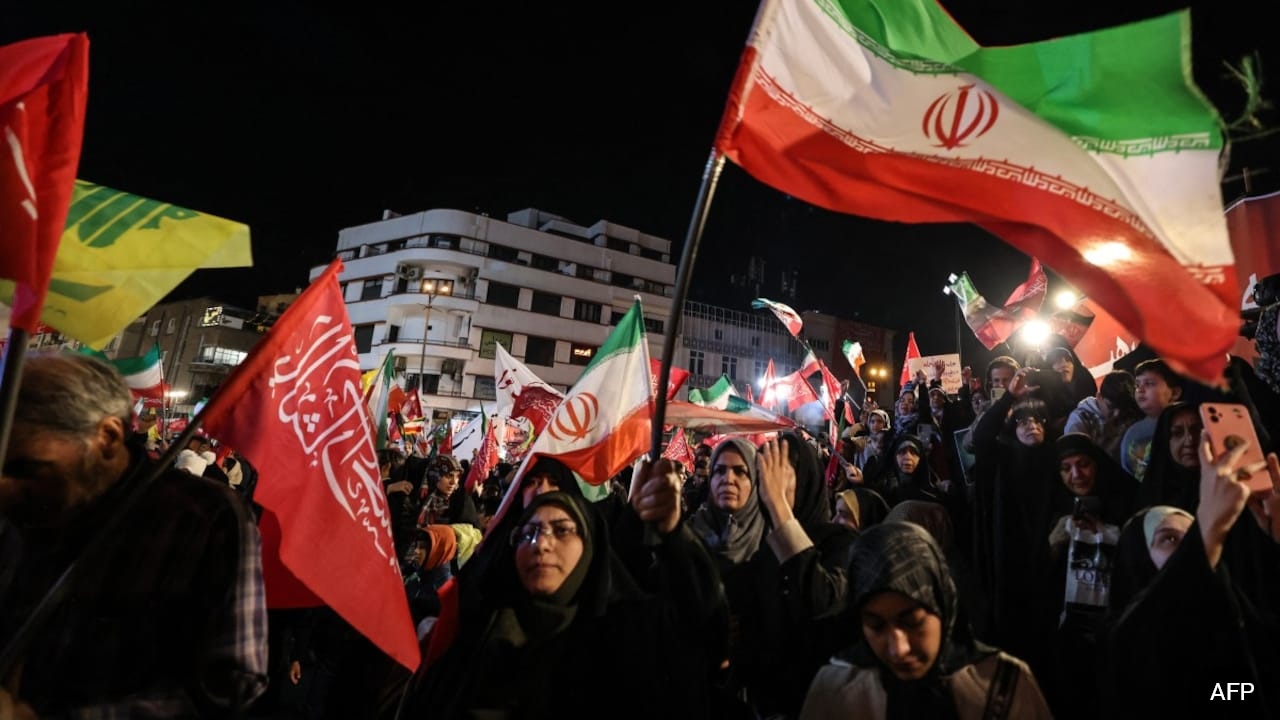
When Americans told pollsters they did not want war, ordinary Iranians heard something profoundly hopeful. They heard that the American public saw a difference between a government and its eighty-five million citizens. They heard that the people of the United States were not eager to set their country ablaze.
The Echoes of 1953 and 2003
History hangs heavy over any conversation between Washington and Tehran, and you cannot understand the emotional charge of these polls without acknowledging the ghosts in the room.
For Iranians, foreign intervention is never theoretical. They remember 1953, when a CIA-backed coup toppled Prime Minister Mohammad Mossadegh, derailing Iran's democratic trajectory and planting seeds of resentment that still bear bitter fruit seventy years later. They remember the 1980s, when Saddam Hussein's forces used chemical weapons against Iranian troops while Western powers looked the other way.
And they watched what happened next door in 2003.
Iranians saw Iraq—a neighbor with shared history, families, and trade—shattered by an American invasion sold on promises of swift liberation. They watched Baghdad descend into sectarian carnage, infrastructure crumble into dust, and millions of refugees spill across borders. Every Iranian family knows someone who fled war, or lost a brother in the trenches of the Iran-Iraq conflict, or watched a vibrant city reduced to rubble.
So when Western commentators casually debate "surgical strikes" or "limited military options" against Iranian facilities, Iranians do not hear clean, clinical terminology. They hear the opening chord of a catastrophe they have already seen play out next door.
I will admit something that analysts rarely say out loud: watching these cycles from afar is terrifying because of how easily miscalculation can override public will. Polls measure what people want today. They do not guarantee what a leader might do tomorrow in the heat of a crisis, a misread radar signal, or a stray missile strike. The gap between public opinion and executive power in foreign policy remains dangerously wide. That uncertainty never truly leaves the room.
Why Public Opinion Still Matters
Still, dismissing the polls as meaningless would be a profound mistake. In democracies, public sentiment acts like gravity. Leaders can defy it for a while, jumping higher and pushing harder, but eventually, it pulls everything back down to earth.
The polling setback forced a recalibration in Washington. Strategists began quietly toning down the most incendiary language. Hawkish voices found themselves on the defensive, forced to explain how escalation would avoid triggering the very regional conflagration voters feared. The political cost of war suddenly had a price tag attached to it, measured in lost swing-state votes and cratering approval numbers.
In Tehran, people noticed the shift in temperature immediately.
The rial stabilized slightly—not enough to erase years of inflation, not enough to make meat affordable again for working-class families, but enough to stop the freefall. Conversations in taxis shifted from hoarding canned goods to cautious speculation about diplomacy. Small, fragile slivers of normalcy crept back into daily routines.
It is a strange, haunting thing to witness: the emotional wellbeing of millions of people in the Middle East tethered to survey samples taken in suburban shopping malls and on landline phones across the American Midwest. Yet that is the reality of an interconnected world where the decisions of a superpower ripple outward like shockwaves across water.
The Morning After the Numbers
Back in that kitchen in northern Tehran, Dariush finally closes the browser tab on his phone. The blue light fades from his face. Outside his window, the Alborz mountains are beginning to catch the first pale gray light of dawn, their jagged peaks dusted with snow.
Down on the street below, a baker is rolling up the metal shutter of his shop, the smell of warm sangak bread drifting up into the crisp morning air. A municipal worker sweeps dry leaves from the gutter. Life, stubborn and resilient, resumes its rhythm.
Nothing fundamental has been solved. The sanctions remain. The diplomatic deadlock endures. The structural grievances between Washington and Tehran sit untouched beneath the surface like unexploded ordnance.
Yet for one morning, the air feels lighter. Across an ocean, millions of strangers who will never walk these streets or taste this bread answered a simple question with a quiet, collective refusal. And in the silence that followed their answer, a city dared to breathe again.


