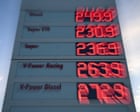
Retail fuel prices do not spike coincidentally in October; they represent the convergence of structural refining bottlenecks, synchronized inventory drawdowns, and distribution friction that predictably intersect with biennial electoral windows. When wholesale gasoline costs accelerate weeks before a midterm election, public discourse typically defaults to a binary narrative of political culpability or international cartel manipulation. Both explanations obscure the mechanical reality of domestic petroleum markets.
Price formation at the pump is governed by a precise cost function involving feedstock acquisition, refinery capacity utilization, seasonal specification shifts, and regional logistics margins. Understanding why fuel prices surge during specific calendar quarters requires dismantling the transmission mechanism connecting global crude benchmarks to local station marquees. For a different view, read: this related article.
The Mechanical Cost Function of Retail Gasoline
The retail price of gasoline is not a direct reflection of crude oil spot prices. It is a composite function derived from four distinct variables: crude oil feedstock costs, refinery crack spreads, distribution and marketing margins, and federal, state, and local taxation.
$$\text{Retail Price} = (\text{Crude Cost} \times \text{Yield Factor}) + \text{Refining Margin} + \text{Distribution Margin} + \text{Taxes}$$ Similar reporting on this matter has been published by MarketWatch.
Crude oil typically accounts for roughly fifty to sixty percent of the final pump price, depending on the grade and refining complexity required. The remaining components fluctuate based on operational capacity and logistical constraints. When retail prices approach annual highs ahead of midterms, the upward pressure rarely stems from crude alone. More frequently, it originates in the refining sector, where the crack spread—the gross margin a refiner makes from cracking crude oil into gasoline and distillate fuel—expands rapidly due to supply constriction.
This constriction is structural. Late-summer and early-autumn periods coincide with a mandatory transition in fuel specifications. Refineries must switch from producing Reid Vapor Pressure (RVP) summer-grade gasoline, which limits evaporative emissions in high temperatures, to winter-grade blends containing higher concentrations of volatile butanes. This transition requires temporary unit shutdowns for line-clearing and tank-switching, reducing operational output precisely when inventory buffers are thinnest following peak summer driving demand.
Refinery Utilization and Capacity Constraints
The domestic refining sector operates under strict economic incentives that prioritize margin optimization over reserve capacity. Over the past decade, total U.S. refining capacity has contracted rather than expanded, driven by environmental regulations, conversion of facilities to renewable diesel production, and corporate rationalization following pandemic-era demand shocks.
When utilization rates push past ninety percent, the system loses its shock absorber. A single unplanned outage at a major regional facility—such as a fluid catalytic cracker unit (FCCU) failure on the Gulf Coast or in the Midwest—creates an immediate spot-market deficit. Because refined products cannot be easily substituted across distant geographic regions due to pipeline routing and regional specification mandates, localized supply shocks propagate rapidly into regional price spikes.
The export parity dynamic further complicates domestic inventory management. U.S. refiners operate in a globally integrated market. When European or Latin American deficits drive international spot prices higher, domestic refiners face commercial incentives to export finished products, drawing down domestic stockpiles even if domestic demand remains stable or contracts. This export flow maintains high capacity utilization while simultaneously tightening domestic inventory cover days, setting the stage for rapid price acceleration at the pump.
Distribution Logistics and Regional PADD Friction
The United States petroleum market is subdivided into five Petroleum Administration for Defense Districts (PADDs), each functioning as a semi-isolated economic ecosystem with distinct supply sources, pipeline networks, and pricing dynamics.
PADD 1 (East Coast) and PADD 5 (West Coast) exhibit the highest structural vulnerability to price shocks. The East Coast lacks significant internal refining capacity relative to consumption and relies heavily on pipeline deliveries from the Gulf Coast (via the Colonial Pipeline) and marine imports from Europe and Canada. When Colonial experiences operational curtailments or Gulf Coast refiners undergo maintenance, East Coast inventories deplete within days.
The West Coast operates as an energy island. PADD 5 is largely disconnected from the major pipeline networks of the interior, requiring refineries in California, Washington, and Alaska to satisfy virtually all local demand. Furthermore, California imposes unique, stringent environmental fuel specifications (CARB Phase 3 gasoline) that cannot be easily supplied by standard Gulf Coast or imported blends. Consequently, any domestic supply disruption on the West Coast results in extreme retail price divergence from national averages.
Distribution margins widen during these periods of localized scarcity. Wholesalers and station operators adjust prices not merely to cover replacement costs, but to manage inventory velocity and protect against sudden downward price swings. This pricing behavior creates a asymmetry known as rockets and feathers: retail prices rise rapidly in response to wholesale cost increases but decline sluggishly when wholesale costs subside.
The Electoral Feedback Loop and Consumer Psychology
The acute political sensitivity of fuel prices stems from consumer behavioral economics. Gasoline is a high-frequency purchase with prices prominently displayed on large marquees along primary commuter routes. Unlike most consumer goods, where price changes are subtle or bundled into broader inflation metrics, gasoline serves as a constant, highly visible proxy for the health of the broader economy.
This visibility generates a disproportionate psychological penalty for political incumbents. When pump prices breach key psychological thresholds—such as four dollars per gallon—consumer sentiment indices experience sharp contractions regardless of real wage growth or employment stability.
Governments frequently attempt to counteract this dynamic through administrative interventions, such as releasing crude from the Strategic Petroleum Reserve (SPR) or proposing temporary gasoline tax holidays. However, these interventions face severe operational and economic limitations:
- SPR Releases: Releasing sour, heavy crude from the SPR does not instantly translate into refined gasoline. The crude must still be purchased, transported, and processed by refineries that may already be operating at maximum capacity. The impact on immediate pump prices is often muted compared to the announcement effect.
- Tax Suspensions: Suspending state or federal gas taxes typically fails to provide full relief to consumers. In concentrated retail markets, suppliers and station operators frequently capture a significant portion of the tax reduction by widening their retail margins rather than passing the full savings to the end consumer.
Structural Vulnerabilities and Strategic Outlook
The recurrence of fuel price spikes ahead of major electoral events highlights a permanent structural vulnerability in liquid fuel supply chains. As long as global demand tracks or exceeds net refining capacity, and as long as environmental mandates require biannual fuel specification changes, seasonal supply contractions will remain an inevitable feature of the energy market.
Policymakers and market participants operating within this space must plan around these predictable friction points rather than treating them as anomalous political crises. Strategic positioning requires monitoring three leading indicators well in advance of seasonal transition windows:
- PADD-Specific Inventory Levels: Tracking weekly days-of-supply metrics across individual PADDs rather than aggregate national inventory figures, as localized deficits dictate price spikes.
- Refiner Net Margins and Crack Spreads: Monitoring the trajectory of 3-2-1 crack spreads to anticipate when margin expansion will begin forcing retail price escalation.
- Scheduled Maintenance Calendars: Mapping planned turnaround schedules for key refining complexes in the Gulf Coast and Midwest against seasonal demand curves to identify systemic vulnerability windows.
Supply chain resilience in liquid fuels requires structural redundancy that current economic incentives discourage. Until refining capacity margins widen significantly or alternative transportation vectors achieve systemic scale, retail fuel volatility will remain tightly coupled with the calendar, punishing incumbents and rewarding operators who accurately forecast logistical friction.