Two trading powerhouses just stopped waiting for Washington to blink.
When President Donald Trump escalated tariff pressure against Canada and tested transatlantic nerves in 2025 and 2026, Ottawa and Brussels didn't just issue polite communiqués. They started building a parallel economic and security architecture. The Canada and the EU partnership isn't a ceremonial photo op anymore. It's a hard-nosed hedging strategy born out of tariff shock, supply chain anxiety, and a shared realization that bilateral bargaining with a superpower leaves smaller economies exposed.
Most coverage treats this shift as pure diplomatic theater. That misses the real story. Beneath the speeches in Strasbourg and Montréal, policymakers and corporate treasurers are quietly rerouting procurement contracts, critical mineral investments, digital rules, and defense hardware away from single-point reliance on the United States.
Why Canada and the EU Are Teaming Up Without Waiting for Washington
Look at the math first. Bilateral trade between Canada and the European Union rose 10% from 2024 to 2025, hitting roughly $178 billion, with the EU standing as Canada's second-largest global source of foreign direct investment. That isn't pocket change. Still, for decades, Canadian exporters treated Europe like a nice-to-have side market while the U.S. absorbed the lion's share of goods.
Tariff turbulence flipped that script fast. Beginning in early 2025, the Trump administration rolled out steep duties on Canadian imports—including 25% across-the-board tariff orders, 25% tariffs on steel and aluminum that later expanded to 50% on many core metal imports, and later Section 338 tariffs hitting Canadian autos, alcohol, dairy, and other categories. Even when parts of those duties faced court challenges—like the U.S. Supreme Court striking down certain International Emergency Economic Powers Act tariffs in February 2026—the unpredictability itself did lasting damage.
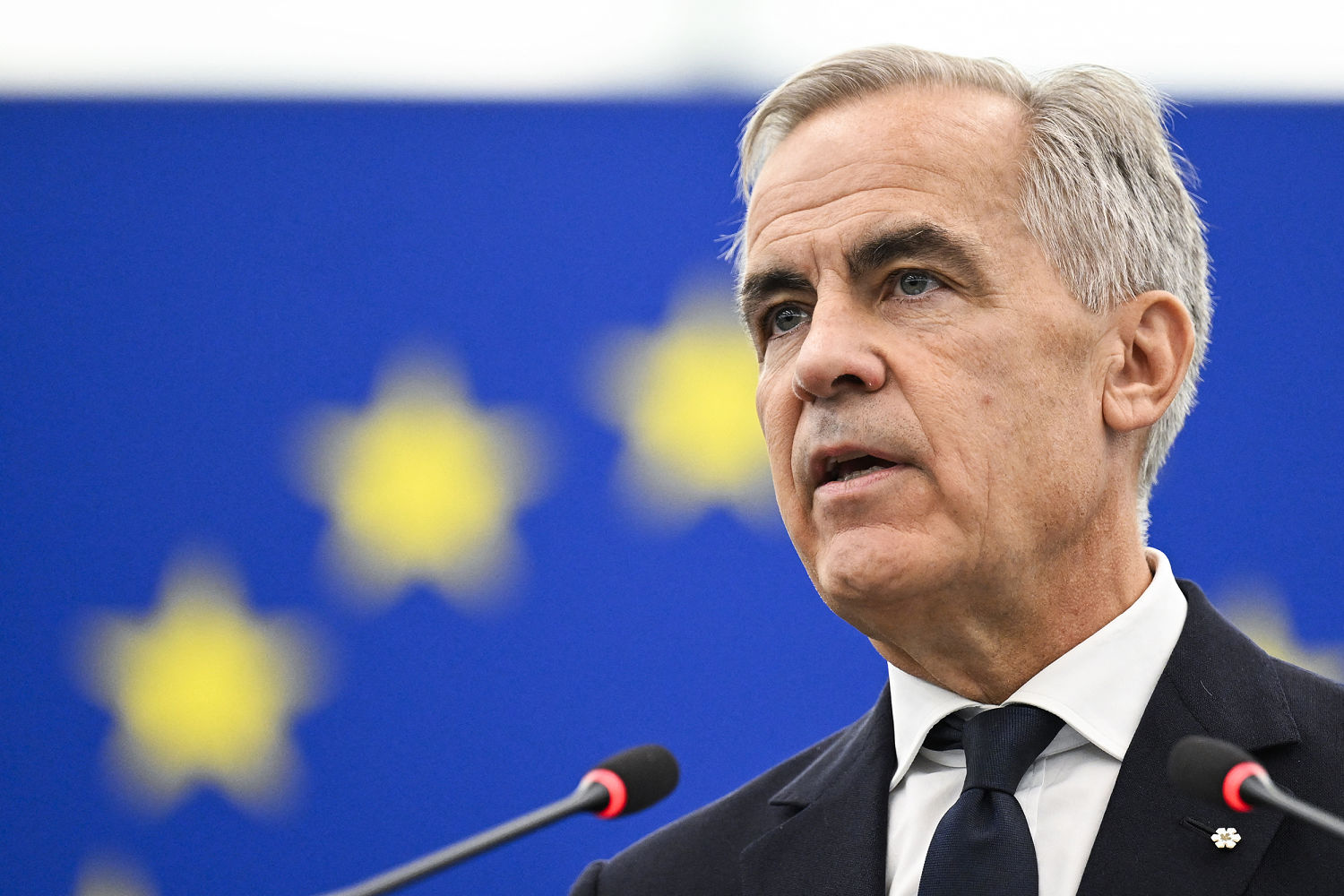
Prime Minister Mark Carney put the core grievance bluntly: negotiating bilaterally with a hegemon means negotiating from weakness, mistaking subordination for sovereignty. When economic integration gets weaponized through sudden border or tariff shocks, diversification stops looking like an academic recommendation and starts looking like survival.
In September 2026, European Commission President Ursula von der Leyen went even further during her State of the Union address, floating the idea of making Canada the EU's first associate member. Trump reacted by warning that treating Canada as an associate member could look like a hostile act worthy of heavy tariffs. Yet by late October 2026, leaders met in Montréal for the 21st Canada-EU Summit and rolled out what they called an "Alliance for the Future".
You don't build a multi-track institutional bridge in a matter of months unless both sides see a structural problem that isn't going away after one election cycle.
What the New Canada-EU Playbook Actually Looks Like
Press releases love grand slogans. What matters for businesses and workers is where money and rules actually move.
Critical Minerals and Industrial Supply Chains
If you want to counter tariff leverage, you start with inputs nobody can easily replace. Canada sits on critical minerals that European manufacturers need for batteries, grids, and defense hardware. At the Montréal summit, Canada and the European Investment Bank wrapped up negotiations on a treaty framework allowing the EIB to invest directly in Canadian critical minerals projects. Both sides also launched joint work on raw materials stockpiling, processing, and recycling.
On the energy side, Ottawa and Brussels agreed to study long-term LNG exports, grid cooperation, and modernization of the Canada-Euratom Nuclear Cooperation Agreement. Let's be honest: shipping Canadian LNG across the Atlantic has real infrastructure and cost hurdles compared to U.S. Gulf Coast terminals. Anyone pretending Canada replaces American energy overnight is selling a fantasy. Still, locking in feasibility studies and offtake frameworks gives European buyers a second Western supplier when Washington plays hardball.
Defense Procurement and Hard Security
Trade disputes rarely stay trapped in commerce ministries. Canada has joined the EU's Security Action for Europe (SAFE) procurement instrument, turning defense buying into a two-way street. Montréal-based Marconi picked up a SAFE contract for radios built for Poland's Cyber Command, while Montréal's Galvion landed a contract above $44 million to supply military helmets to Latvia. Meanwhile, Ottawa and Brussels backed financing—up to $2.5 billion—to scale up production of Alberta-made De Havilland waterbombers, anticipating deliveries of 24 DHC-515 aircraft to EU member states.
Add in cooperation on the EU's IRIS² secure satellite system, Galileo positioning services, and Frontex–CBSA border coordination, and you see a pattern. Security integration used to flow almost exclusively through Washington-centered channels. Now Canada is plugging directly into European industrial and security plumbing.
Digital Trade, AI, and Rules That Stick
Tariffs hit physical containers at ports. Regulatory alignment shapes software, cloud services, and AI labs.
At the October 30, 2026 summit in Montréal, Canada and the EU concluded negotiations on a Digital Trade Agreement meant to sit alongside the Comprehensive Economic and Trade Agreement (CETA). CETA already wiped out roughly 99% of tariff lines between the two markets. The new digital pact locks in binding rules on data flows, consumer protection, and digital trust while leaving room for national priorities like privacy, public-sector data, culture, and cybersecurity.
Canada is also linking into EuroHPC JU for supercomputing and AI infrastructure, while both sides are looking at mutual recognition in digital identity and AI conformity assessments. Think about what that means for a mid-sized software or AI firm in Toronto or Amsterdam. Instead of building separate compliance stacks for two fragmented regimes, they get a single transatlantic lane—even as U.S. trade rules grow erratic.
Where the Alliance Is Strong—and Where It Hits a Wall
It's tempting to call this a neat counterweight to Trump's trade doctrine. Reality is messier.
First, geography doesn't care about summit communiqués. Canada shares a massive land border and deeply integrated auto, manufacturing, and energy supply chains with the United States. Even with surging EU trade, Canadian firms can't flip a switch and replace U.S. demand. In fact, during the 2025–2026 trade clash, Ottawa had to roll out targeted relief measures—like a six-month pause on certain retaliatory tariffs for inputs used in Canadian manufacturing and food packaging—because slapping tariffs on American intermediate goods hurts Canadian factories too.
Second, Brussels has its own internal split personality. European trade officials have worried for years about triggering a full-blown transatlantic tariff spiral while needing U.S. backing on broader security files like Ukraine. Even as von der Leyen floated associate membership for Canada, EU member states still have to hash out what "associate membership" actually means legally, financially, and politically—and whether unanimous approval among 27 capitals is even realistic.
Third, domestic politics in both places can slow things down. Provincial interests in Canada—from Quebec's autonomy concerns to Western energy producers—don't always align seamlessly with Brussels' green and regulatory priorities. In Europe, national industrial champions still guard procurement budgets jealously.
Still, none of those flaws erase what's happening. European Policy Centre analysts have pointed out a lesson running through Ottawa's approach: economic dependence doesn't have to mean automatic political submission, provided you build deterrence, partnerships, and domestic resilience first. That's the real hinge here. Not revenge. Leverage.
What Businesses and Policymakers Should Do Next
If you run supply chains, advise boards, or shape policy, waiting for Washington and Ottawa to kiss and make up is a terrible bet.
Start by auditing where your revenue, inputs, and compliance work depend on a single U.S. corridor. Map out which components, software stacks, or financing lines could get caught in sudden tariff shifts or retaliatory duties.
Next, use existing bridges rather than waiting for future treaties. CETA is already live, the Canada-EU Digital Trade Agreement is moving toward formal signature and ratification, and programs like Horizon Europe association and SAFE procurement are open right now. Look at how European investment vehicles—including the EIB's new critical minerals framework with Canada—and Canadian export-credit or industrial programs line up with your capex plans.
Finally, build dual-track optionality into contracts. Dual-source critical inputs where feasible, lock in flexible currency and logistics terms, and treat Canada-EU regulatory alignment as an active commercial asset rather than background noise. The countries that weather tariff wars best aren't the ones that guess every headline right; they're the ones that give themselves somewhere else to trade when the door narrows.