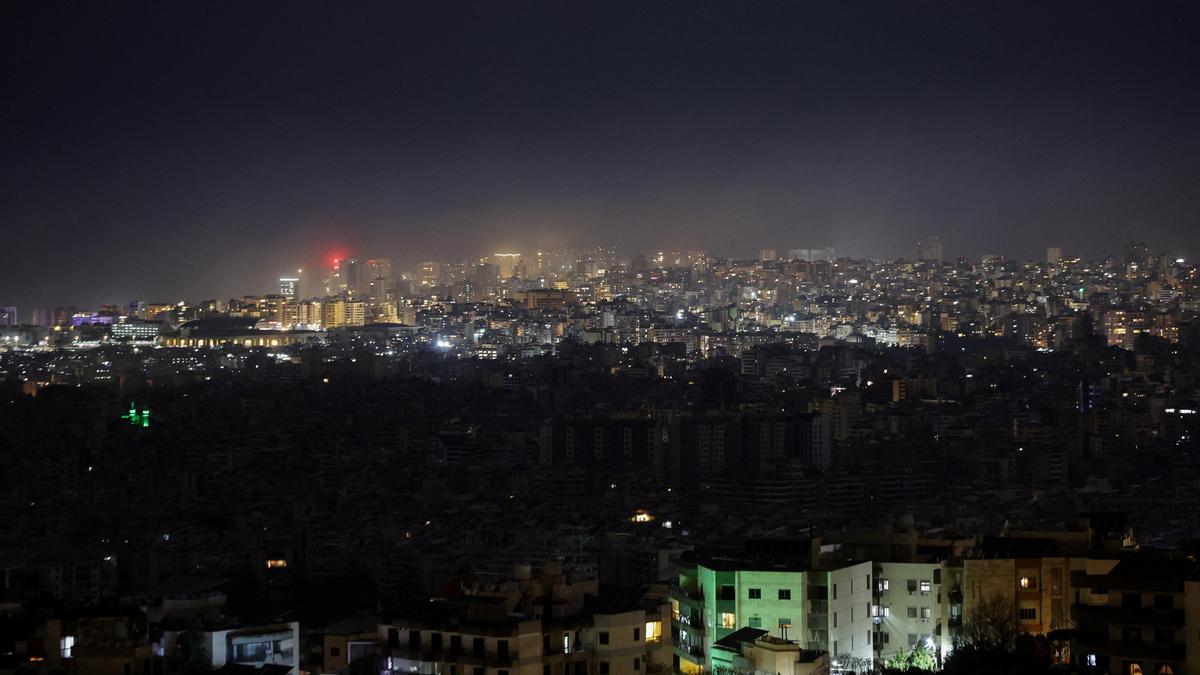
Fresh signals from Jerusalem and Beirut suggest that high-level talks are no longer a matter of if, but when. Israeli officials have begun briefing domestic and international outlets on a proposed framework to end the current hostilities, aiming for a diplomatic solution that would push armed forces back from the Blue Line. This development comes after months of cross-border attrition that has displaced over 150,000 people on both sides of the frontier. The immediate goal is the implementation of a modified version of UN Resolution 1701, creating a buffer zone free of non-state military assets. However, history suggests that a signed paper in a luxury hotel suite rarely translates to security in the rocky hills of the Galilee or the valleys of Southern Lebanon.
Diplomacy in this corridor has always been a game of shadows. While the headlines focus on the "talks," the real story lies in the desperate need for both governments to project a return to normalcy. For Israel, the political pressure to return displaced northern citizens to their homes is reaching a breaking point. For Lebanon, an economy in a state of permanent collapse cannot sustain the infrastructure damage of a full-scale war. These are negotiations born of exhaustion rather than a genuine desire for reconciliation.
The Ghost of Resolution 1701
The international community keeps pointing toward UN Resolution 1701 as the gold standard for peace. It is a flawed premise. Passed in 2006, the resolution was designed to ensure that the area between the Litani River and the border was restricted to the Lebanese Armed Forces (LAF) and UNIFIL peacekeepers.
In reality, the last two decades saw the steady militarization of that very zone. The failure was not in the wording of the resolution, but in its enforcement. UNIFIL lacks the mandate to engage in proactive disarmament, and the LAF is frequently sidelined or co-opted by local political realities. Any new talks that rely on the same enforcement mechanisms are essentially scheduling the next conflict.
Observers now suggest a "1701 Plus" model. This would involve a more robust international monitoring team, likely including American or French technical assistance, to verify that no long-range munitions or underground facilities remain within striking distance of the border. But verification requires access, and access in Southern Lebanon is a sovereign minefield that the Lebanese government in Beirut has historically been unable to navigate.
The Economic Leverage of the Mediterranean
A major, often overlooked factor driving these talks is the untapped wealth beneath the seabed. The 2022 maritime border agreement was supposed to be a precursor to stability. It allowed for gas exploration in the Qana and Karish fields, promising a financial lifeline to Lebanon’s decimated banking sector.
That progress stalled the moment the first rockets were fired last October. Global energy giants are not interested in drilling in a war zone. TotalEnergies and other consortium members have a low tolerance for the kind of risk currently present in the Eastern Mediterranean.
Israel, meanwhile, wants to protect its existing gas infrastructure, which is vital for its domestic energy security and its growing role as a regional energy exporter to Europe and Jordan. If these talks succeed, it will likely be because both sides realized they are burning money they don't have. The "peace" being discussed is less about brotherhood and more about a joint venture in extraction.
The Internal Friction in Beirut
Lebanon is not a monolithic negotiator. The caretaker government in Beirut, led by Najib Mikati, is attempting to represent a state that is deeply fractured. The Lebanese Armed Forces are currently the only institution holding the country together, but they are chronically underfunded and reliant on foreign aid—primarily from the United States and Qatar.
When Israeli officials talk about "holding talks soon," they are essentially talking to a middleman. The Lebanese government cannot guarantee the actions of the various armed factions within its borders. This creates a fundamental credibility gap. How do you sign a security guarantee with a state that does not have a monopoly on the use of force?
The Lebanese strategy has shifted toward demanding a full "land border demarcation." They want to resolve thirteen disputed points along the Blue Line, including the village of Ghajar and the Shebaa Farms. By framing the conflict as a border dispute rather than a broader ideological struggle, Beirut hopes to give the armed factions a "victory" they can use to justify a retreat. It is a face-saving exercise on a national scale.
The Tactical Reality of the North
On the Israeli side, the military establishment is skeptical. High-ranking officers in the Northern Command have spent the last year watching a sophisticated network of outposts and surveillance systems be dismantled by precision fire. They are not interested in a "quiet for quiet" arrangement that leaves the threat intact.
The Israeli public’s appetite for a diplomatic fix is at an all-time low. Those who lived in the northern kibbutzim are refusing to return until they see a physical change on the ground. They want a "sterile zone." This would mean an area several kilometers deep where any movement is treated as a threat.
If the talks fail to produce a verifiable withdrawal of heavy weaponry, the Israeli government faces a binary choice. They can either accept the permanent depopulation of the Galilee or launch a ground operation to create the buffer zone by force. This pressure is what is driving the current diplomatic urgency. It is an attempt to prevent an inevitable escalation that neither side actually wants but both are prepared to execute.
The Role of the Regional Power Brokers
Washington is the invisible hand in the room. Amos Hochstein, the U.S. envoy who brokered the maritime deal, has been shuttling between capitals for months. The American interest is clear: avoid a regional conflagration that would draw in Iran and disrupt global shipping lanes.
The U.S. is reportedly offering a "carrot" in the form of massive investment in the Lebanese military and infrastructure if a deal is reached. This is a gamble. Pumping money into a system with high levels of corruption and external influence rarely yields the intended security results.
Furthermore, any deal struck now is vulnerable to the shifting winds of regional politics. The border between Israel and Lebanon is merely one theater in a much larger chessboard. If a ceasefire is reached in the south, it is often assumed the north will follow suit. But the northern border has its own unique set of grievances and historical baggage that predate the current crisis.
The Problem of Verification
How do you prove a withdrawal?
Modern warfare has moved underground. For every visible outpost, there are dozens of concealed launch sites and tunnels. A diplomatic agreement that only addresses surface-level presence is a tactical placebo.
To be effective, any new agreement would need to include:
- Satellite and Drone Surveillance: A neutral third party providing 24/7 imagery to both sides.
- Joint Liaison Committees: A mechanism for immediate communication to prevent minor border incidents from spiraling into war.
- Infrastructure Reconstruction: Rebuilding Lebanese villages with the condition that they remain civilian-only zones.
These measures are incredibly difficult to implement. They require a level of trust that has been non-existent for decades.
The Strategic Stalemate
The most likely outcome of these "soon to be held" talks is a fragile, temporary truce that both sides will call a "strategic shift." It will allow for the return of some civilians and the resumption of limited economic activity. But the core issues—the disputed land points, the presence of non-state actors, and the lack of a formal peace treaty—will remain.
We are looking at a management of the conflict rather than a resolution of it. The border will remain a "hot" zone, characterized by high-tech sensors and constant patrolling. The rhetoric will remain inflammatory.
The hard truth is that as long as the state of Lebanon remains weakened and the state of Israel remains focused on a security-first doctrine, the border will be a place of intermittent violence. These talks are a pause button, not a stop button. They provide a window of opportunity to breathe, to rebuild, and to prepare for the next round of friction.
The residents of the north and the south are being asked to bet their lives on a diplomatic process that has failed them repeatedly since 1978, 1982, 1996, and 2006. They are understandably wary of the "optimism" radiating from official channels. Peace, in this part of the world, is not the absence of war; it is merely the period of time required to reload the weapons.
Watch the movement of the heavy batteries and the logistics convoys. If those begin to pull back significantly, the talks have teeth. If they remain in place while the diplomats talk, then we are simply watching a well-choreographed play designed to buy time. Focus on the soil, not the statements.