Viktor Orban isn't just a prime minister. For his supporters, he’s a shield against a globalist tide. For his detractors, he’s the man dismantling democracy from the inside. Right now, the streets of Budapest aren't just paved with history; they're the staging ground for a political collision that feels more like a cold civil war than a standard democratic cycle. If you think this is just another regional skirmish in Central Europe, you're missing the bigger picture.
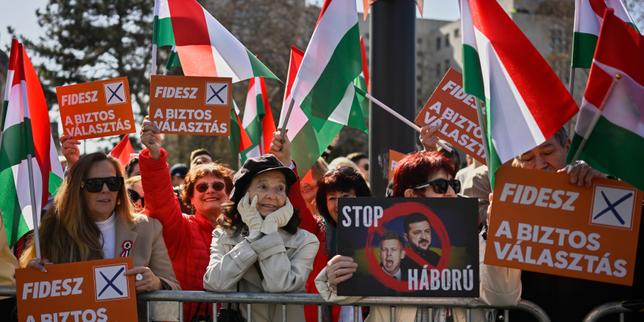
The recent mass mobilizations in the Hungarian capital show a nation split down the middle. On one side, you have the "Peace March"—a massive show of force by Orban’s Fidesz party. On the other, a rejuvenated opposition is trying to prove they can finally punch through the government's narrative. This isn't just about who sits in the parliament building. It's about whether the "illiberal democracy" model remains the blueprint for the continent's populist right.
The Fidesz Machine and the Power of the Street
Orban knows how to use a crowd. When Fidesz calls for a rally, it’s a logistical masterpiece. Buses stream in from the countryside, bringing in the base that has kept him in power since 2010. You see the Hungarian tricolor everywhere. The rhetoric is consistent: sovereignty, family values, and a fierce resistance to "Brussels interference."
But don't mistake these rallies for mere photo ops. They serve a functional purpose in Hungarian politics. They are meant to demoralize the opposition. By filling the grand avenues of Budapest, Orban sends a message to the world and his own citizens: "I am the people."
He often frames the choice as one between war and peace. It’s a powerful, if controversial, binary. By positioning himself as the only leader capable of keeping Hungary out of broader European conflicts, he taps into a deep-seated desire for stability. It works. Even critics admit his ability to read the national psyche is unmatched.
A Fractured Opposition Finally Finds a Pulse
For years, the Hungarian opposition was a mess of tiny parties that couldn't agree on a lunch menu, let alone a platform. They were easy targets. However, the energy on the streets has shifted. We're seeing a new kind of defiance. It’s less about abstract policy and more about a fundamental rejection of the Fidesz system.
The emergence of figures like Peter Magyar has thrown a wrench into the usual gears of Hungarian politics. He’s someone who came from within the system, which makes his critique sting more. When the opposition marches now, they aren't just carrying EU flags. They’re talking about corruption, the cost of living, and the state of the healthcare system.
They’re finally learning that to beat a populist, you can't just be "not the other guy." You need a counter-narrative that feels just as visceral. The crowds in Budapest are younger now. They’re louder. They’re using social media to bypass the state-aligned media landscape that usually silences them.
The Media Gap and the Rural-Urban Divide
To understand why these street protests matter so much, you have to look at the media. In Hungary, if you live outside the capital, your news likely comes from sources friendly to the government. This creates a massive information bubble.
Budapest is the exception. It’s the liberal heart of the country, a place where the opposition can actually get their message out. That’s why the streets of the capital are the only place where the two sides actually "measure their forces." In the digital and broadcast world, they barely inhabit the same reality.
- State-aligned media: Focuses on national sovereignty and the dangers of migration.
- Independent outlets: Focus on rule-of-law issues and government spending.
This divide is the defining feature of modern Hungary. The protests are the only time these two worlds physically collide. When 100,000 people show up for the opposition, it’s a signal to the rural voters that there is another way. When Fidesz responds with a larger crowd, it’s a way of saying "the capital doesn't speak for the country."
Why the World is Watching
This isn't just a local drama. Hungary has become a laboratory for a specific type of governance. Leaders across the globe look at Orban’s success with envy or horror.
If the opposition can make significant gains, it proves that the populist wave has a ceiling. If Orban cruises to another victory, it cements the idea that his brand of politics is the new normal. The European Union is particularly invested. They've frozen billions in funding over "rule of law" concerns, yet Orban remains the primary disruptor in EU decision-making.
The tension is real. You can feel it in the cafes around the Parliament and in the metro stations. This is a country weighing its identity. Are they a core European democracy, or are they something else entirely—a bridge between East and West that plays by its own rules?
What Actually Happens Next
Don't expect a sudden shift overnight. The Fidesz electoral map is incredibly resilient. They've spent over a decade refining the districts and the rules to favor the incumbent.
However, the sheer scale of the recent protests suggests that the "fear factor" is fading. People are more willing to be seen at an opposition rally than they were four years ago. That’s a massive psychological hurdle to clear.
If you're following this, keep your eyes on the youth vote. The data shows a widening gap between the under-30s and the older generation. This isn't just a political disagreement; it’s a demographic ticking time bomb for the current administration.
Pay attention to the local elections too. They’re often the bellwether for the national mood. If the opposition can hold Budapest and flip a few key regional cities, the momentum becomes very hard for the state media to ignore.
The next few months will be a masterclass in political mobilization. Both sides are going all-in. It’s messy, it’s loud, and it’s arguably the most important political story in Europe right now.
To get a true sense of the landscape, look beyond the headlines. Check the local reporting from outlets like Telex or 444 (use a browser translator). They provide the granular detail that international news often skips. Follow the polling from the Reykjavik-based research groups or the local Hungarian pollsters like Medián. They offer the most accurate pulse of a nation that is currently anything but quiet.