The mainstream media is drunk on the idea of "historic breakthroughs." Every time a Lebanese official sits in the same room as an Israeli counterpart, the press treats it like a diplomatic miracle. They call it a "rare in-person talk." They frame it as a step toward regional stability.
They are wrong.
These meetings are not the start of a peace process. They are a high-stakes accounting exercise for a bankruptcy that neither side wants to admit. Calling these talks "progress" ignores the fundamental reality: Lebanon and Israel aren't negotiating over land or water. They are negotiating over the survival of their respective political elites.
The Sovereignty Charade
The standard narrative suggests that Lebanon is fighting for every inch of its maritime and terrestrial borders to protect national pride. This is a fairy tale fed to a starving public.
In reality, the Lebanese state—as a functioning, sovereign entity—barely exists. When the "government" goes to the table, they aren't representing a unified national interest. They are representing a fragile collection of sectarian warlords who need a win to keep the lights on—literally. The obsession with "Line 23" versus "Line 29" in maritime disputes isn't about fish or flags. It’s about the desperate hope that offshore gas will provide a multi-billion dollar bailout for a banking sector that orchestrated the greatest Ponzi scheme in modern history.
Israel knows this. They aren't negotiating with a state; they are negotiating with a crisis.
Gas Is a Distraction Not a Solution
The "lazy consensus" says that offshore energy wealth will change the game for Lebanon. Experts point to the Karish gas field and the Qana prospect as the keys to regional harmony.
Let's look at the numbers. Even if Lebanon strikes significant gas tomorrow, it takes seven to ten years to bring that energy to market. Lebanon’s economy crashed by 58% in less than three years. The World Bank has called it one of the worst economic collapses since the mid-19th century.
Waiting for gas to save Lebanon is like a man with a severed artery waiting for his hair to grow back so he can sell it. The math doesn't work. The talks are a performance designed to buy time from the International Monetary Fund (IMF), signaling a "stability" that doesn't exist on the ground.
The Hezbollah Paradox
You cannot discuss Lebanese-Israeli talks without addressing the elephant in the room that the media refuses to name correctly. The media calls Hezbollah a "militia" or a "political party." In the context of these talks, Hezbollah is the shadow architect.
The contrarian truth? Hezbollah needs these talks to happen, but they cannot let them succeed.
If a final, permanent border is settled, Hezbollah loses its primary reason for existing: "Resistance." If there is no disputed territory, there is no "occupation." If there is no occupation, the argument for a non-state actor to hold a massive missile arsenal evaporates.
Therefore, these "rare in-person talks" are designed to be inconclusive. They are a pressure valve. They allow just enough communication to prevent an accidental war that neither side can afford, without ever reaching a resolution that would force a domestic political shift in Beirut.
The Myth of the Third Party
The United States often acts as the mediator in these sessions. The press portrays the U.S. as the "honest broker."
I’ve watched these types of diplomatic circles for years. The U.S. isn't there to broker peace; they are there to manage the decline. Washington’s goal isn't a prosperous Lebanon; it’s a Lebanon that doesn't explode and send three million refugees into the Mediterranean. By facilitating these talks, the U.S. provides a veneer of legitimacy to a Lebanese political class that should have been ousted years ago.
We are subsidizing the status quo.
The Zero-Sum Resource Fallacy
People ask: "Can't they just share the resources?"
This question assumes that we are dealing with rational economic actors. We aren't. We are dealing with actors who view any gain for the other side as an existential threat.
In the Eastern Mediterranean, gas isn't a commodity; it's a weapon. Israel uses it to build bridges with Jordan and Egypt via the Eastern Mediterranean Gas Forum (EMGF). Lebanon is excluded from this forum because it doesn't recognize Israel.
The talks aren't about sharing the pie. They are about making sure the other person doesn't get a fork.
Stop Asking if Peace Is Coming
The most flawed question in the news cycle is: "Will these talks lead to a peace treaty?"
The answer is a hard no. Peace requires a level of institutional trust that is absent. Lebanon is a fractured state where the central government has no monopoly on the use of force. Israel is a high-tech fortress with a zero-tolerance policy for border ambiguity.
What we are witnessing is Managed Conflict.
Managed conflict is the art of talking just enough to ensure the status quo remains profitable for the people in power, while the citizens on both sides remain in a state of perpetual anxiety. It is the most cynical form of diplomacy.
The Cost of the Performance
While diplomats sip coffee in Naqoura, the Lebanese people are enduring hyperinflation. The Lebanese Lira has lost more than 95% of its value.
The danger of focusing on these talks is that it provides a distraction. It allows the ruling elite to point to a map and talk about "national rights" while their citizens can't buy bread. It’s a classic bait-and-switch.
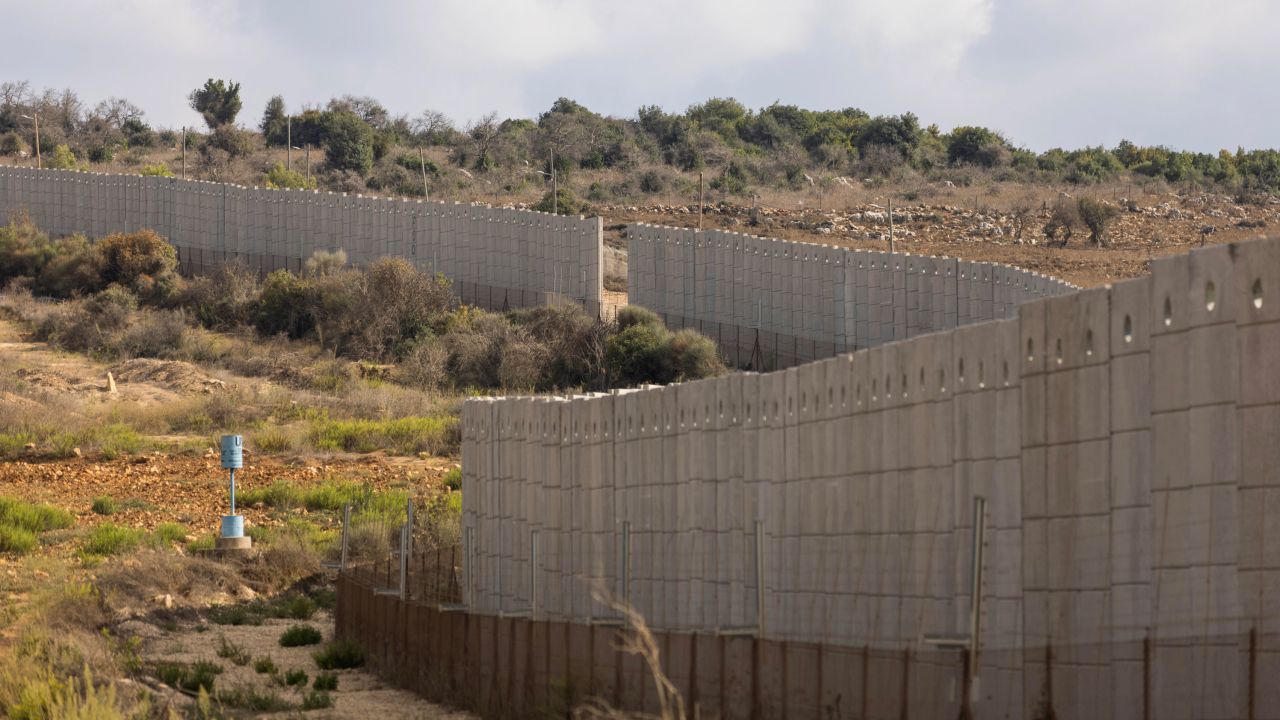
If you want to understand the reality of the Israel-Lebanon border, ignore the official statements. Look at the capital flight. Look at the energy grid. Look at the fact that the "rare talks" have been happening in various forms for decades with zero change in the security posture of either nation.
The Hard Truth
These talks are a ghost. They represent the spirit of a diplomacy that died long ago.
Israel is moving forward with or without a deal. They have the military and economic might to extract what they need. Lebanon is a passenger in a car with no driver, heading toward a cliff, arguing about which radio station to listen to.
Stop looking for a "historic deal" in the headlines. Start looking at the structural decay that makes a deal impossible. The talks aren't the story. The fact that we still believe they matter is the real tragedy.
Burn the maps. The lines don't exist if the state behind them has already folded.