The air in the borderlands does not care about lines drawn on maps. It moves effortlessly from the Democratic Republic of Congo across the savannah, slipping past customs posts, untroubled by soldiers, indifferent to paper decrees. For months, the Kivu provinces of the DRC had been locked in a quiet, brutal war against an old enemy. A hemorrhagic fever that turns the human body inside out, rewriting every cell's instruction manual into a recipe for collapse.
We watched it from a distance. That is the luxury of geography until it isn't.
Then came the telephone call that changed the climate of a continent. A young patient, carrying a virus that has terrified humanity since 1976, had slipped through the net. A bus ride. A cough. A fever that spiked past the margins of safety. And suddenly, the invisible frontier had been crossed. Kenya, a nation that prided itself on a healthcare infrastructure capable of withstanding the shocks of East Africa, reported its first-ever Ebola death.
Panic is a poor epidemiologist. When the news broke, the digital noise machine whirred into motion. People whispered about lock-downs, about closing borders completely, about a plague descending upon Nairobi like a Biblical judgment. But biology does not operate on panic. It operates on contact. It operates on sweat, blood, and the agonizing intimacy of nursing a dying loved one.
To understand what happened next, you have to look past the sterile terminology of public health bulletins. You have to imagine the human cost of a microscopic predator.
Consider a hypothetical traveler. Let us call him Samuel. Samuel is a merchant who moves goods between Goma and western Kenya, trading in fabrics and small electronics. He is a man of motion, accustomed to the dust of transit and the chaotic rhythm of border towns. When he woke up with a headache that felt like a hot iron behind his eyes, he blamed the water. When his joints began to ache, he blamed the long hours hunched over a steering wheel. He did not know that a silent war was already raging within his lymphatic system.
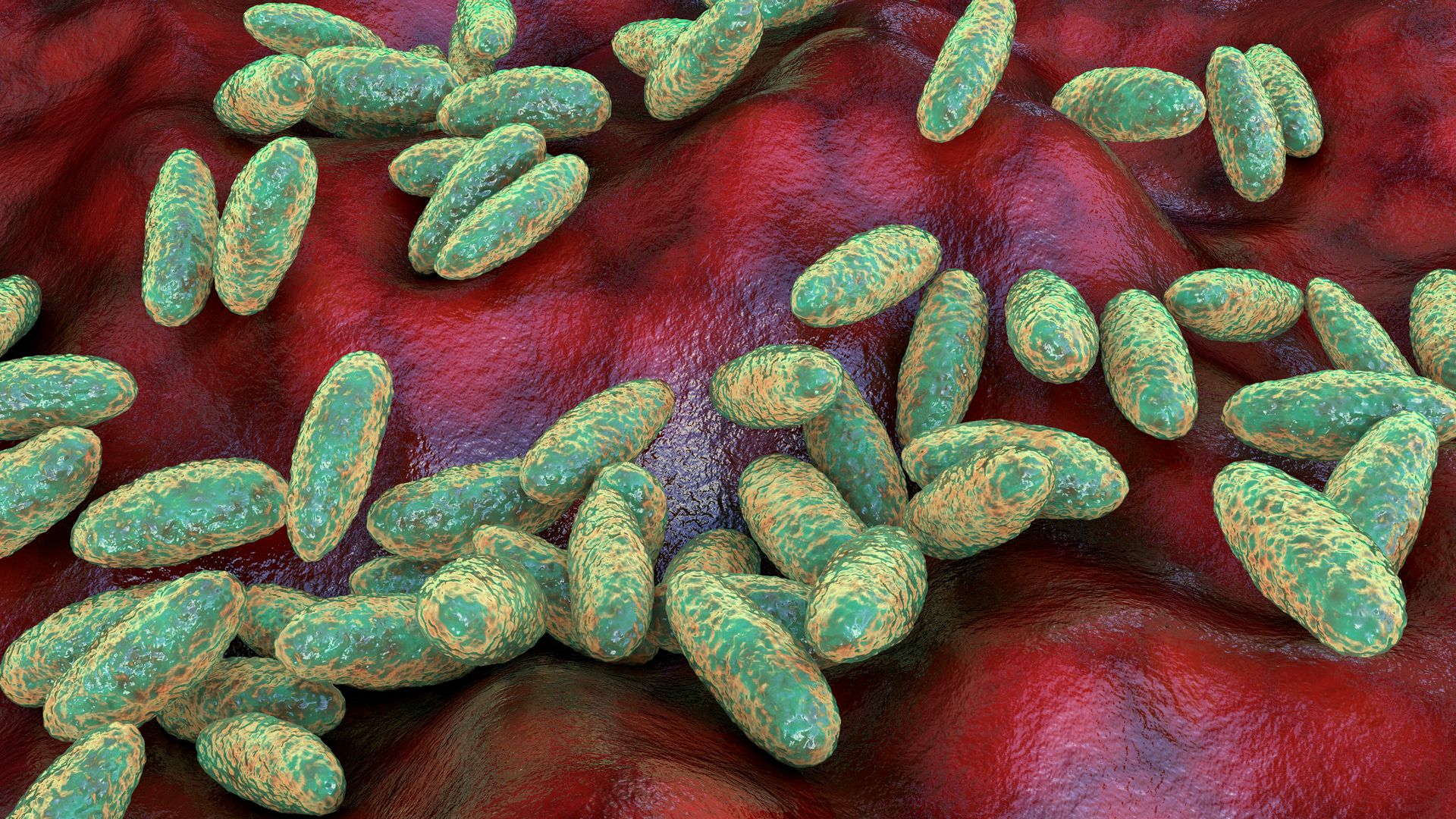
By the time Samuel reached a medical clinic in Kenya, the virus had already established its beachhead. Ebola is not an airborne phantom; it is an opportunist of touch. It requires human connection to survive, hitching a ride on the very impulses of empathy and care that define our species. When a loved one falls ill, our first instinct is to hold them, to wipe their brow, to wash their clothes. In the calculus of Filoviruses, those very acts of mercy are currency.
The medical staff who received Samuel did not panic. That is the untold story of public health emergencies—the quiet, methodical bravery of nurses and technicians who put on heavy rubber boots, pull yellow hazmat suits over their shoulders, and step into the isolation ward while the rest of the world screams at their televisions.
When the laboratory confirmation finally arrived—positive, unambiguous, terrifying—the machinery of containment sprang into action. This is where the narrative of inevitable doom breaks down. A single case does not automatically become an epidemic. An epidemic requires chaos; containment requires discipline.
Contact tracing is the unglamorous backbone of disease control. It is detective work of the most grinding, exhausting kind. Public health workers had to retrace Samuel’s steps down to the minute. Who sat next to him on the bus? Which ticket collector took his fare? Which family members helped him unpack his bags? Every name is a potential wildfire; every traced contact is a bucket of water thrown on the embers before the wind can catch them.
We forget how fragile our modern illusions of safety are. We live our lives assuming that boundaries are physical walls rather than agreements on a map. A virus reminds us that we are all biological neighbors, sharing a single, porous ecosystem. When Ebola touches the soil of Nairobi, it is not just a Kenyan story or a Congolese story. It is a human story about the friction between our interconnected world and our ancient vulnerabilities.
The containment of that first case in Kenya was a masterclass in vigilance, but it left a scar on the collective psyche. It forced a reckoning with the reality that health security is only as strong as the weakest link in a regional supply chain of care. You cannot wall off a population from its neighbors without destroying the economic and social lifeblood that keeps them alive. The solution was never to sever ties, but to deepen them—to build better laboratories, to train faster responders, to share data before fear can outrun facts.
Think of the nurse who held Samuel's hand through layers of latex, whispering reassurance in a language he could understand, even as her own heart hammered against her ribs. She was the thin, trembling line between a localized tragedy and a continental catastrophe.
The fever eventually broke, the patient passed, the contacts were cornered and monitored through the grueling twenty-one-day incubation window, and the city breathed again. But the air in the borderlands remains the same. It still moves across the savannah, indifferent to our borders, reminding us of how easily the world can tilt on its axis, and how much we owe to the nameless guardians who keep it steady.