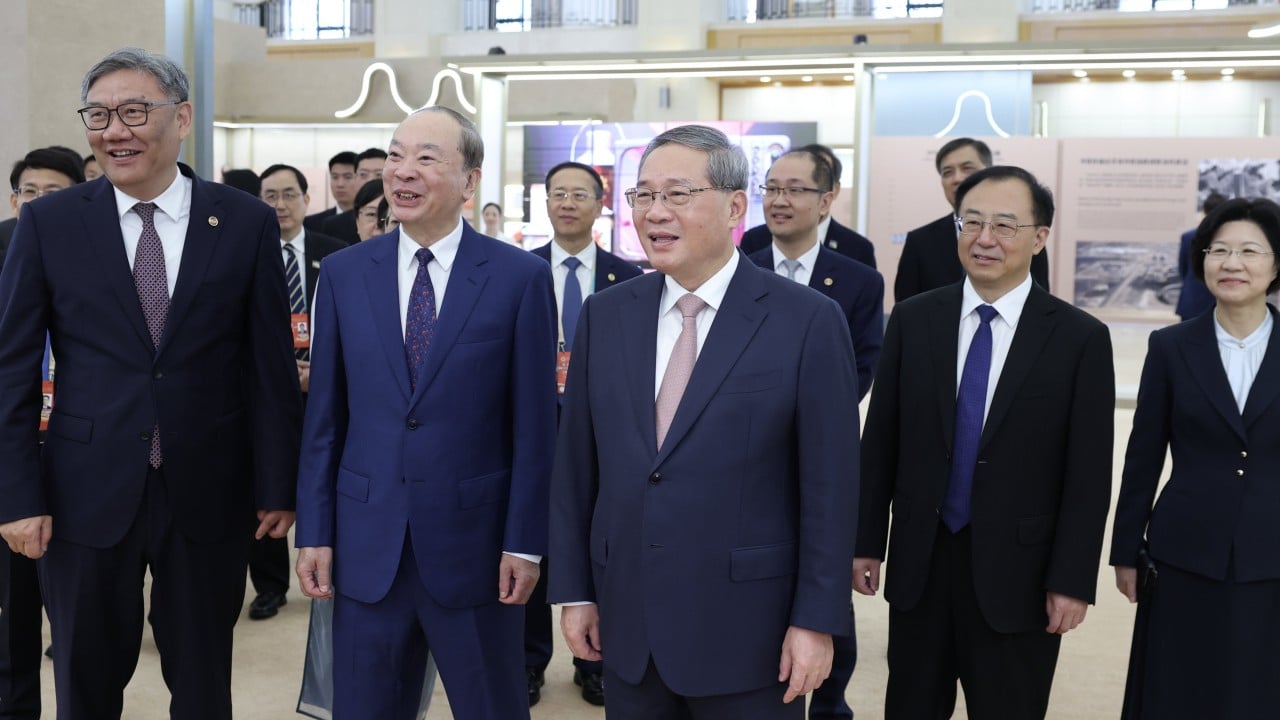
Li Qiang says China wants more high-value imports. Wall Street cheers. Washington sighs.
Buy it if you want. I don't.
Every time Beijing’s trade surplus crosses another historic threshold—pushing past $1 trillion on an annual pace after ending 2025 near $1.2 trillion despite punishing U.S. tariffs—the press script writes itself. Premier Li Qiang steps up to a podium, at the Canton Fair or an import expo, and pledges to buy more high-value-added foreign goods. Competitor outlets treat that pledge like a peace offering. A pressure valve. Proof that China hears the backlash from Brussels, Washington, and Southeast Asia over factory overcapacity and lopsided trade.
That is lazy consensus. Worse, it reads macroeconomics backward.
A trade surplus isn’t a polite request waiting for a nicer speech. It is an accounting identity tied to saving, investment, domestic demand, and industrial substitution. Saying "we will import more high-value goods" does not automatically shrink a trillion-dollar gap when domestic consumption stays sluggish, local champions keep racing to replace foreign suppliers, and export engines—from electric vehicles to AI hardware and industrial equipment—keep firing on all cylinders.
The Question Everyone Gets Wrong
Listen to the "People Also Ask" chorus whenever trade numbers drop: Will China’s vow to buy more high-value imports rebalance global trade? Does a rising trade surplus mean China’s economy is winning? Should foreign exporters rush in to capture Beijing’s import push?
Every single one of those questions starts from a flawed premise.
First, a massive surplus is not automatic proof of macroeconomic health. A country can run a gargantuan trade surplus precisely because domestic households are cautious, property wealth feels bruised, and local factories produce far more than domestic buyers can absorb. Exporting excess output abroad fills the demand gap at home. Calling that an unalloyed victory misses the domestic strain underneath.
Second, a pledge to import "high-value" goods is not a blank check for every foreign manufacturer. In trade policy, "high-value" usually means inputs China still needs while it climbs the ladder—precision instruments, specialized chemicals, medical devices, advanced components, and select machinery—not finished products designed to kneecap domestic champions.
Third, chasing import headlines without checking substitution speed is how corporate budgets get burned.
Battle Scars From Chasing Trade Promises
I have watched boards and regional heads blow millions chasing diplomatic import pledges in East Asia.
A few years back, an industrial equipment maker I advised poured serious capital into localization, trade-show booths, and customized sales teams after high-profile signals from Beijing about opening up high-end manufacturing supply chains. On paper, the timing looked sharp. Foreign suppliers had the technical edge. Local buyers were upgrading lines.
Then reality hit. Domestic rivals cut prices by 20% to 30%, took slightly lower margins, and accepted "good enough" tolerances that matched local engineering specs. Procurement committees shifted toward domestic vendors to satisfy local supply-chain mandates and speed up after-sales service. Within eighteen months, the foreign firm’s margins were shredded, its sales cycle stretched past a year, and its China budget was quietly slashed.
That is the trap of reading speeches instead of unit economics. Official rhetoric sets direction; price, domestic substitution, and balance-sheet realities set the ceiling.
What "High-Value Imports" Actually Means in Trade Mechanics
To see why Li Qiang’s pledge does not magically unwind the surplus, look at the mechanics rather than the headlines.
In standard national accounts, net exports equal domestic output minus domestic absorption (consumption plus investment plus government spending). When saving remains high relative to domestic consumption, and manufacturing capacity keeps expanding faster than local end-demand, the surplus stays sticky. Even when monthly import growth spikes—as it did during bursts of AI-related component demand and commodity restocking—exports have repeatedly surged fast enough to keep the overall surplus enormous.
Economists from Brad Setser to Michael Pettis have spent years hammering home a version of this core truth: you cannot rely on polite import pledges to fix a structural savings-and-production imbalance. And trade watchers tracking customs data—like the analysts cited by Reuters and Macquarie—have pointed to how export resilience in sectors tied to electric vehicles and the AI hardware cycle keeps propelling shipments outward even amid tariff friction.
Notice the nuance the competitor piece missed. Saying "more high-value imports" does not mean net imports will surge enough to flip the trade balance. High-value imports often feed into export assembly or industrial upgrades that make Chinese exports even more competitive globally. Buying precision parts or specialized capital goods can lower production costs at home and expand export capacity tomorrow.
That is not rebalancing. That is upgrading the factory floor.
A Thought Experiment on Surplus Math
Imagine a scenario where a large export-oriented economy runs a $1.1 trillion annual trade surplus and announces a major push to buy $100 billion more in high-end foreign goods over the next year. Suppose foreign suppliers deliver every penny of that extra $100 billion. Great news for those specific exporters. Now suppose that in the same year, domestic manufacturers cut export prices slightly to clear excess inventory, expand shipments of EVs, batteries, and AI servers, and push total exports up by $160 billion. What happens to the trade surplus? It grows by $60 billion. The import pledge succeeded on its own narrow terms, yet the trade imbalance widened.
That thought experiment captures why headline pledges rarely move the macro needle the way commentators expect. Trade balances are tug-of-wars between export competitiveness, exchange-rate dynamics, domestic demand, and foreign protectionism. One speech does not repeal the math.
The Uncomfortable Truth for Exporters and Policymakers
If you are a Western policymaker waiting for import pledges to calm tariff battles, you are misreading the leverage. Surplus nations rarely hand over their export engines out of courtesy; they adjust when external pushback, currency pressure, or domestic rebalancing forces the issue.
If you are an executive selling into China, here is the unconventional playbook that actually works:
- Sell bottlenecks, not finished goods. Target niches where domestic alternatives still lag on reliability, yield, or regulatory approval—specialized lab gear, high-end industrial sensors, niche compounds—rather than competing head-to-head on mid-tier hardware where local price wars are brutal.
- Price for speed, not nostalgia. Legacy brand premium does not carry the weight it used to in industrial procurement. If your total cost of ownership or delivery lead time lags local suppliers, buyers will move on.
- Treat trade truces as temporary breathing room. Tariff pauses and diplomatic pledges buy time, not permanent market access. Structure supply chains so a sudden shift in duties or customs scrutiny does not sink quarterly guidance.
- Watch domestic consumption, not just customs press conferences. Real, durable import pull from households depends on consumer confidence, job security, and income growth—not podium remarks.
Where This Contrarian Bet Can Burn You
Honesty cuts both ways, and I am not going to pretend my read is risk-free.
The biggest risk to betting that China’s surplus stays stubbornly huge is external backlash turning into hard walls. Tariffs, anti-dumping probes, investment screens, and supply-chain localization in the U.S., Europe, and emerging markets can bite harder than models predict. If major buyers slap steep barriers on high-growth export categories at the same time domestic stimulus lifts local consumption, surplus growth could slow much faster than skeptics expect.
There is also policy execution risk. Beijing has shown before that when leadership wants a specific outcome—whether green manufacturing, grid buildouts, or targeted import quotas—state-backed buyers and banks can move fast. Dismissing every official pledge as window dressing can make you late when a real policy shift lands.
Still, bet on structure before slogans. Until domestic demand absorbs vastly more of what the factory floor produces, the surplus is not going away just because a premier says the right words at a trade event.
Stop reading trade speeches like balance sheets. Run the math.