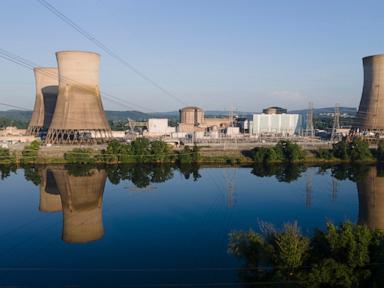
The United States is attempting to bring three shuttered commercial reactors—Palisades in Michigan, the Crane Clean Energy Center (formerly Three Mile Island Unit 1) in Pennsylvania, and Duane Arnold in Iowa—back into service to meet surging electricity demand driven heavily by hyperscale data centers and federal industrial policy. Yet the neat story told in press releases—that old nuclear plants can simply be switched back on to feed artificial intelligence—collides with hard mechanical reality, regulatory bottlenecks, and a clock that is already running out.
Combined, these three projects represent roughly 2.2 gigawatts of returning capacity. That sounds substantial until you compare it against multi-gigawatt data center campuses sprouting across the country or look at how long it takes to un-decommission a reactor. No commercial reactor in American history has ever completed a round trip from decommissioning back to full commercial operation. Pioneers are writing the manual in real time, and every misstep costs tens of millions of dollars.
Why Steel Alone Does Not Guarantee Megawatts
On paper, reviving a closed reactor looks like a shortcut around years of transmission queue delays and permitting battles. The site already exists. The cooling water intake is already permitted. Heavy high-voltage lines already tie the switchyard into the regional grid.
When electricity markets looked flat or declining a few years ago, utilities retired units early because cheap natural gas and subsidized renewables squeezed margins. Now that load forecasts have swung upward, those same physical footprints look like gold mines.
Still, metal that has sat cold or been prepped for dismantling does not wake up on command. Restoring a reactor requires reversing administrative steps taken to enter decommissioning, reassembling safety programs, replacing or sleeving degraded components, and proving to federal regulators that the plant meets operating standards again.
Decommissioning is largely a one-way street once major internals are cut apart, components are shipped off site, and specialized crews scatter.
Consider what happened at Palisades, the project furthest along in the queue. Shut down in May 2022 and backed by up to $1.52 billion in Department of Energy loan support, Holtec transitioned the facility back to operational licensing status in August 2025 and began loading fuel into the reactor vessel in late August 2026. Even with years of preparation, fuel loading hit a snag in September 2026 when a fuel assembly tilted in the core, forcing a pause until regulators approved a one-time recovery procedure in October. Earlier restart targets had already slipped across 2025 and 2026, leaving the company racing toward March 2027 contractual power-delivery obligations.
How Big Tech Changed the Economics of Restarting
For years, nuclear operators struggled to finance major capital overhauls without exposing ratepayers to cost overruns. Hyperscalers changed that math overnight.
Data centers need continuous, 24/7 power rather than intermittent output that fluctuates with weather. Technology giants chasing artificial intelligence compute capacity have stepped in with long-term power purchase agreements—multi-decade contracts that give utilities bankable revenue to justify billions in refurbishment and debt.
At the Crane Clean Energy Center in Pennsylvania, Constellation lined up a 20-year agreement tied to Microsoft. At Duane Arnold in Iowa—a 615-megawatt plant that closed early in 2020 after derecho storm damage—NextEra Energy secured a 25-year agreement with Google alongside a Department of Energy loan of up to $1.9 billion closed in September 2026, targeting commercial operation in early 2029.
That structure shifts risk in ways traditional utility models rarely did. Instead of waiting for slow state rate cases alone, developers pair federal loan backing with corporate buyers willing to lock in long-term off-take. Critics, however, raise sharp questions about what happens to surrounding grid prices when massive, steady loads plug into regional transmission networks. Even if a tech company signs a bilateral contract, electrons still move across shared wires, and local consumers watch capacity and transmission costs closely.
The Hidden Bottlenecks Behind Every Restart
Anyone watching only ribbon-cutting announcements misses the quieter constraints that govern whether these plants hit their dates. Licensing is one hurdle; human capital and supply chains are another.
- Regulatory Re-Entry: Nuclear Regulatory Commission oversight does not simply pause when a plant shuts down—it shifts to decommissioning rules. Returning to power operation requires licensing amendments, exemptions where needed, environmental reviews, and restored emergency and physical security plans.
- Licensed Operator Scarcity: Operating a reactor demands licensed senior reactor operators and reactor operators who train for years and pass rigorous exams. When plants shut down, experienced staff retire or move to other facilities, forcing owners to recruit and train cohorts from scratch.
- Component and Vendor Lead Times: Steam generator work, head-penetration replacements, specialized tooling, and nuclear-grade parts operate on long fabrication cycles. A single delay on custom equipment can ripple across an entire outage schedule.
- Workforce and Safety Culture: Restarting cold systems puts intense schedule pressure on contractors and plant staff. Regulators scrutinize not just hardware inspections, but also corrective-action programs and safety culture during complex transitions.
To see how these pieces compare across the active U.S. restart effort, look at where the three projects stand:
| Project | Location | Approximate Output | Closure Year | Key Off-Taker or Backing | Target Window |
|---|---|---|---|---|---|
| Palisades | Michigan | ~800 MW | 2022 | Wolverine Power Cooperative, Hoosier Energy; up to $1.52B DOE loan | Late 2026 into early 2027 (PPA deadline March 2027) |
| Crane Clean Energy Center | Pennsylvania | ~800+ MW class | 2019 | Microsoft (20-year agreement); $1B DOE loan | 2027 |
| Duane Arnold | Iowa | ~615 MW | 2020 | Google (25-year PPA); up to $1.9B DOE loan | Early 2029 |
Hypothetically, imagine a mid-sized manufacturing company that missed out on early clean-firm power contracts and decides in late 2026 that it wants a dedicated, recently retired reactor to run a 24/7 foundry. Unless a plant is sitting in very early post-shutdown status with intact major equipment and an available grid hookup, that option simply does not exist. The pool of realistic restart candidates was small from day one, and each project taken off the board shrinks what is left.
Why Restarts Are a Bridge, Not a Cure-All
Even if Palisades, Crane, and Duane Arnold all return to full power without further major setbacks, they will not solve America's data center power crunch on their own. Two gigawatts and change is a meaningful chunk of firm capacity for specific regions, yet national electricity demand growth is pulling from every available source—natural gas turbines, solar-plus-storage, uprates at existing reactors, and grid upgrades.
There is also a timing mismatch that energy buyers sometimes gloss over. Artificial intelligence clusters can be built in phases faster than a shuttered reactor can be legally and mechanically resurrected. That gap forces hyperscalers to rely on existing grid power, behind-the-meter generation, or phased rollouts while waiting for nuclear megawatts to arrive.
Politicizing the issue adds another layer of noise. Supporters treat every reactor restart as proof of an imminent nuclear renaissance, while skeptics point to schedule slips and past plant closures as evidence of overpromising. Reality sits between those extremes. Restarting closed reactors works when the hardware is sound, the financing holds, and the regulator signs off—but it is a narrow, high-wire engineering effort, not an easy button.
For executives and policymakers tracking where firm power comes from next, the real test starts after fuel is loaded. Watch whether these plants hit commercial operation on schedule, hold steady under continuous load, and keep costs contained without shifting hidden burdens onto everyday utility customers.