Federal judges just forced the White House to open the vault on billions in housing money. It wasn't a close call.
When a federal appeals court ordered the Trump administration to distribute frozen homeless assistance funds, local mayors across the country finally exhaled. If you've ever worked anywhere near municipal housing budgets or nonprofit grant administration, you know how paralyzing a federal funding freeze feels on the ground. Shelters don't run on IOUs. Landlords who accept housing vouchers don't wait around for appellate dockets to clear.
Yet most headlines treat this ruling like just another routine partisan clash in Washington. They miss the real story. This decision isn't merely about one administration's spending priorities, and it certainly isn't about simple accounting delays. It goes straight to the heart of the Impoundment Control Act, executive overreach, and what happens when Congress appropriates money for the Department of Housing and Urban Development (HUD) that the executive branch simply refuses to spend.
Why the Appeals Court Stepped In
Let's get straight to the mechanics of what happened. Congress passed bipartisan appropriations bills that explicitly allocated billions of dollars to HUD's Continuum of Care (CoC) program and Emergency Solutions Grants (ESG). These aren't slush funds. They're formula-driven and competitive grants that pay for permanent supportive housing, rapid re-housing, and emergency shelter beds in every single state.
Instead of releasing the money on schedule, the administration attached new, unilateral conditions and held up disbursements for jurisdictions that didn't align with its broader policy goals—specifically targeting cities and states with sanctuary policies or certain approaches to public camping bans.
The appellate panel looked at the statutory text and saw a blatant violation of separation of powers. Under Article I of the Constitution, Congress holds the power of the purse. Once the president signs an appropriations bill into law, the executive branch has a constitutional duty to "take Care that the Laws be faithfully executed." The court essentially told the administration that you can't rewrite funding criteria after the fact just because you dislike how local governments manage their streets.
The Real-World Cost of Delayed HUD Money
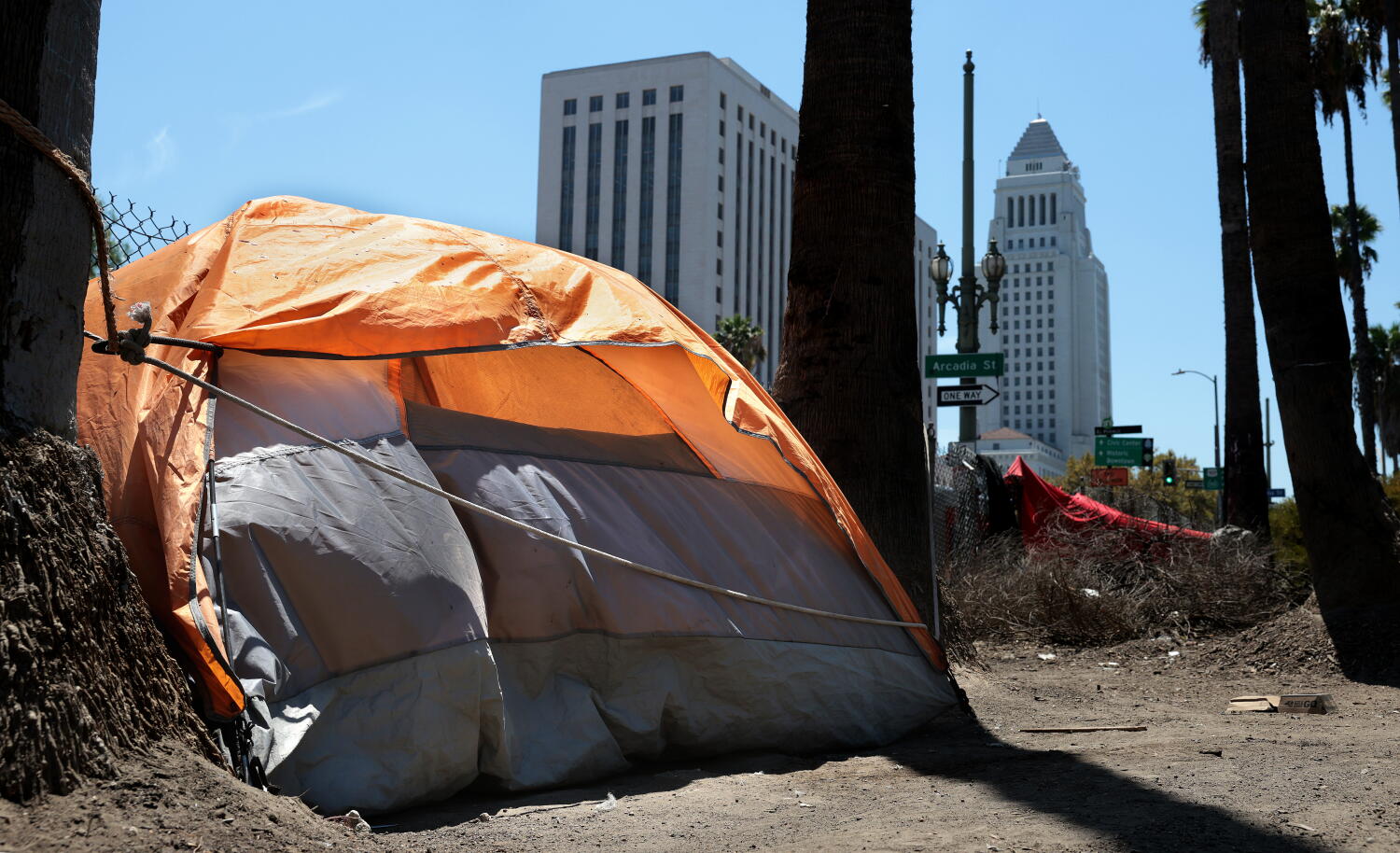
People love to argue about homelessness policy from 30,000 feet. Down at street level, the math is brutal and immediate.
I've watched local Continuum of Care boards try to bridge a three-month federal gap. It's ugly. When HUD holds back renewal grants, local nonprofits have to draw down emergency lines of credit just to make Friday payroll. Case managers—who are already underpaid and burned out—start looking for other jobs because they don't know if their positions will exist next month.
Even worse, private landlords pull out of housing voucher programs. Think about it from a property owner's perspective. You agree to rent a two-bedroom apartment to a formerly unhoused veteran through a HUD-funded rapid re-housing program. Suddenly, the local agency tells you the rent check is delayed indefinitely because of a legal fight in Washington. You don't blame the Department of Justice or an appellate judge. You just stop accepting vouchers and list the unit on the open market.
Once a landlord leaves a municipal housing program, getting them back takes years. That's the hidden damage of a funding freeze that never shows up in court filings.
What Most People Get Wrong About Federal Homeless Grants
There's a massive misconception floating around social media right now that this ruling forces the federal government to hand blank checks to big-city mayors. That's completely false.
HUD's homelessness assistance programs are some of the most heavily audited, strictly regulated grants in the federal government. To receive Continuum of Care money, local coalitions have to submit exhaustive performance data every single year. They have to track:
- Length of time homeless: How quickly does a community move someone from a shelter cot into permanent housing?
- Returns to homelessness: What percentage of people who exit the program end up back on the streets within six to twenty-four months?
- Employment and income growth: Are participants actually increasing their earned or non-employment cash income while enrolled?
- System-wide coordination: Does the community maintain a unified Homeless Management Information System (HMIS) to prevent duplicate billing and track outcomes?
If a city fails to meet these benchmarks, HUD already has the legal authority to reallocate their funding to higher-performing nonprofits during the annual competition. What the executive branch cannot do is invent brand-new political litmus tests out of thin air—like immigration enforcement cooperation—that Congress never authorized in the underlying McKinney-Vento Homeless Assistance Act.
The Impoundment Control Act Is Back in the Spotlight
If you want to understand why legal scholars are watching this appeals court ruling so closely, look at the 1974 Impoundment Control Act (ICA).
Congress passed the ICA after President Richard Nixon repeatedly refused to spend billions of dollars appropriated for clean water projects, highways, and housing programs. The law created a strict framework. If a president wants to cancel or delay spending approved by Congress, they have to send a special message to Capitol Hill requesting a "rescission" or "deferral." Unless both the House and Senate approve the rescission within 45 days, the administration must spend the money.
For decades, administrations of both parties respected that boundary, even when they hated it. Now, the legal theory of "executive impoundment" is being tested aggressively in federal courts. By ordering the Trump administration to distribute the homeless funds immediately, the appeals court reinforced a critical precedent: the Impoundment Control Act still has teeth, and federal judges won't let agencies use bureaucratic slow-walking to achieve an illegal impoundment.
Where the Legal Fight Goes Next
Does this ruling mean the money hits local bank accounts tomorrow morning? Not quite, though the clock is ticking loudly.
The administration has two main options. First, it can ask the full appeals court for an en banc rehearing, or file an emergency application with the U.S. Supreme Court requesting a stay of the order. Second, HUD can comply with the mandate and begin processing the obligated grant agreements while continuing to litigate the underlying constitutional questions.
Seeking an emergency stay at the Supreme Court is a heavy lift here. To win a stay, the government has to prove it will suffer "irreparable harm" if it's forced to follow the law while the appeal plays out. It's awfully hard to convince five justices that releasing Congressionally mandated funds to keep vulnerable people indoors causes irreparable harm to the United States—especially when withholding the money causes immediate, documented harm to cities, nonprofits, and families facing eviction.
What Local Agencies and Nonprofits Should Do Right Now
If you sit on a Continuum of Care board, run a housing nonprofit, or manage municipal grants, don't sit back and assume the checks will clear without friction. Bureaucracies move slowly even when a court orders them to sprint.
Start by auditing every single pending grant agreement in HUD's e-snaps portal today. Document the exact dates your organization submitted required compliance paperwork and note any conditional language HUD inserted into your current contracts. Keep a clean paper trail of any bridge loans, delayed lease-ups, or staff reductions caused by the freeze—if further litigation occurs, concrete financial harm declarations from local providers are the single strongest weapon state attorneys general have in court. Finally, coordinate directly with your state's attorney general's office and national advocacy groups like the National Alliance to End Homelessness so your jurisdiction's specific numbers are included in compliance monitoring reports. The court opened the door, but local leaders still have to make sure the money actually walks through it.