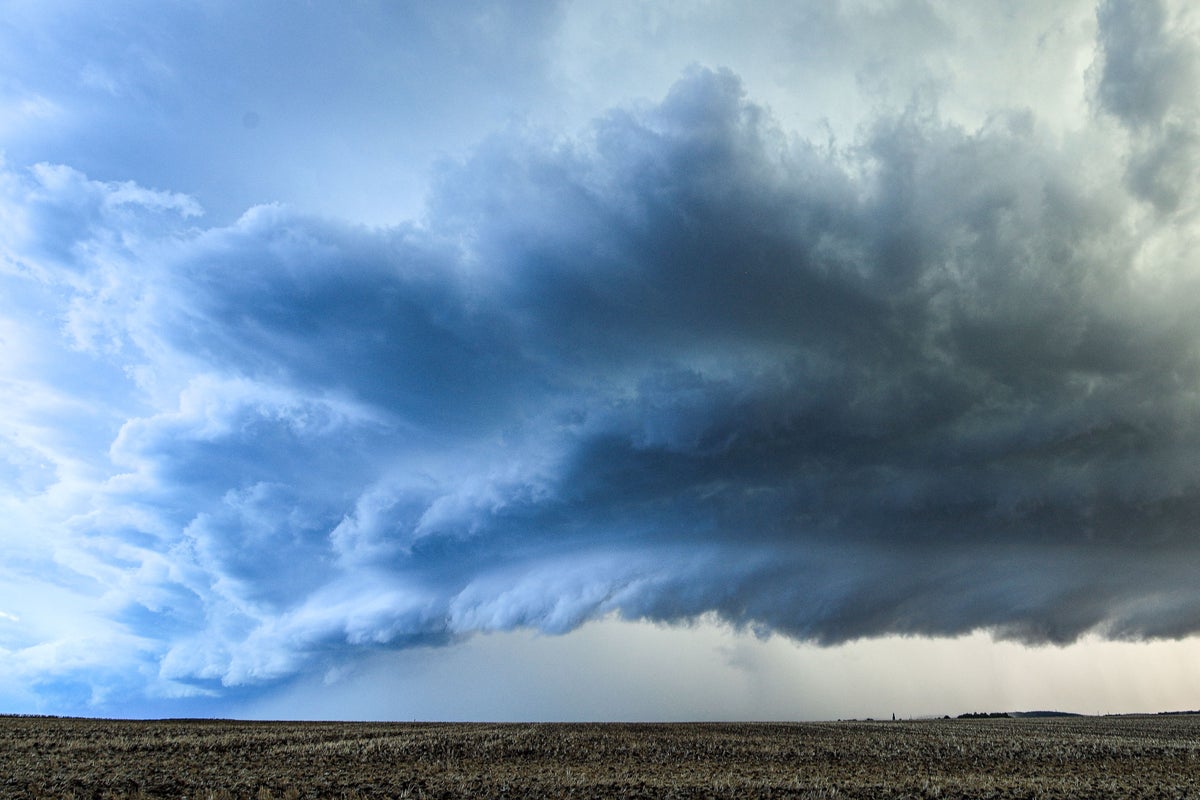
Severe convective events do not merely damage physical structures; they expose the baseline fragility of regional asset management and public safety frameworks. When an overnight squall line intersects with densely populated European corridors, the resulting asset degradation follows a predictable mechanical sequence. Recent meteorological shockwaves across Germany, culminating in fatal structural failures in Rhineland-Palatinate and localized tornadoes in Brandenburg, demonstrate that standard municipal resilience models are failing to account for localized kinetic loads.
Deconstructing these meteorological disasters requires moving past descriptive reporting into functional systems analysis. The physical damage vectors observed across Hesse, Bavaria, and western Germany operate on three distinct economic and engineering failure modes.
The Three Vectors of Kinetic Storm Failure
Atmospheric instability translates into capital destruction through specific physical mechanisms. Understanding these vectors transforms weather reporting from a reactive narrative into predictive risk assessment.
- Dynamic Wind Shear and Façade Integrity: Structural damage in municipal zones like Höhr-Grenzhausen occurs when high-velocity gusts encounter exterior building envelopes that lack pressure equalization design. When wind enters a compromised opening, internal pressure spikes, creating an outward force vector that strips walls and roofing away from load-bearing frames.
- Arboricultural Failure Under Saturated Soil Dynamics: The primary catalyst for human casualties during convective events is unmanaged urban and rural forestry. Root system stability degrades rapidly under combined soil saturation and high-torque rotational wind loads. In Waldorf, two pedestrians seeking shelter under a wooden structure were catastrophically impacted when an uprooted tree failed structurally, proving that resting infrastructure often compounds risk rather than mitigating it.
- Linear Infrastructure Discontinuity: Power grids, transit corridors, and logistics networks operate on tight dependencies. High-velocity winds overturning heavy commercial transport vehicles on major arteries like the A61 highway instantly sever supply chain velocity, while localized transformer failures create cascading municipal blackouts that disable emergency communications.
The Cost Function of Municipal Exposure
Municipalities face a difficult optimization problem between capital expenditure on underground hardening and the probability-weighted cost of storm damage. Traditional budgeting treats severe weather as an exogenous shock rather than a chronic, quantifiable risk variable.
When a tornado strikes regional hubs such as Fürstenwalde, tearing off roofs and scattering vehicular assets over a wide radius, the financial exposure extends far beyond immediate repair bills. Business interruption, emergency responder deployment costs, and temporary housing provisions create an immediate fiscal drain on local governments.
The threshold for structural failure is dropping as thermal energy in the atmosphere increases. Urban planners can no longer rely on historical 50-year or 100-year storm recurrence intervals. These metrics assume a stationary climate baseline that no longer exists. Risk management teams must now price infrastructure based on non-stationary extreme volatility, factoring in higher frequencies of microbursts and unmapped localized tornadoes.
Strategic Asset Hardening and Regional Risk Mitigation
Mitigating the human and economic toll of convective storms requires an operational shift from emergency response to systemic fortification. Public safety architecture must be redesigned around three strict mandates.
First, municipal authorities must audit urban canopies adjacent to public pedestrian zones. Tree species selection, root-space allocation, and proactive crown reduction near designated rest areas and walkways prevent the exact failure mechanics observed in Waldorf. Second, building codes in wind-prone corridors must mandate high-wind clip installations and reinforced roof-to-wall connections, reducing the kinetic energy transfer that currently turns residential roofing into lethal projectile debris. Finally, festival organizers and public venue operators require automated evacuation protocols tied directly to real-time Doppler radar telemetry, eliminating reliance on visual weather assessment.
Deploy capital toward predictive structural auditing and localized wind-load reinforcement before the next seasonal atmospheric boundary collision forces a reactive accounting.