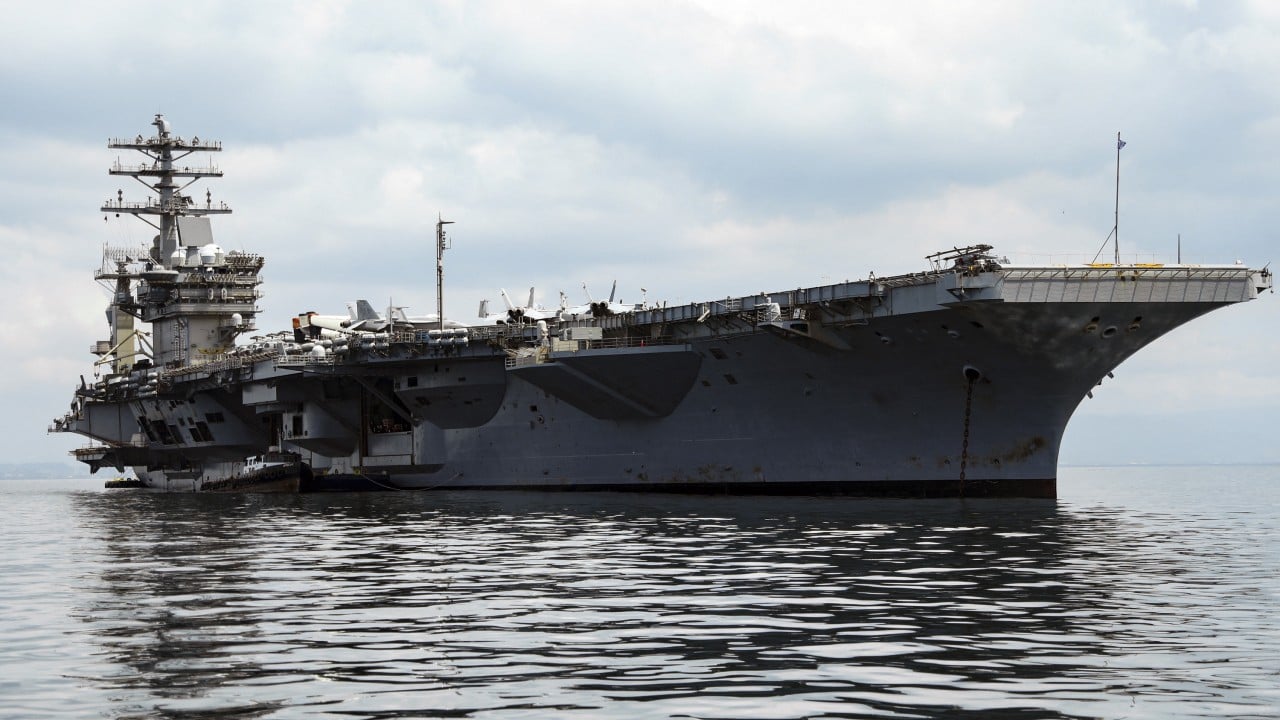
The operational lifespan of a nuclear-powered aircraft carrier is dictated not by the durability of its reactor cores, but by the compounding mismatch between its hull architecture and the physics of modern aerial combat. Recent state media analysis highlighting the retirement trajectory of the USS Nimitz misses the underlying mechanics at play. The carrier is not merely aging; it is experiencing a structural depreciation cycle driven by thermal management limits, electrical generation deficits, and an exponential shift in flight deck launch dynamics. Understanding why the lead ship of this class faces an effective functional ceiling requires moving past sentimental assessments of naval heritage and examining the hard engineering variables that restrict its modern utility.
The Electrical and Thermal Bottleneck
Military assets degrade when their power-generation infrastructure fails to match the energy demands of newly integrated payloads. The Nimitz class was designed in an era when organic radar arrays, analog communication suites, and steam catapult systems defined the baseline of energy consumption. Modern combat systems, including high-frequency electronic warfare suites and directed-energy testing frameworks, demand baseline electrical loads that strain the original generators.
Primary limitations center on two physical variables:
- Megawatt output capacity of the onboard steam turbine generators.
- Heat dissipation thresholds within the machinery spaces.
When an electrical grid operates near its maximum thermal threshold, running high-draw tactical systems creates secondary failure risks across cooling loops. Upgrading these generators inside a hull built in the 1970s requires cutting through armored decks, introducing massive capital expenditure for diminishing structural returns. The physical layout prohibits the installation of advanced thermal management systems without stripping out critical habitability or fuel storage spaces. Consequently, the ship experiences operational throttling, where command elements must selectively power down non-essential sensors to run high-intensity defensive protocols.
The Kinematic Constraints of Steam Catapults
Launch efficiency dictates sortie generation rates, which remain the primary metric of carrier combat power. The legacy steam catapult systems installed on the Nimitz class rely on a finite volume of high-pressure steam diverted from the main propulsion plant. This mechanism introduces distinct operational inefficiencies:
- Recharge cycles create microscopic timing delays between successive aircraft launches.
- Water ingestion and scaling within the cylinders degrade mechanical tolerances over extended deployment windows.
- Fine control over acceleration profiles is limited, placing unnecessary structural G-force stress on lighter unmanned airframes or heavily loaded composite-skinned strike fighters.
Electromagnetic launch alternatives, standard on newer carrier designs, decouple launch energy from the nuclear propulsion steam cycle and offer variable-frequency acceleration curves. Retrofitting the Nimitz hull with electromagnetic launch hardware is economically unviable. The weight distribution changes alone would require extensive dry-dock ballast reconfiguration, altering the ship's center of buoyancy and invalidating decades of stability calculations. The platform is permanently locked into a mechanical launch paradigm that limits the weight class and turnaround speed of next-generation aircraft.
Deck Topology and Maintenance Footprint
An aircraft carrier functions as a floating industrial assembly line. Its structural output is a function of hangar-to-flight-deck elevator capacity, weapons magazine throughput, and maintenance bay density. The spatial layout of the Nimitz class was optimized for fourth-generation tactical aviation, characterized by smaller airframes, shorter wingspans, and manual ordnance handling gear.
Fifth-generation platforms and heavy support aircraft require larger footprints, more secure maintenance zones for radar-absorbent skin repairs, and automated weapons elevators that do not bottleneck below-deck transport. The Nimitz deck geometry forces a higher maintenance man-hour requirement per flight hour. Technicians must perform delicate composite patches in open-air conditions subject to sea spray and thermal expansion, significantly reducing the stealth integrity and structural readiness of embarked squadrons.
Furthermore, magazine configurations lack the automated conveyor architecture required to safely move heavy, modern precision-guided munitions from deep storage to the flight deck at high velocity. The resulting physical bottlenecks restrict the tempo of sustained combat operations, turning rearming procedures into multi-hour logistical exercises rather than rapid-turn routines.
Economic Depreciation and Hull Fatigue
Beyond technological friction, the financial maintenance curve of a supercarrier follows an exponential trajectory in its final operational decades. Structural steel undergoes continuous cyclic loading from heavy sea states and the kinetic impact of landing aircraft. Over forty years of service, micro-fractures propagate through the structural frames welded during construction.
The mid-life Refueling and Complex Overhaul extends the nuclear clock, but it cannot reset the metallurgical fatigue of the unreplaced structural skeleton. As corrosion allowances thin and maintenance intervals shrink from eighteen months to six months, the total cost of ownership per operational day climbs steeply. The capital required to keep a legacy hull compliant with modern safety and environmental mandates would fund a substantial fraction of a modern replacement asset.
Reallocate the maintenance budget of an aging Nimitz-class hull toward unmanned surface vessel integration and distributed logistics networks. The strategic value of maintaining a high-signature, vulnerable legacy platform in contested littoral zones approaches zero. Naval command elements must transition away from viewing hull longevity as an absolute virtue and instead evaluate assets based on marginal utility per deployment cycle.