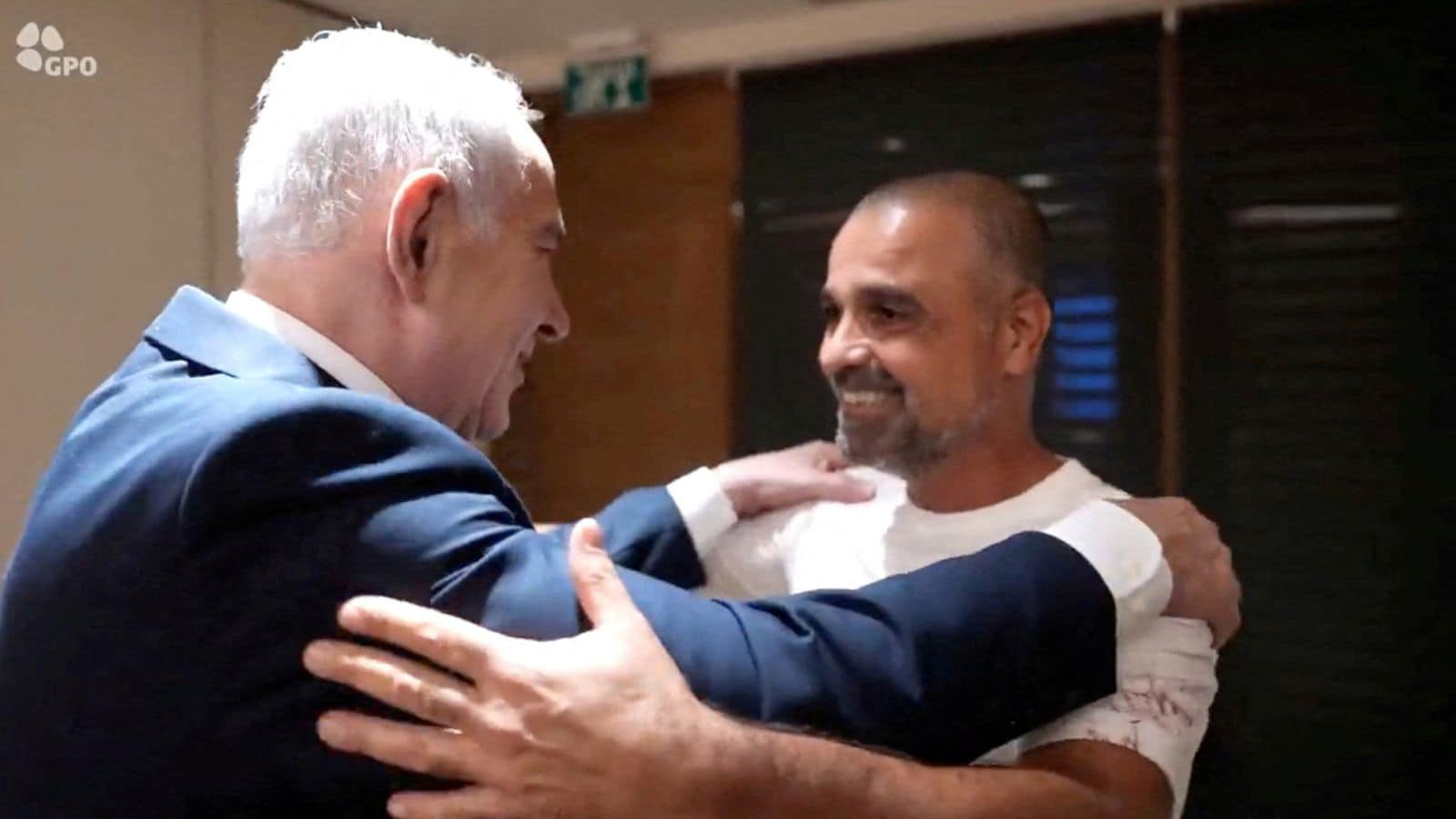
When a Boeing 737 plummets 17,000 feet over the Middle East with a bleeding captain locked in a struggle against his own flight deck, reality breaks down into raw adrenaline. In the immediate aftermath of Flydubai Flight 1073, the global press corps desperately searched for narrative simplicity. They found it in Yaniv Hayoun, an Israeli sewage-infrastructure contractor and plumber who happened to be on board.
Within hours, headlines across the world crowned Hayoun as an accidental aviator—a blue-collar everyman who allegedly stormed the cockpit, subdued a radicalized co-pilot, and physically arrested a rapid dive by pulling back on the yoke. Politicians posed for cameras, late-night talk shows rolled out the red carpet, and cable news networks looped footage of a bloodied T-shirt accompanied by tall tales of television-fueled flight skills.
The only problem with the myth is that actual aviation professionals say it defies physics, logic, and what really happened behind that reinforced flight deck door.
Stripping away the theatrical political theater reveals a sobering look at how modern media manufactures instant folklore, why aviation safety protocols are deeply vulnerable, and how the genuine heroes of Flight 1073 were marginalized to make room for a better story.
The Physics of the Plunge
To understand why the viral narrative collapses, one must look at the mechanics of a modern commercial airliner during an active cockpit intrusion. When the co-pilot allegedly launched a violent assault on Captain Smit Machchhar, the aircraft experienced severe destabilization, resulting in an abrupt 17,000-foot descent.
Public retellings featured Hayoun sprinting forward, tearing open the heavy security barrier, wrenching the controls from a trained pilot, and manually arresting the dive. In television interviews, Hayoun claimed he pulled back on the aircraft handles based on techniques he absorbed watching disaster documentaries.
Commercial pilots watched these broadcasts with open astonishment. Modern fly-by-wire and mechanical flight control systems on a Boeing 737 do not respond well to untrained passengers randomly yanking columns during a high-G, multi-axis emergency. More importantly, Captain Machchhar himself punctured the folklore in subsequent interviews from his hospital bed in Abu Dhabi. Asked directly about the plumber narrative, Machchhar stated plainly that he had no knowledge of the civilian pilot story, emphasizing that his own desperate struggle to free himself from seatbelts, block axe or knife blows, and regain baseline aircraft awareness was the actual barrier to disaster.
Off-duty airline pilots who were also traveling as passengers on the flight stepped up to the flight deck only after the immediate physical threat was neutralized and the door was breached. They were the ones who managed the avionics, communicated with air traffic control, and guided the battered jet down to an emergency landing in Tabuk, Saudi Arabia.
Manufactured Mythology
Why did the plumber-turned-hero trope capture international imagination so intensely?
Modern crisis reporting thrives on cinematic archetypes. A professional airline pilot doing his job under horrific conditions is standard news copy; an ordinary blue-collar tradesman saving hundreds of lives through sheer improvisation reads like a Hollywood blockbuster script.
Political opportunism accelerated the myth. High-ranking officials eager to project national resilience and capitalize on a dramatic narrative rushed to embrace the most colorful character in the cabin. Medals were struck, television circuits were booked, and nuance was discarded. When survivors or actual crew members tried to correct the record, their statements were drowned out by a relentless wave of viral clips and prime-time segments.
This phenomenon points to a broader systemic failure in how aviation incidents are reported. Sensationalism consistently elbows out technical accuracy. Instead of examining the genuine systemic vulnerabilities—such as the security vetting gaps that allowed the co-pilot onto the flight deck or the mechanical design flaws of cockpit doors that can complicate emergency rescue efforts—public attention was funneled into a personality-driven fairy tale.
The Real Crisis on Flight 1073
Behind the political photo-ops lies a grim reality for the actual victims and crew. While television networks fawned over viral soundbites, Captain Machchhar and other injured passengers faced bureaucratic walls regarding medical recognition, trauma support, and legal accountability.
The co-pilot, identified in security investigations as Hamam al-Hammami, had slipped through international background screening processes despite red flags that pointed toward radicalization. That is the real investigative story of Flight 1073. It is not about a handyman turning into a master aviator via cable television. It is about international aviation security agencies relying on superficial compliance checks, leaving hundreds of passengers at the mercy of a compromised flight deck.
When the cameras turn off and the viral hype fades, the aviation industry is left to grapple with uncomfortable truths. Commercial flight remains remarkably safe, but human factors and insider threats represent a frontier that automated checklists cannot easily seal.
The myth of the plumber who flew a commercial jet makes for great morning television, but it obscures the urgent work required to keep the next flight safe. The passengers and crew who survived Flight 1073 deserve the unvarnished truth, not a comforting fiction designed for ratings.