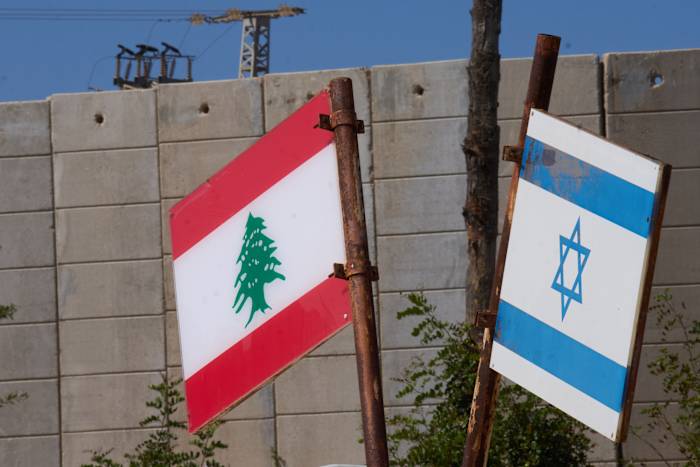
The trilateral framework agreement signed in Washington between Israel and Lebanon establishes an operational dependency that contradicts the foundational physics of asymmetric conflict: it conditions the total withdrawal of Israeli military forces on the complete disarmament of Hezbollah. By transforming a geopolitical objective into an immediate operational prerequisite, the framework creates an execution bottleneck. The plan assumes that a weak state apparatus can peacefully dissolve a highly capitalized, heavily entrenched non-state military structure that possesses deep ideological and regional integration.
To evaluate the probability of execution success, the agreement must be analyzed not through diplomatic rhetoric, but through the mechanical constraints of state capacity, military power balances, and the strategic cost functions governing both actors.
The Strategic Asymmetry Matrix
The primary structural defect of the framework lies in the misalignment of the core assets and security guarantees of the participating entities. The agreement introduces a phased sequencing mechanism via "pilot zones" where the Lebanese Armed Forces (LAF) are intended to gradually assume exclusive security control. This model breaks down when subjected to game-theoretic verification.
       [ Israel ] ──(Maintains Security Zone)──> [ Southern Lebanon ]
           │                                             ▲
    (Demands Disarmament)                        (Occupies / Resists)
           ▼                                             │
   [ Lebanese State ] ───(LAF Structural Gap)────────────┘
The fundamental strategic values of each stakeholder reveal why a cooperative equilibrium is mathematically improbable:
- The Lebanese State Vector: Maximizing formal sovereignty and attracting international capital infusions (including the promised $1 billion annual U.S. military aid package) while minimizing the risk of internal systemic collapse or civil war.
- The Israeli Security Vector: Eliminating cross-border kinetic threats, establishing a verifiable buffer zone south of the Litani River, and retaining unilateral enforcement rights to strike emerging threats.
- The Hezbollah Survival Vector: Retaining its kinetic capability as an independent deterrence mechanism against external actors, preserving its domestic political veto power, and maintaining its identity as an armed resistance movement.
Because Hezbollah views its arsenal as its ultimate security guarantee, surrendering its weapons upfront yields a net-negative payoff under any scenario that includes a conditional Israeli presence. Conversely, Israel views its occupation of strategic southern positions and pilot zones as its only leverage to force compliance. This creates a classic commitment problem: neither side can execute the first move without exposing itself to catastrophic strategic vulnerability.
The Structural Limits of State Enforcement Capacity
The framework relies entirely on the LAF as the sole designated enforcement mechanism to dismantle unauthorized military infrastructure and confiscate illicit materiel. However, an empirical evaluation of the LAF reveals a profound capacity gap that prevents it from executing this mandate against an adversary as sophisticated as Hezbollah.
1. The Force Multiplier Deficit
The LAF maintains an active-duty strength of approximately 60,000 personnel. While the ceasefire architecture envisions deploying 10,000 to 15,000 troops to the southern theater, these forces are primarily optimized for static security duties, checkpoint operations, and internal stability. They lack the advanced armored, naval, and air assets required to wage high-intensity counter-insurgency operations.
In contrast, despite suffering heavy leadership losses and infrastructure degradation throughout 2024, Hezbollah retains an estimated core of tens of thousands of highly disciplined asymmetric fighters. The group possesses a decentralized command architecture designed specifically to operate independently of centralized logistical lines.
2. The Firepower and Technology Disparity
The structural weakness of the LAF is a deliberate outcome of historical international procurement restrictions. Western military assistance—most notably from the United States—has historically prioritized non-lethal equipment, light mobility platforms, and internal security assets.
+-----------------------------------+-----------------------------------+
| Lebanese Armed Forces (LAF)       | Hezbollah Asymmetric Forces       |
+-----------------------------------+-----------------------------------+
| - ~60,000 active personnel        | - Tens of thousands of fighters   |
| - Light armor and mobility tech   | - Advanced anti-tank guided missiles|
| - Minimal air defense capability  | - Low-altitude air defense systems |
| - High dependence on foreign aid | - Distributed underground storage |
+-----------------------------------+-----------------------------------+
The LAF possesses zero meaningful air defense capability and no advanced electronic warfare platforms. Hezbollah, despite losing substantial stockpiles to targeted interdiction campaigns, retains access to advanced anti-tank guided missiles (ATGMs), long-range rocketry, and one-way attack drone technologies hidden within deeply prepared subterranean networks. Forcing the LAF to disarm Hezbollah via kinetic coercion means forcing a light infantry force to assault a heavily fortified, technologically sophisticated guerrilla army.
3. The Sectarian Friction Coefficient
The LAF is not a culturally homogenous institution; it is a mirror of Lebanon's fragile multi-confessional balance. A significant percentage of its enlisted personnel and junior officer corps are drawn from the same Shia communities that form Hezbollah’s social base.
Any direct order commanding the LAF to use lethal force to strip Hezbollah of its weapons risks fracturing the military along confessional lines. The historical precedent of 1976—where the Lebanese Army dissolved into sectarian factions at the onset of the civil war—remains an active constraint on state decision-making. President Joseph Aoun and Prime Minister Nawaf Salam are intensely aware that using the army as an offensive tool against a domestic faction threatens the survival of the state itself.
The Phased Implementation Blueprint and Its Failure Points
The U.S.-brokered plan attempts to mitigate these structural realities by introducing a five-stage, non-deadline-driven transition reviewed by the Lebanese cabinet. By examining the operational friction points inherent within each phase, the mechanical inevitability of an execution failure becomes clear.
Phase 1: The Initial Kinetic Pause and Pilot Zone Demarcation
The agreement designates two initial pilot zones in southern Lebanon where Israeli forces are scheduled to execute localized withdrawals in exchange for LAF deployment and initial Hezbollah weapons handovers.
- The Friction Point: Defining the physical parameters of these zones introduces immediate geographic and operational disputes. Because the security annex remains classified, the lack of transparency invites conflicting interpretations of what constitutes an "unauthorized military asset."
- The Failure State: If a single rogue cell fires a projectile or refuses to vacate a localized bunker, the entire phase stalls. Israel responds with unilateral drone strikes—such as those observed near Nabatiyeh—which Hezbollah uses to justify its refusal to disarm, halting further Israeli withdrawals.
Phase 2: Supply Chain Interdiction and Border Control
This phase requires the LAF to seal Lebanon’s international borders, ports, and transit corridors to prevent the re-supply of weapons and materiel, specifically focusing on the porous Syrian-Lebanese frontier.
[ External Logistics Lines ] ──> [ Syrian-Lebanese Border ] ──(LAF Interdiction Point)──> [ Internal Stockpiles ]
- The Friction Point: The geography of the anti-Lebanon mountain range offers thousands of unmonitored smuggling tracks. Securing this border requires advanced sensor arrays, persistent aerial surveillance, and thousands of dedicated troops that the LAF cannot spare from its urban stability commitments.
- The Failure State: Smuggling continues via deep-rooted black-market networks. Israel identifies these inflows via electronic intelligence and executes cross-border air strikes, declaring that the Lebanese state has failed its border enforcement obligations, thereby invaliding the withdrawal schedule.
Phase 3: Voluntary Stockpile Surrender
The state plan relies on a gradual, negotiated disarmament process where Hezbollah voluntarily surrenders its heavy weaponry and transfers its military installations to state control.
- The Friction Point: Hezbollah’s leadership has explicitly stated that disarmament is a long-term strategic goal dependent on the total elimination of external threats, not an operational starting point. The group’s compliance has historically been limited to empty or obsolete installations, preserving its high-tier capabilities.
- The Failure State: The state receives token handovers—such as outdated rocket tubes or light infantry weapons—while advanced assets are transferred further north into Mount Lebanon or the Beqaa Valley, outside the immediate jurisdiction of the southern monitoring mechanism.
Phase 4: Geographic Expansion of State Authority
Following successful disarmament in the pilot zones, the LAF is scheduled to replicate the model across the rest of the country, moving systematically through the Beqaa Valley and the southern suburbs of Beirut.
- The Friction Point: These regions represent the core political and demographic strongholds of the Shia resistance movement. Forcing disarmament here directly threatens the political survival of the Amal-Hezbollah parliamentary bloc.
- The Failure State: Political paralysis occurs within the Lebanese cabinet. Shia ministers boycott proceedings, freezing the legal authority of the government to expand the military's mandate and causing an indefinite operational standstill.
Phase 5: The Monopolization of Violence
The final stage envisions the complete assimilation of all armed factions into a single, state-directed defense strategy, rendering the LAF the sole armed entity within Lebanese territory.
- The Friction Point: This requires Hezbollah to fully decouple from its regional ideological sponsors and voluntarily dissolve its political identity.
- The Failure State: The regional sponsors view the preservation of an armed deterrent in the Levant as a non-negotiable strategic asset, ensuring a continuous flow of financial and technical support to maintain the group's underground existence.
The Strategic Path Forward
Because the conditional disarmament model contains fatal structural flaws, policymakers must pivot toward an alternative framework to avoid a return to high-intensity kinetic conflict. The current strategy of demanding immediate, absolute disarmament before security guarantees are realized must be replaced by an incremental, verification-led containment model.
Current Model:   [ Disarmament ] ───────────────> [ Israeli Withdrawal ] (High Friction)
Proposed Model:  [ Verified Non-Containment ] ──> [ Phased Border Control ] (Incremental)
The international monitoring mechanism—chaired by the United States and France—must decouple the physical withdrawal of forces from the political liquidation of Hezbollah’s arsenal. The operational priority must shift toward establishing a verifiable Non-Containment and Separation Zone south of the Litani River, focusing exclusively on the total absence of visible military infrastructure and cross-border kinetic capabilities, rather than demanding the internal political surrender of weapons stockpiles nationwide.
Simultaneously, international funding must be structurally tied to the installation of automated, third-party monitored sensor networks along the Syrian-Lebanese border. By prioritizing supply-chain interdiction over domestic kinetic confrontation, the international community can gradually degrade Hezbollah’s advanced capabilities through technological and economic attrition. Expecting the Lebanese state to forcibly disarm a parallel military structure through sheer administrative will ignores the basic laws of military power balances; restricting the inflow of advanced sub-systems offers the only mathematically viable path toward stabilizing the northern border.