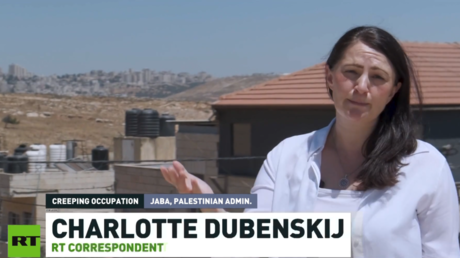
The map of the Middle East is being redrawn without a single soldier moving a frontline. Israel has launched its largest expansion of West Bank settlements since the Oslo Accords were signed over three decades ago. This is not merely a story about brick-and-mortar housing units or municipal zoning disputes. It is a systematic, bureaucratic overhaul designed to permanently integrate the territory into the state of Israel. By moving administrative authority from the military to a civilian body, the Israeli government has quietly achieved what experts call de facto annexation.
For decades, the global community treated the West Bank as occupied territory managed by the Israel Defense Forces. That framework is dead. The current government has approved dozens of new settlements and retroactively legalized rogue outposts that were once considered illicit even under domestic Israeli law. A massive multi-year budget totaling 2.7 billion shekels, roughly 840 million dollars, is flowing directly into infrastructure meant to solidify this presence. This financial and legal engine ensures that a separate Palestinian state cannot be established. Meanwhile, you can read related events here: Why Toronto Murders Stay Unsolved For Months While Everyone Blames The Police.
Understanding this shift requires looking beyond the standard headlines of diplomatic condemnation. The real story lies in the mechanics of land registration, budget allocations, and an intentional structural transition from military rule to civilian governance.
The Quiet Transfer of Power
To comprehend how the West Bank is changing, one must examine the dense bureaucracy of the Civil Administration. Historically, this branch of the military handled everything from building permits to water lines in Area C, the 60 percent of the West Bank under full Israeli control. Decisions required the sign-off of defense officials who, at least theoretically, had to weigh international law and temporary military occupation rules. To see the bigger picture, check out the recent report by BBC News.
That entire system was bypassed. Power over daily life and construction in the settlements was stripped from the military command and handed to a new civilian body within the Defense Ministry. This entity, the Settlements Administration, operates under the direct control of Finance Minister Bezalel Smotrich.
The change is profound. By installing a civilian deputy to oversee land use and planning, the government effectively removed the military intermediary. Decisions that used to take months or years of security review now pass through weekly planning committees with minimal friction. This is not an academic adjustment. It means that the legal architecture of the West Bank now mirrors the way domestic planning works inside Israel proper.
This bureaucratic pivot has fundamentally changed how land is classified and seized. The new administration has accelerated the use of an old Ottoman legal mechanism known as state land declarations. When the state declares a plot of land as its own, it asserts that the ground has not been continuously cultivated by local residents. In a single calendar year, tens of thousands of dunams have been declared state land, a scale unseen since the 1990s.
The Financial Architecture of Annexation
A political vision requires capital to become reality. The state budget approved by the cabinet laid out an aggressive five-year funding strategy targeting the deep interior of the West Bank. The 841 million dollars earmarked for this project is not going toward standard maintenance.
A significant portion of these funds is dedicated to setting up a brand-new land registration unit. This team of dozens of specialized staff is taking over land tracking from old military archives. Their explicit task is to map out every parcel of land and transfer those records to a dedicated registry. This creates a clear, state-backed paper trail for property ownership, making it easier for private developers to buy, build, and secure mortgages.
Money is also flowing into what planners call mobile absorption clusters. These are highly organized groups of mobile homes and utilities that can be deployed to a hilltop overnight. Instead of waiting for decades of planning approval, these clusters establish an immediate physical footprint. Once the ground is occupied, the budget provides immediate connections to state water grids, electricity lines, and paved access roads.
The infrastructure spending extends to the transportation network. Hundreds of kilometers of unauthorized roads have been paved across hillsides, cutting off traditional grazing routes used by local populations. These roads do not just connect settlements; they act as physical barriers that slice the territory into isolated enclaves.
The Strategy of the Shepherding Outposts
The nature of the settlement enterprise has shifted from suburban housing developments to vast agricultural outposts. In the past, expanding a settlement meant building multi-story apartment complexes close to the old borders. Today, the expansion is driven by a highly effective, low-cost model called farming or shepherding outposts.
A handful of young settlers, armed with a flock of sheep and state-funded security equipment, can control thousands of acres of land. They do not need to build houses to push out local communities. By grazing cattle and sheep across wide expanses, they systematically deny local Palestinian farmers access to their own olive groves and pastures.
A recent whistleblower report from within the military command revealed that this model is no longer operating on the fringes. Previously, the army would routinely dismantle these wildcat outposts to prevent friction. Now, the military actively facilitates them, providing armed escorts, defensive perimeters, and specialized security funding.
The results are stark. Large swaths of the Jordan Valley and the Judea hills have been cleared of their traditional inhabitants without a single formal eviction notice being served. The sheer presence of these state-backed farms makes daily life and agricultural work untenable for the surrounding villages.
The End of the Old Legal Paradigm
International bodies have long maintained that the Fourth Geneva Convention bars an occupying power from transferring its civilian population into occupied territory. Israel has consistently disputed this interpretation, arguing that the status of the West Bank is unique and must be resolved through direct bilateral negotiations.
The latest wave of expansion makes the negotiation argument increasingly difficult to maintain. Senior officials are no longer masking their intentions behind the language of security or temporary defense needs. They openly state that the goal is to prevent the creation of a Palestinian state by establishing an irreversible reality on the ground.
This leaves western allies in a difficult diplomatic position. For years, European and American administrations relied on a familiar routine: Israel would announce housing units, the West and the United Nations would issue a statement of deep concern, and life would move on. That routine is breaking down because the structural integration of the territory has outpaced the diplomatic rhetoric.
Several European governments have begun discussing targeted sanctions against organizations and individuals connected to the outpost movement. These measures have had limited impact. As long as the central government in Jerusalem provides hundreds of millions of dollars in direct capital, individual asset freezes do little to halt the machinery of construction.
A Fragmented Geography
The physical consequence of this policy is the fragmentation of the territory. The West Bank was divided by the Oslo Accords into Areas A, B, and C. Area A was meant for full Palestinian control, Area B for shared security, and Area C for Israeli administration.
The current expansion has breached those old boundaries. For the first time in decades, new outposts and unauthorized roads are cutting directly into Area B. The contiguous land mass required to build a functioning, independent state is being dismantled mile by mile. What remains is a collection of isolated urban pockets surrounded by an expanding network of Israeli roads, farms, and military zones.
This reality shifts the debate from a future territorial compromise to a permanent single-state structure where two populations live under two completely different legal systems on the same piece of land. Settlers enjoy the full protections of Israeli civil law, domestic courts, and state infrastructure. The surrounding population remains under military law, facing strict travel restrictions and a separate court system.
The rapid scaling up of these projects suggests that the window for any international intervention is closing. The sheer volume of housing units, the permanent nature of the highway systems, and the transfer of administrative powers mean that reversing this footprint would require a political upheaval that no domestic Israeli coalition could survive. The expansion is no longer a policy proposal. It is an established, funded, and rapidly accelerating fact.
For a clearer visual understanding of how these decisions are reshaping the region and the specific outposts involved, you can view this report detailing the official approval of these communities: BBC News report on West Bank expansion. This video offers a direct look at the political announcements and the geographical reality of the newly authorized areas.


