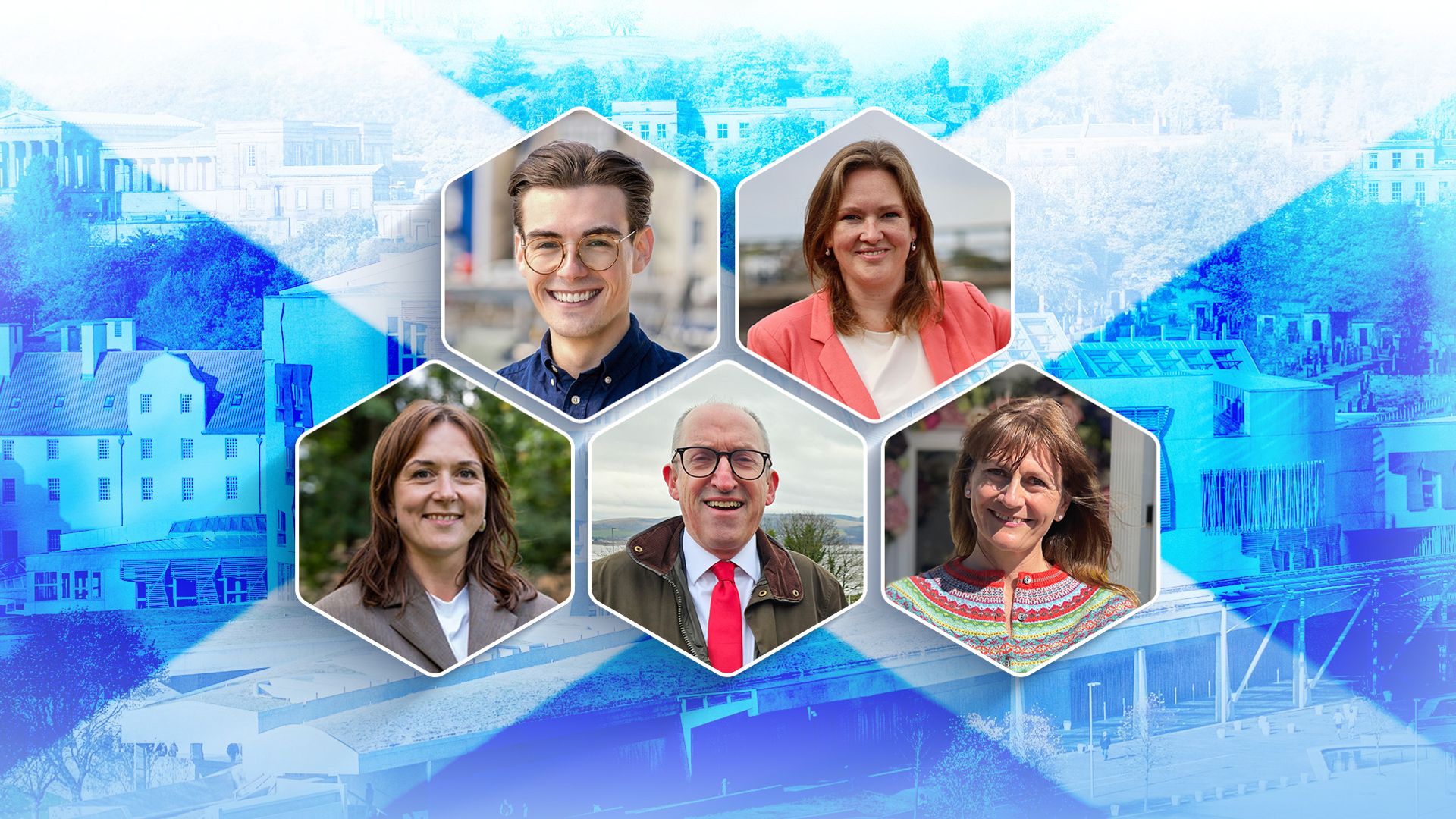
The political press is currently salivating over the "Class of 2026." They call them hotshots. They profile them as the fresh blood destined to save a wheezing Scottish Parliament. They point to impressive LinkedIn profiles, polished media appearances, and a background in "policy advocacy" as proof that the next intake of MSPs will finally break the deadlock of the last twenty-five years.
They are wrong. Meanwhile, you can find similar events here: The Cold Truth About Russias Crumbling Power Grid.
What the mainstream analysis misses is that these candidates aren't disruptors; they are the ultimate products of a system designed to reward conformity over competence. We aren't looking at a new wave of leadership. We are looking at the professionalization of mediocrity.
In my time navigating the intersection of public policy and private enterprise, I’ve seen this movie before. A "hotshot" candidate enters a legislative body with a resume full of gold stars and a head full of theoretical frameworks, only to be swallowed whole by a committee structure that prioritizes process over outcomes. We don't need more "bright young things" who have spent their entire lives in the political bubble. We need people who have actually built something, broken something, or managed a P&L that wasn't subsidized by the taxpayer. To see the bigger picture, check out the recent article by The New York Times.
The Credentials Trap
The typical Holyrood hopeful in 2026 follows a predictable path: student politics, a stint as a researcher for an incumbent MSP, perhaps a few years at a think tank or a public affairs firm, and then—the coronation. They are experts in the language of governance but have zero experience in the mechanics of delivery.
This is the "Credentials Trap."
We mistake a high-quality CV for high-quality capability. In the real world, if a project manager fails to deliver a bridge on time and under budget, they are fired. In Holyrood, if a policy fails to deliver its intended outcome, the "hotshot" simply asks for more funding to "re-evaluate the implementation strategy."
The Scottish Parliament was designed to be different from Westminster. It was supposed to be a place of "new politics," characterized by consensus and accessibility. Instead, it has become a factory for careerists who view a seat in the chamber as a mid-level management position rather than a mandate for radical change.
The Myth of the Policy Wonk
The competitor narrative suggests that because these candidates "understand policy," they are uniquely qualified to lead. This is a fundamental misunderstanding of what a legislator does. Policy is the easy part. You can hire a consultant to write a policy. You can ask a think tank to draft a white paper.
The hard part is the trade-off.
Politics is the art of deciding who loses. A real leader understands that for every "investment" in one sector, there is a withdrawal from another. The current crop of candidates talks exclusively about "investing," "supporting," and "strengthening." They never talk about cutting, dismantling, or sunsetting obsolete departments.
They are terrified of making enemies, which makes them useless at making progress.
Why "New Blood" is Usually Just More of the Same
There is a lazy consensus that simply swapping out the old guard for younger faces will solve the inertia. This ignores the structural reality of the party list system.
In the Scottish electoral system, your loyalty to the party hierarchy is far more important than your value to the electorate. If you want a high spot on the regional list, you don't challenge the status quo; you amplify it. You don't bring original ideas; you repeat the party line with more charisma than the person you’re replacing.
I have watched brilliant, independent-minded individuals try to enter this arena. They are usually weeded out during the selection process because they are "unmanageable." The system isn't looking for hotshots; it’s looking for reliable votes.
The Consultant Class Takeover
Look closely at the 2026 hopefuls. A staggering number come from the world of communications and public relations. They are trained to manage perception, not reality.
When you populate a parliament with PR experts, you get a government that prioritizes the "announcement" over the "achievement." We see this in the endless cycle of "strategies" and "visions" for Scotland that never seem to translate into better schools, shorter wait times, or a more competitive economy.
Imagine a scenario where a private company operated like this. If a CEO spent 90% of their budget on a branding campaign and 10% on the actual product, the board would have them out by the first quarter. In Holyrood, that’s just a standard Tuesday.
The Competency Crisis Nobody Wants to Admit
We are facing a massive competency crisis in Scottish governance. It’s not just about ideology; it’s about the basic ability to execute complex projects. From the ferry fiasco to the botched census, the evidence is everywhere.
The "hotshots" of 2026 are not being trained to fix this. They are being trained to defend it.
The skills required to win a selection contest—public speaking, social media savvy, and internal networking—are almost diametrically opposed to the skills required to oversee a multi-billion pound infrastructure project or reform a national health service.
- Winning a seat requires being liked.
- Governing effectively requires being comfortable with being hated.
The current batch of candidates is desperate to be liked. They want the "MSP" title for the status, not for the utility.
Stop Asking if They Are "Rising Stars"
The media asks the wrong questions. They ask: "Who is the next leader of the party?" or "Who is the most impressive orator in the new intake?"
The questions we should be asking are:
- Have they ever had to meet a payroll when the bank account was near zero?
- Have they ever managed a team of more than five people who weren't political volunteers?
- What is the biggest thing they have ever personally failed at, and what did it cost?
If the answer to the first two is "no" and they can't answer the third with honesty, they aren't a hotshot. They are a passenger.
The High Cost of Political Professionalism
The professionalization of politics has driven out the "amateur" in the best sense of the word—the person who has a career in medicine, engineering, or education and decides to spend four years in parliament to fix a specific problem before returning to their real job.
Instead, we have created a closed loop. The 2026 candidates are the product of this loop. They view the electorate not as people to be served, but as a demographic to be managed.
The danger of the "Class of 2026" isn't that they will fail. The danger is that they will succeed in exactly the same way their predecessors did: by maintaining the appearance of movement while the country drifts further into stagnation.
If you want to see what the future of Scotland looks like, don't look at the glossy profiles of the new candidates. Look at the balance sheet of the last decade. The people promising to fix the mess are the very ones who built their careers defending the people who made it.
Stop falling for the "hotshot" narrative. It’s a distraction designed to keep you from noticing that the engine is stalled and the new drivers don't even know how to open the hood.
The 2026 election won't be won by the smartest person in the room. it will be won by the person who can most convincingly pretend that doing the same thing for the twenty-sixth year in a row will somehow produce a different result.
Turn off the profiles. Ignore the "ones to watch" lists. Until we start electing people based on their record of delivery rather than their potential for promotion, the "hotshots" will continue to be nothing more than highly paid observers of a national decline.
Demand builders. Not bloggers.