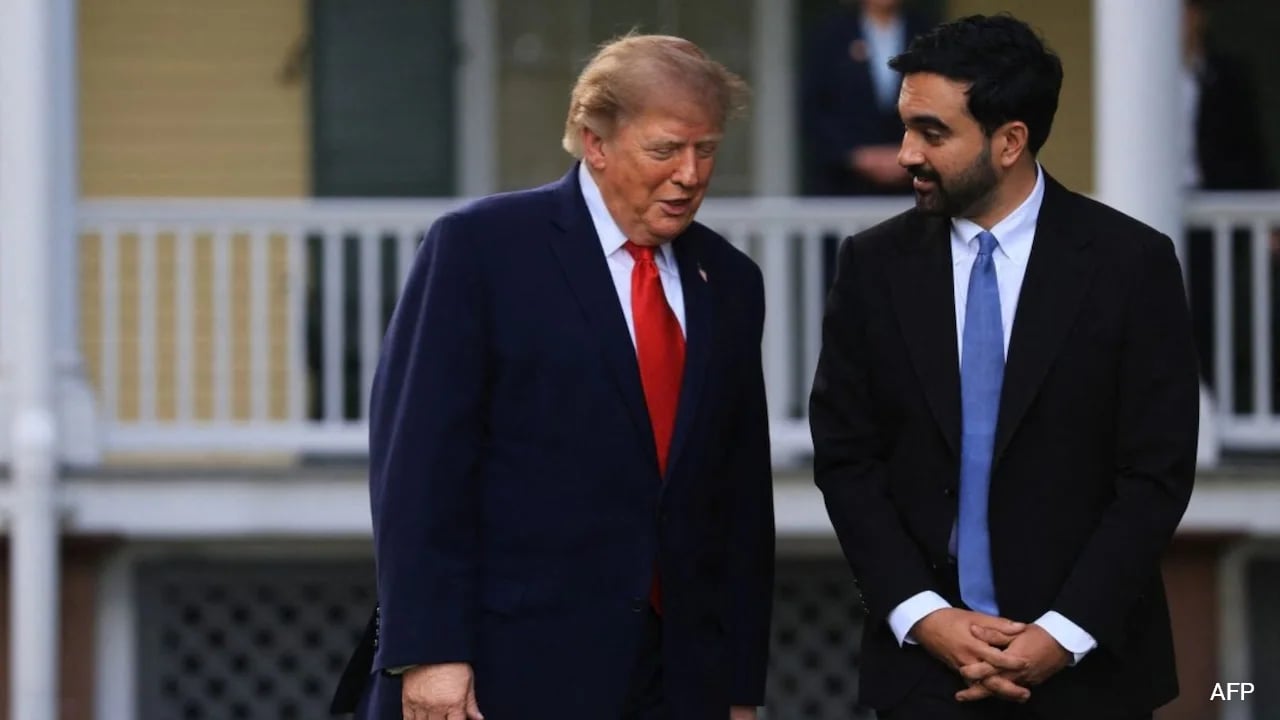
Politics isn't a cable news shouting match once the cameras turn off. Most voters assume a democratic socialist from Queens and a populist billionaire president wouldn't even share the same zip code, let alone a text thread. Yet Zohran Mamdani confirmed he communicates directly with Donald Trump from time to time.
It sounds bizarre on paper. You've got Mamdani, a prominent Democratic Socialists of America member who built his career fighting corporate landlords and pushing progressive New York City policies, exchanging messages with the Republican president. People immediately jumped to wild conclusions about secret alliances or political betrayals. In related updates, we also covered: Why Taking Political Soundbites Literally Is How Media Outlets Keep You Distracted.
The reality is way more practical. And honestly, it reveals a lot about how New York politics actually gets done when big federal money is on the line.
The Real Reason Behind the Text Messages
Mamdani explained that his direct line to Trump isn't about ideological alignment or late-night political gossip. It's strictly about constituent advocacy and getting results for New York City. Associated Press has also covered this critical topic in great detail.
When you represent or lead a massive urban hub, federal intervention isn't optional. You need Washington's buy-in for infrastructure grants, transit funding, housing relief, and emergency resources. Mamdani realized early on that yelling through a megaphone at rallies rarely moves money out of federal agencies. Talking directly to the person holding the pen does.
Trump operates on personal rapport and transactional deal-making. He's famously accessible by phone to allies, rivals, reporters, and local officials alike. Mamdani recognized that dynamic and used it rather than pretending the White House didn't exist.
Think about how municipal governance works in practice. A city can pass all the local resolutions it wants, but if the Department of Transportation or Housing and Urban Development freezes a grant, projects stall for years. Mamdani's approach prioritizes tangible wins for working-class New Yorkers over ideological purity tests on social media.
Why This Shocked Political Observers
To understand why this blew up online, look at the sharp contrast between their public brands.
Mamdani rose through New York's progressive movement, representing Astoria in the State Assembly before launching his high-profile bid for New York City mayor. His platform centers on rent freezes, free public transit, higher taxes on the wealthy, and public ownership of utilities. He's unapologetically socialist.
Trump, meanwhile, frequently uses New York's progressive politicians as punching bags at his rallies, painting the city as a cautionary tale of left-wing governance. On paper, they represent opposite ends of the American political spectrum.
Social media algorithms thrive on binary conflict. Voters are conditioned to believe that if two politicians disagree on tax policy, immigration, and healthcare, they must treat each other like mortal enemies in every room. When Mamdani casually admitted they text occasionally, pundits treated it like a plot twist in a political thriller.
It wasn't a plot twist. It was just old-school New York pragmatism peeking through modern partisan theater.
The Queens Connection Nobody Should Ignore
You can't separate this dynamic from geography. Both men are products of Queens, New York, though from wildly different eras and neighborhoods.
Queens breeds a very specific kind of political sensibility. It's the most diverse borough in the city, packed with working-class immigrants, small business owners, union members, and stubborn pragmatists. People from Queens generally care less about abstract ideological debates and more about whether the subway runs on time, whether potholes get fixed, and whether the rent is affordable.
Trump grew up in Jamaica Estates before building his real estate empire in Manhattan. Mamdani grew up in Morningside Heights and settled in Astoria, organizing tenants and taxi drivers. Despite their opposite class backgrounds, both understand New York's transactional political culture instinctively.
In New York City, mayors and local leaders have always maintained backchannels with presidents they publicly opposed. Fiorello La Guardia worked closely with Franklin D. Roosevelt despite party friction. Ed Koch regularly sparred with Ronald Reagan in the press while lobbying his administration behind closed doors for federal aid. Even Bill de Blasio, who clashed constantly with Trump during his first term, still had to coordinate with the White House during the COVID-19 crisis.
Mamdani is following a well-worn playbook. The only difference is that text messaging replaced the rotary phone.
How Progressive Voters and Critics Reacted
The reaction to Mamdani's disclosure split right down predictable fault lines, though some of the pushback came from unexpected corners.
- Hardline progressives worried that normalizing casual communication with Trump softens the moral opposition to his administration's policies. Some activists argued that direct engagement risks lending legitimacy to a president whose agenda directly harms immigrant and low-income communities in Queens and across the five boroughs.
- Pragmatic Democrats saw it as a sign of political maturity. Governing requires dealing with the president voters actually elected, not the one you wish was in office. If a text message helps secure federal backing for a local transit project or housing initiative, most regular voters won't complain about the sender's contact list.
- Conservative commentators framed the revelation as proof that even outspoken socialists recognize Trump's leverage and deal-making authority when they actually need something accomplished.
Both criticisms miss the bigger picture. Communicating with an ideological opponent doesn't mean adopting their worldview. It means refusing to let personal pride block resources meant for your constituents.
What This Reveals About Modern Political Access
We live in an era where political communication has flattened. Twenty years ago, a state assemblymember or local official couldn't easily reach the President of the United States without going through layers of congressional leadership, White House chiefs of staff, and formal scheduling requests.
Trump broke that protocol permanently. Throughout his political career, he's bypassed traditional gatekeepers, handing out his personal cell number to world leaders, business executives, and local politicians. He prefers direct, unscripted communication over carefully vetted memos.
Mamdani adapted to the environment in front of him. Instead of relying solely on formal letters that sit in an inbox for six months, he used a direct channel when specific issues warranted it.
That doesn't mean they're texting every Tuesday about lunch spots in Astoria. "From time to time" means targeted, sporadic outreach tied to specific moments, legislative battles, or municipal needs. It's a tool in a broader political toolkit, right alongside public rallies, legislative drafting, and coalition building.
The Difference Between Public Rhetoric and Private Governing
If you want to understand politics without getting played by partisan media, you have to separate performance from execution.
Public rhetoric is designed to rally supporters, define values, and draw sharp moral contrasts. When Mamdani gives a speech condemning corporate greed or federal immigration crackdowns, he's articulating the core principles his voters elected him to defend.
Private governing is about mechanics. It's about budget lines, federal waivers, regulatory approvals, and emergency declarations. You don't get a federal waiver through an Instagram Reel. You get it by picking up the phone, sending a message, and making a direct case to the decision-maker.
Voters often confuse compromise with capitulation. Talking to an opponent isn't surrendering your principles. Surrendering your principles is changing your votes or abandoning your constituents to stay in someone's good graces. As long as Mamdani's policy positions remain intact, keeping a line open to the White House costs him nothing and potentially gains his constituents millions in federal support.
How to Read Political Headlines Like an Insider
Next time a story breaks about two rival politicians texting, grabbing dinner, or speaking privately, resist the urge to treat it like a scandal. Look at the incentives instead.
Ask yourself three simple questions whenever you see these headlines:
- What resource does the local official need? Follow the federal funding, regulatory approvals, or crisis response tied to their district.
- Did any policy positions actually change? Check voting records and public budgets rather than judging by a single anecdote.
- Who benefits from the outrage? Usually, partisan media outlets and rival candidates gain the most from spinning routine political communication into a betrayal narrative.
Watch Mamdani's actual legislative record, budget priorities, and federal funding outcomes over the coming months rather than overanalyzing his text messages. Results for working-class New Yorkers are the only metric that matters.