Western leaders thought they could freeze the global financial system to stop a war. They were wrong. Instead, they’ve kicked off the fastest migration of capital in modern history. By weaponizing the dollar against Russia and threatening to do the same to anyone helping them, the U.S. and EU haven’t just isolated an enemy. They've scared the rest of the world into finding an exit.
China is standing right there at the door.
For years, talk of the yuan replacing the dollar was mostly academic noise. It's not noise anymore. In 2026, we're seeing the "petroyuan" move from a theory to a daily reality. The numbers are staggering. In March 2026, China’s Cross-Border Interbank Payment System (CIPS) hit an all-time record, processing over 1.22 trillion yuan ($178 billion) in a single day. That's a 50% jump in daily transaction value in just one month.
The Sanction Trap backfires
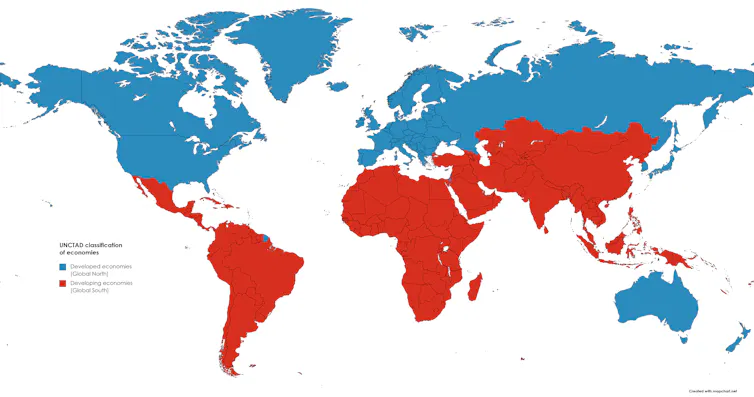
The trigger wasn't some brilliant marketing campaign from Beijing. It was fear. When the West froze $300 billion in Russian central bank assets, every leader in the Global South looked at their own dollar reserves and felt a chill. If it happened to Moscow, it can happen to Riyadh, Brasilia, or Jakarta.
Look at the trade between Russia and China. Before 2022, yuan settlements were a rounding error—less than 2% of their trade. By early 2024, that number hit 40%. Even though the U.S. started threatening "secondary sanctions" on banks that help Russia, the flow hasn't stopped; it’s just gone deeper.
The 20th package of EU sanctions, just adopted in April 2026, tries to close these loopholes. It targets banks in Kyrgyzstan and Azerbaijan. It even bans the "digital rouble." But this game of whack-a-mole only forces China to build its own, completely separate plumbing.
CIPS is the new financial highway
You've probably heard of SWIFT. It’s the messaging system that tells banks how to move money. If you're kicked off SWIFT, you're basically shouting into a void. China’s answer is CIPS.
Wait, don't confuse the two. SWIFT is just the messenger. CIPS is the actual armored truck and the road it drives on. It doesn't just send messages; it clears and settles the money.
- SWIFT: A Belgian cooperative that follows G7 rules.
- CIPS: Managed by the People’s Bank of China (PBOC).
By the start of 2026, CIPS connected over 5,000 institutions across 190 countries. While it still uses SWIFT for about 80% of its instructions, that reliance is dropping fast. Beijing just overhauled the CIPS business rules in February 2026. They aren't just building a yuan rail anymore; they're building a multi-currency platform that functions as a "sanction-resistant" backup for the entire world.
Oil is the ultimate prize
The dollar’s real power comes from the "petrodollar"—the fact that almost all oil on Earth is sold in greenbacks. If you want to buy energy, you need dollars. That's changing.
The conflict in the Middle East and the blockade of the Strait of Hormuz in early 2026 have accelerated this shift. Iran is already trading discounted oil for Chinese investment, with payments handled almost exclusively in yuan. But the real shift is Saudi Arabia. As the U.S. pulls back its security guarantees, the Saudis are looking East.
When China buys oil from the Gulf in yuan, it doesn't just help China. It gives the Gulf states yuan they can then use to buy Chinese cars, steel, and tech. It’s a closed loop. No dollars required. No U.S. oversight possible.
The Digital Yuan goes mainstream
While the U.S. debates whether "crypto" is a security, China has turned the digital yuan (e-CNY) into a legitimate financial weapon.
As of January 2026, the digital yuan moved beyond a "trial" phase. It’s now a form of digital deposit money. Commercial banks in China are now paying interest on digital yuan wallets. They've integrated it into the regular banking system, protected by deposit insurance.
Why does this matter for SEO or global trade? Because it’s programmable.
Imagine a trade deal where the money only releases the second a shipping container is scanned at a port. No letters of credit. No three-day bank delays. The PBOC recorded 16.7 trillion yuan in transactions by late 2025. That's $2.37 trillion moving through a system the West can't monitor or block.
Why you should care
This isn't just about geopolitics. It’s about the cost of doing business. If you're an exporter, the "dual-rail" system is becoming your new reality. You'll soon have to choose between the transparency and liquidity of the dollar or the speed and political safety of the yuan.
Don't wait for the dollar to "collapse"—it won't happen overnight. Instead, watch the fragmentation. The world is splitting into two financial zones. One is led by the U.S. and its allies, centered on compliance and sanctions. The other is led by China, centered on frictionless trade and "neutral" infrastructure.
If you're managing a global supply chain or a portfolio, you need to start thinking in two currencies. Here’s how to prep:
- Audit your exposure. If your trade routes involve "high-risk" regions like Russia or the Middle East, ensure your banks have CIPS connectivity.
- Watch the e-CNY. If you deal with Chinese suppliers, ask about digital yuan payments. The transaction costs are often lower and the settlement is near-instant.
- Hedge for volatility. The era of the "stable" dollar world is ending. As more trade moves to the yuan, expect more fluctuations in the USD/CNY exchange rate.
The West thought sanctions would be a leash. Instead, they became a blueprint for a world that no longer needs the dollar. Beijing isn't just waiting for the future; they're clearing the path for it right now.