Fear is a lazy word. Lazy analysts slap it onto every poll result they cannot bother to unpack.
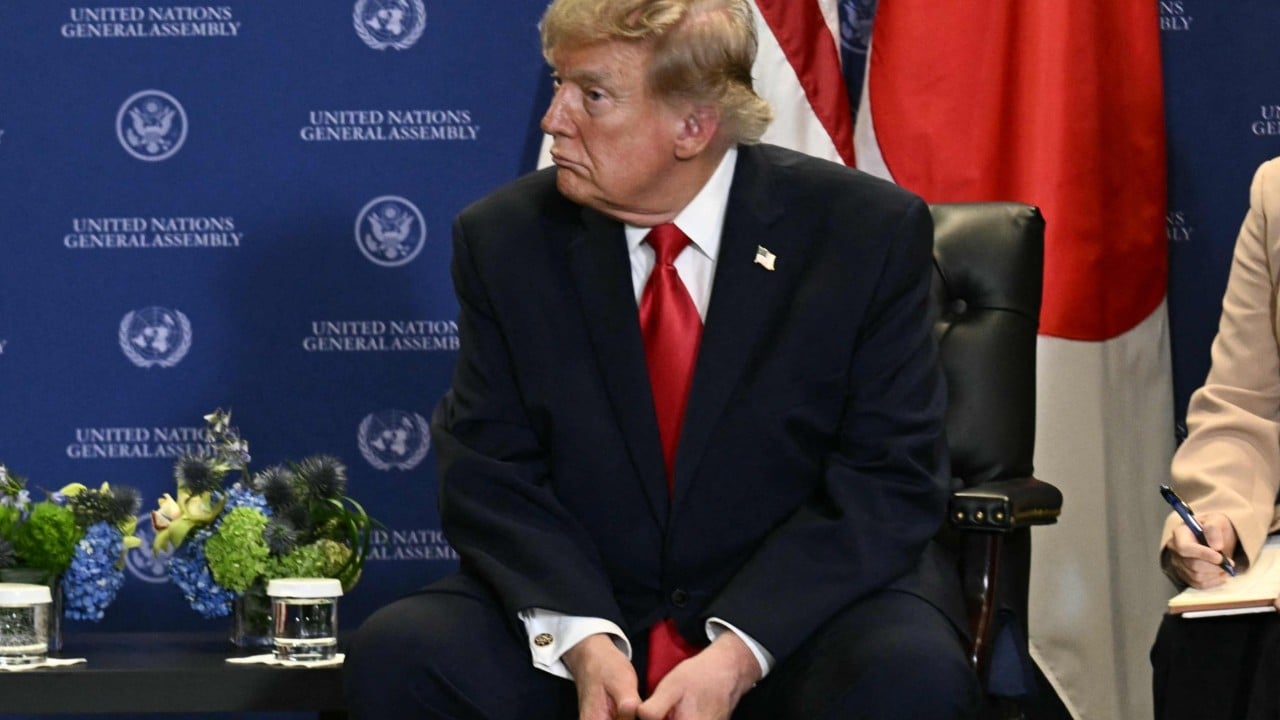
A survey drops. Younger Japanese respondents name the United States as a top threat to world peace ahead of China. Instantly, the punditry machine grinds into gear. "Younger Japanese now fear Trump's US more than China." The headline writes itself. The narrative feels crisp, shocking, and viral.
It is also upside down.
I have spent years watching how foreign analysts misread Japanese public sentiment from afar, treating an island nation of 120 million people like a mood ring for Washington politics. I have seen corporate strategy teams and think-tank consultants burn millions of dollars building market-entry and risk models around sensational poll lines while ignoring the structural mechanics underneath. When you confuse irritation with existential dread, you build strategies on sand.
The Lazy Consensus Everyone Is Repeating
Here is the standard takeaway peddled by coverage around these recent polls: young people in Japan are turning away from America because of Donald Trump's tariff brinkmanship, transactional alliances, and disruptive foreign policy, viewing Washington as a bigger danger to global stability than Beijing.
On the surface, the numbers look dramatic. Poll trackers in October 2026 highlighted how public perception of the United States as a threat to world peace climbed in Japan, with younger cohorts driving a striking share of that shift. Analysts rushed to declare a generational realignment—as if twenty-somethings in Shibuya or Osaka suddenly view the People's Liberation Army Coast Guard near the Senkaku Islands as a benign neighbor compared to an unpredictable White House.
That argument confuses volatility with lethality.
In international relations, political scientists distinguish between acute shock and structural coercion. A disruptive president in Washington creates acute shock. Tariffs spike. Diplomatic norms wobble. Energy markets jolt when Middle East tensions flare. That feels immediate, noisy, and frustrating—especially to younger voters who grew up expecting American predictability as background noise, like clean tap water or on-time trains.
China is different. China is structural pressure. It sits right across the East China Sea. It shapes supply chains, maritime patrols, semiconductor dependencies, and regional military balances year after year. In the very same October 2026 national survey reporting the jump in U.S. threat perception (26.8% overall for the U.S., up 9.3 points from fiscal 2025), China still ranked highest as the biggest threat to world peace at 32.5%, while 76.7% of respondents expressed a sense of crisis over a potential Taiwan contingency.
Read those two numbers together. If younger Japanese truly "feared" Washington more than Beijing, the entire security calculus of Northeast Asia would already look radically different. Instead, what you are seeing is disappointment with a patron, not preference for a rival.
Why "Threat to World Peace" Does Not Mean "Bigger Danger to Japan"
Survey wording is a trap. Most readers skip the exact phrasing of the question and project their own drama onto the answer.
When a poll asks which country poses the greatest threat to world peace, respondents are making a macro judgment about global instability—trade wars, military escalations, erratic leadership, and systemic shocks. Under Trump's second term, Washington's willingness to upend trade rules, pressure allies on burden-sharing, or trigger geopolitical flare-ups makes the U.S. look like an agent of disruption on the global stage.
Ask a different question—Which country threatens your daily sovereignty, maritime security, or long-term economic autonomy?—and the answers diverge sharply.
Think about why younger Japanese react the way they do:
- They never knew the Cold War bargain firsthand. Older generations internalized the post-war security compact with a visceral sense of gratitude and dependence. Younger Japanese treat the U.S.–Japan alliance as an inherited fixture, not a hard-won lifeline. When the guarantor acts erratic, young people critique it more bluntly without carrying the same historical deference.
- They judge by friction, not ideology. Young professionals and students feel economic friction fast. Currency swings, import costs, supply-chain headaches, and global energy shocks hit wallets immediately. If Washington's moves look chaotic or self-serving, irritation follows quickly.
- Familiarity breeds bluntness, not defection. Criticizing an ally loudly is a sign of proximity and expectation. Most Japanese people do not wake up thinking Beijing has their best interests at heart. Skepticism toward China remains deeply embedded across generations, even when frustration with Washington spikes.
"Fear makes you huddle and comply. Frustration makes you complain and hedge. Most coverage of Japanese youth right now is mistaking hedging for defection."
🔗 Read more: The Long Road to a Small Island
What People Actually Ask—And Why the Premise Is Broken
Whenever polls like this circulate, search feeds fill up with predictable follow-up questions. Every single one of them tends to start from a flawed assumption.
"Are young Japanese turning anti-American?"
No. That is a lazy binary. Being critical of a specific U.S. administration—or viewing Washington's foreign policy as destabilizing—is not the same as becoming anti-American. American pop culture, tech, universities, and alliance habits remain deeply woven into everyday Japanese life. Calling a sharp dip in approval or a rise in "threat" ratings "anti-Americanism" is analytical malpractice. It flattens complex, conditional opinions into a cartoon.
"Does this mean Japan will drift closer to China?"
Unlikely in any strategic sense. Hedging happens at the margins—trade pragmatism, diplomatic channels, avoiding unnecessary provocations—not through a romantic pivot toward Beijing. You do not solve anxiety over an unpredictable ally by handing leverage to a neighbor with territorial disputes and military clout right on your doorstep.
"Why do younger Japanese care so much about foreign policy all of a sudden?"
They do not necessarily care more about foreign policy in the abstract; they care about stability. When global politics intrudes on cost of living, job prospects, currency value, and regional calm, young people notice. What looks like "foreign policy opinion" in a poll is often a reaction to perceived instability—whether that instability comes from tariffs, regional flashpoints, or leadership unpredictability.
A Thought Experiment: Two Versions of Tomorrow
Imagine a scenario where Washington pulls back sharply from East Asian security commitments over the next five years while ramping up unpredictable economic tariffs on allies and rivals alike. On paper, a poll might show even more young Japanese calling the U.S. a "threat to world peace" because of the chaos it unleashed. Yet in reality, a sudden American retreat would trigger spike-level alarm in Tokyo over Chinese naval assertiveness and regional balance of power.
Now imagine a second scenario: Washington stays firmly anchored in Northeast Asia, deters aggression cleanly, and keeps alliance commitments rock-solid, while running loud, combative rhetoric on trade. Poll numbers on "global disruption" might still bounce around, yet actual strategic fear of Beijing would remain the heavier weight in Tokyo's calculation.
The poll measures mood and perceived volatility. Strategy has to measure incentives and hard power.
The Blind Spots of This Contrarian Take
Being contrarian does not mean being infallible. There are real risks to pushing back against the "young Japanese fear Trump more than China" narrative, and ignoring them would be just as sloppy as the headlines.
First, sentiment can harden into habit. Repeatedly viewing the U.S. as erratic or self-interested can erode trust over time, especially among younger cohorts forming their baseline political views now. Even if they do not trust Beijing, eroded trust in Washington lowers the emotional cushion of the alliance during a crisis.
Second, domestic pressures in Japan shape everything. Economic stagnation, demographic drag, yen pressure, and political shifts inside Japan heavily color how respondents answer surveys about the outside world. Attributing every shift in poll numbers to U.S. or Chinese actions overstates external causes and underweights domestic fatigue.
Third, generational labels oversimplify. "Younger Japanese" is not a monolith. Students, service workers, exporters, rural residents, and Tokyo corporate staff experience global shocks differently. Treating a broad age bracket as one unified mind is a shortcut.
What Smart Leaders and Analysts Should Do Instead
If you are running a business, advising executives, or tracking East Asian geopolitics, stop chasing dramatic poll headlines and change how you read the room.
| Common Mistake | What Actually Happens | Better Move |
|---|---|---|
| Treating a high "threat" poll score as pro-China sentiment | Respondents flag global unpredictability alongside enduring regional concerns | Track both macro disruption metrics and concrete security/supply-chain indicators |
| Assuming young Japanese feel deep Cold War loyalty to the U.S. | Younger cohorts treat alliances transactionally and judge by stability and impact | Speak plainly about practical stability, resilience, and economic security |
| Overreacting to single-survey spikes | Poll swings often capture recent news cycles or economic jitters | Look at multi-year trends across economic, trade, and security behavior |
| Planning for a clean US-vs-China choice | Most actors hedge, diversify, and avoid binary traps where possible | Build dual-track resilience across supply chains, talent, and regulatory risk |
Here are three concrete moves to take right now:
- Audit your risk assumptions for "noise vs. structural shift." Separate short-term policy friction (tariff swings, diplomatic rhetoric, market jolts) from structural shifts (supply-chain relocation, maritime security, technology controls). Do not tear up long-term plans over a noisy poll cycle.
- Stop using "fear" as an analytical crutch. Replace vague emotional labels with specific drivers: economic predictability, alliance reliability, regional deterrence, and cost-of-living security. Precision forces clearer thinking.
- Stress-test your operations against multi-front friction. The real risk for companies and policymakers in Asia is not a neat world where one side is "the threat" and the other is "the savior." It is a messy world where you have to manage China exposure and U.S. policy unpredictability at the same time.
Stop falling for clever headlines that turn frustration into fear. Look at the incentives, watch the leverage, and read the real signal.



