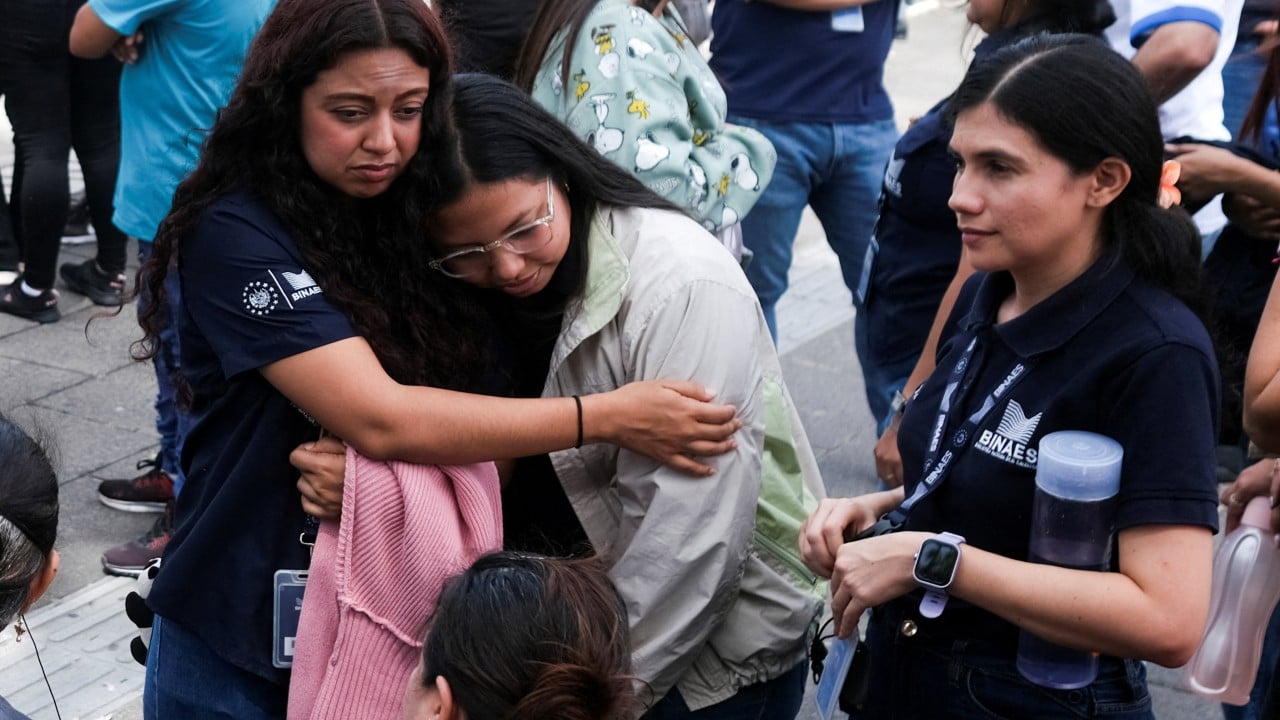
Yesterday morning, a massive 7.3 magnitude earthquake struck off the southern Pacific coast of Mexico, sending shockwaves through Guatemala and El Salvador. For many living in the region, the prolonged shaking brought back instant, terrifying memories of past disasters. While early reports from Mexican President Claudia Sheinbaum and Guatemalan President Bernardo Arévalo confirm that we miraculously dodged major casualties or catastrophic structural damage, this event highlights the permanent tectonic threat hanging over Central America.
The quake hit at 8:48 a.m. CST, centered about 30 miles southwest of Aquiles Serdán, near the coast of Chiapas. At a shallow depth of roughly 9 miles, the energy ripped through the ground, shaking high-rises from Tapachula to Guatemala City and San Salvador. If you think this was just another routine tremor in a seismically active zone, you're missing the bigger picture. The cascading alerts, the temporary tsunami warnings, and the sheer radius of the tremors show exactly how vulnerable the region's infrastructure remains.
What Happened on the Fault Lines
The United States Geological Survey initially registered the event as a 7.4 magnitude before settling on a potent 7.3. The tectonic setup here is incredibly complex. Mexico sits on the chaotic boundary of five different tectonic plates: the Cocos, North American, Pacific, Rivera, and Caribbean plates. This specific tremor occurred along the subduction zone where the Cocos plate slides underneath the North American and Caribbean plates.
When a fault blocks this massive movement, stress builds up over decades. When it snaps, the release is violent.
The main shock was followed by a relentless barrage of at least ten major aftershocks ranging between magnitudes 4.9 and 6.0. These secondary quakes are often what destroy weakened buildings, keeping emergency crews and residents on edge for hours after the initial event.
Panic in the Streets and Near Misses
In Tapachula, the closest major Mexican city to the epicenter, the shaking didn't hit all at once. It started as a low, deceptive rumble before violently intensifying. Hospital workers and administrative staff evacuated into open courtyards as walls began to creak. Local civil protection authorities reported that the panic itself caused injuries; in one instance, a woman suffered a nervous breakdown and fractured her legs after jumping from a second-story apartment window.
Further south in Guatemala City, the sheer duration of the shaking caused widespread alarm during the morning rush hour. Office workers spilled out of eighth- and fifteenth-story buildings, navigating swaying stairwells. For many locals, the event felt eerily similar to the catastrophic twin earthquakes that struck Venezuela just weeks prior on June 24, leaving a psychological scar that amplified the morning's panic.
The Tsunami Scare and Why the Alerts Stayed Silent in Mexico City
Immediately following the main tremor, the U.S. Tsunami Warning System flagged a hazardous threat for coastlines within 186 miles of the epicenter. Ocean models predicted potential sea-level rises of up to three feet along the Chiapas and Guatemalan coasts. Mexico’s Navy Secretary, Raymundo Morales, quickly stepped in to manage the panic, noting that actual sea levels were only expected to fluctuate by about half a meter. Though the threat pass quickly and the alerts were downgraded, coastal communities were told to stay clear of the beaches for a full six hours as a safety precaution.
Curiously, residents in Mexico City noticed that the capital’s famous seismic alarm system never went off, despite buildings visibly swaying in certain neighborhoods. The city government explained that the early energy thresholds calculated by the sensors during the first few seconds didn't meet the mathematical criteria required to trigger the citywide sirens. It's a reminder that automated safety systems are based on strict algorithms, not human perception.
Real Steps for the Next Big One
We got lucky yesterday. Next time, we might not be. If you live or travel anywhere along the Pacific coast of Central America, stop treating earthquake preparedness like a bureaucratic chore.
- Audit your immediate space: Most earthquake injuries don't come from collapsing ceilings; they come from flying objects. Secure heavy bookshelves, monitors, and kitchen cabinets today.
- Know your structural exit: If you are above the third floor, running down shaking stairs during the peak of a quake is incredibly dangerous. Identify structural columns or reinforced doorways where you can shelter until the primary rolling stops.
- Drop the coastal curiosity: If you feel a prolonged earthquake near the coast, do not wait for an official tsunami siren. Move inland and find higher ground immediately. Yesterday's warning window proved that minutes matter when the ocean shifts.