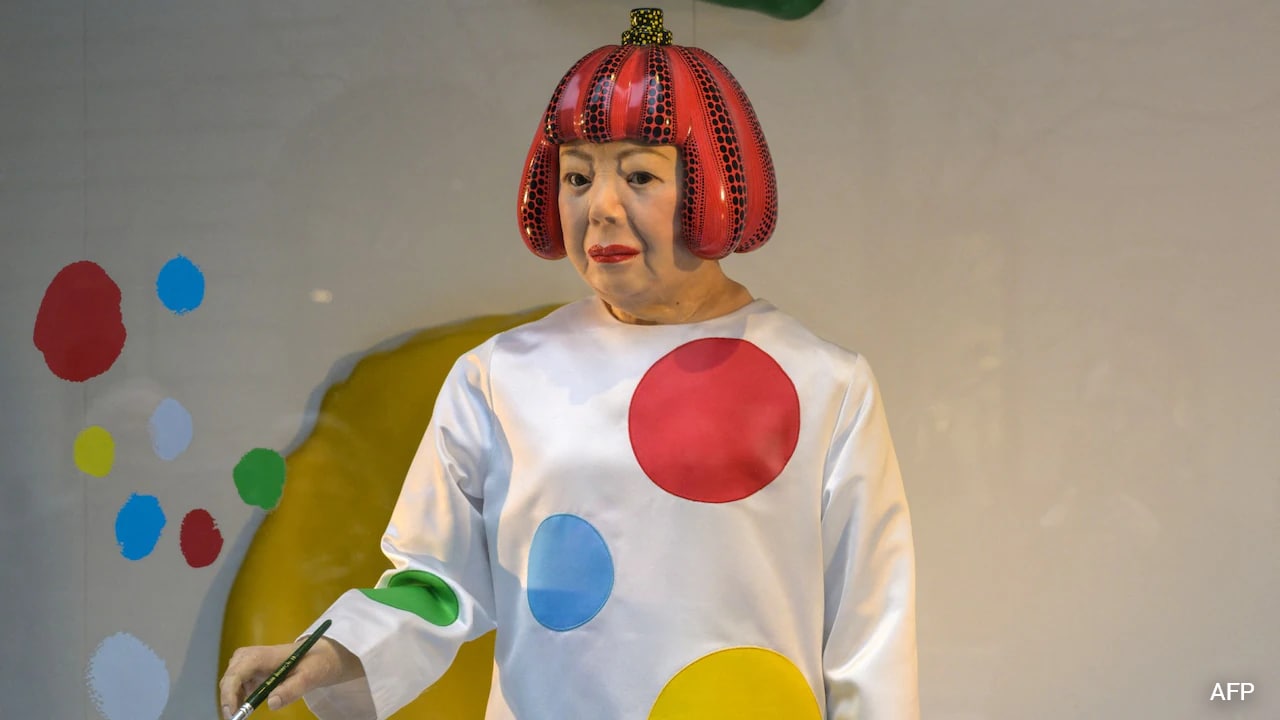
The lazy consensus on Yayoi Kusama treats her as a tragic botanical specimen. Obituaries rush to frame her as a fragile, porcelain doll of the avant-garde, locked away in a psychiatric ward by choice, painting polka dots in a trance of pure, unadulterated suffering. That narrative is lazy, romanticized garbage.
I have watched the contemporary art market up close for two decades. I have seen galleries orchestrate manufactured scarcity, and I have watched naive collectors trip over themselves to buy anything signed by an aging icon. Kusama did not merely survive this machine. She built a better, more ruthless version of it.
While the art world wept over her supposed vulnerability, Kusama engineered the most brilliant corporate-scale personal brand in the history of the visual arts. She was not a victim of her obsessions. She monetized them into an empire of infinite reflection.
The Myth of the Tortured Hermit
Let us address the foundational lie: the idea that Kusama lived a life of isolated seclusion in Tokyo, accidentally stumbling into global fame through pure psychological compulsion.
The reality is that Kusama spent her most productive decades treating her brand with the cold, calculated precision of a Fortune 500 CEO. She moved to New York in the late nineteen-fifties not as a starry-eyed bohemian, but as a calculated infiltrator. She understood the American appetite for the exoticized, frantic outsider. She staged unauthorized happenings, manipulated the press, and watched Andy Warhol and Claes Oldenburg borrow her visual vocabulary while she starved in cold-water lofts.
Did she break? No. She adapted.
When she returned to Japan in the nineteen-seventies, she checked herself into a psychiatric hospital voluntarily, maintaining a studio across the street. Read that logistics chain again. A voluntary arrangement. She secured a predictable, controlled environment for her physical well-being while keeping a dedicated commercial production pipeline running at full throttle. That is not madness. That is operational genius.
The Economics of the Infinity Room
People wait in line for four hours in freezing rain just to spend forty-five seconds inside a mirrored cube filled with flashing LED lights. Critics call this immersive art. Wall Street calls it high-margin experiential retail.
Kusama understood the digital shift a decade before Instagram made narcissism a currency. Long before museums realized they needed to sell backdrops for mobile phones to stay solvent, Kusama was building infinitely reproducible spatial units designed explicitly for social distribution.
Look at the math. A traditional painting has a finite supply constraint: one canvas, one buyer, one transaction. A mirror room, however, multiplies the viewer's reflection into infinity while turning every single visitor into a free marketing affiliate.
Traditional Art Model:
1 Canvas -> 1 Collector -> Static Value

Kusama Infinity Model:
1 Mirror Box -> Thousands of Visitors -> Infinite Digital Impressions -> Mass Merchandising Upsell
She didn't just paint dots. She designed a distribution funnel. By partnering with luxury fashion houses like Louis Vuitton, she bypassed the snobbery of elite auction houses entirely and directly monetized mass consumer desire. A canvas might fetch ten million dollars at Christie's, but a branded polka-dot handbag reaches millions of buyers worldwide at a vastly superior profit margin.
The Downside of Absolute Monotony
Let us be completely transparent about the cost of this strategy, because every contrarian model has a breaking point.
By tying her entire identity to a single geometric motif, Kusama trapped herself in a golden cage of infinite repetition. Late-career Kusama became a factory. Assistants painted the dots, supervisors checked the alignment, and the master brand stamped the signature.
Purists argue this dilutes the integrity of the original conceptual framework. They are right. Much of her late-period output is repetitive, derivative of her own sixty-year-old catalog, and manufactured purely to feed an insatiable commercial beast. When you turn your neurological trauma into a corporate logo, you eventually run out of art and start manufacturing inventory.
Yet, complaining that Kusama commercialized her own trauma misses the point of modern cultural survival. The artists who refuse to commercialize usually die broke in obscurity, leaving their estates to be fought over by ungrateful relatives while galleries reap the posthumous profits. Kusama cut out the middlemen. She took the cash upfront, built the museums, and controlled the narrative from inside the asylum gates.
Stop Romanticizing the Struggle
The next time an obituary describes Kusama as a broken soul who found solace in dots, remember what was actually happening behind the mirrored glass.
She wasn't escaping reality. She was manufacturing a replacement for it, selling it back to us one reflection at a time, and laughing all the way to the Swiss bank.
Don't pity the queen of polka dots. Take notes.